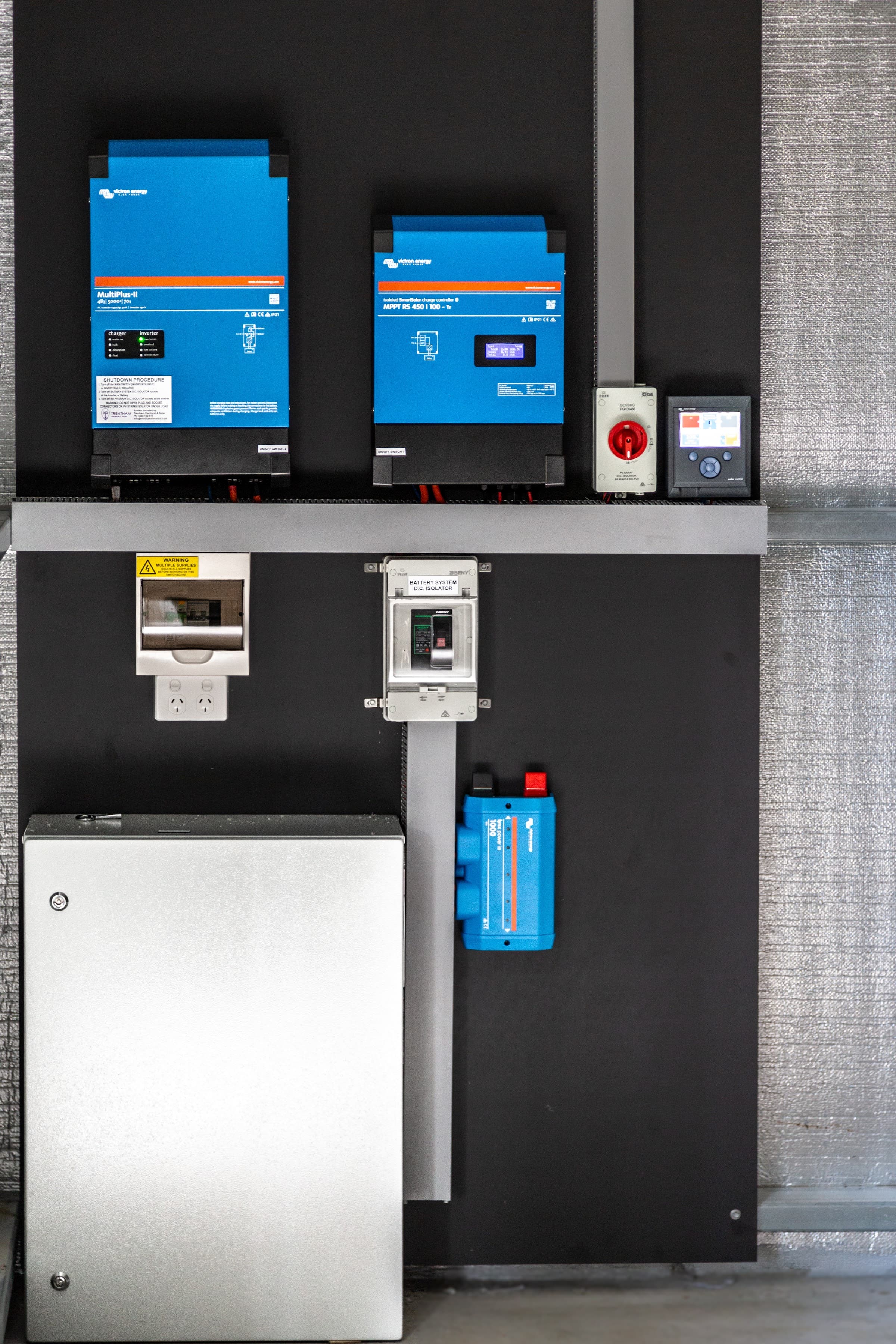
Every off grid system Trentham Energy designs runs on Victron Energy inverters, chargers and monitoring. Here is what is in the cabinet, why each part is separate, what VRM lets us see from Trentham, and how the warranty and service work.
Every off grid system we design runs on Victron Energy equipment: the inverter charger, the solar charge controllers, the monitoring, the generator control. Not because it is the only option, but because after years of building and, more to the point, supporting standalone systems in Central Victoria, it is the platform that lets us fix a problem from Trentham before the owner notices it, replace one part without touching the rest, and grow a system in steps as a property grows.
This is what is in the cabinet and why.
What a Victron off grid system is made of
A Victron system is a set of separate boxes that talk to each other, rather than one all in one unit. That matters off grid, where the nearest replacement is a long drive away.
- The inverter charger. A MultiPlus-II turns the battery's DC into the 230 volt AC the house runs on, and charges the battery from the generator when it runs. It carries the surge for pumps and compressors and passes generator power straight through to the house while charging. Bigger homes run two or three in parallel, or three for a three phase supply.
- The solar charge controllers. SmartSolar MPPT controllers take the array's DC and charge the battery at the right voltage and current for lithium. One per string or group of strings, so a fault on one roof leaves the rest making power, and another array later just means another controller.
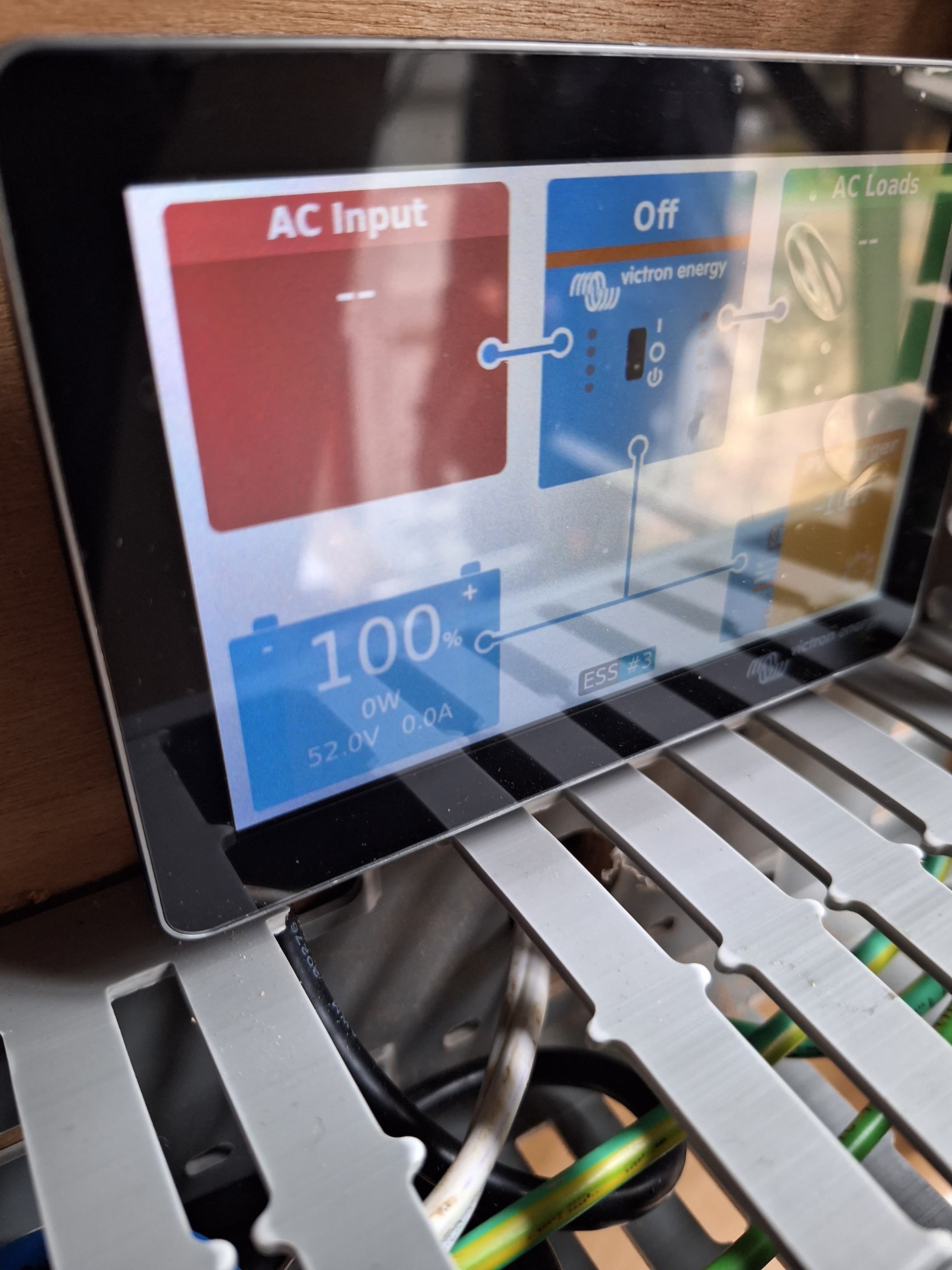
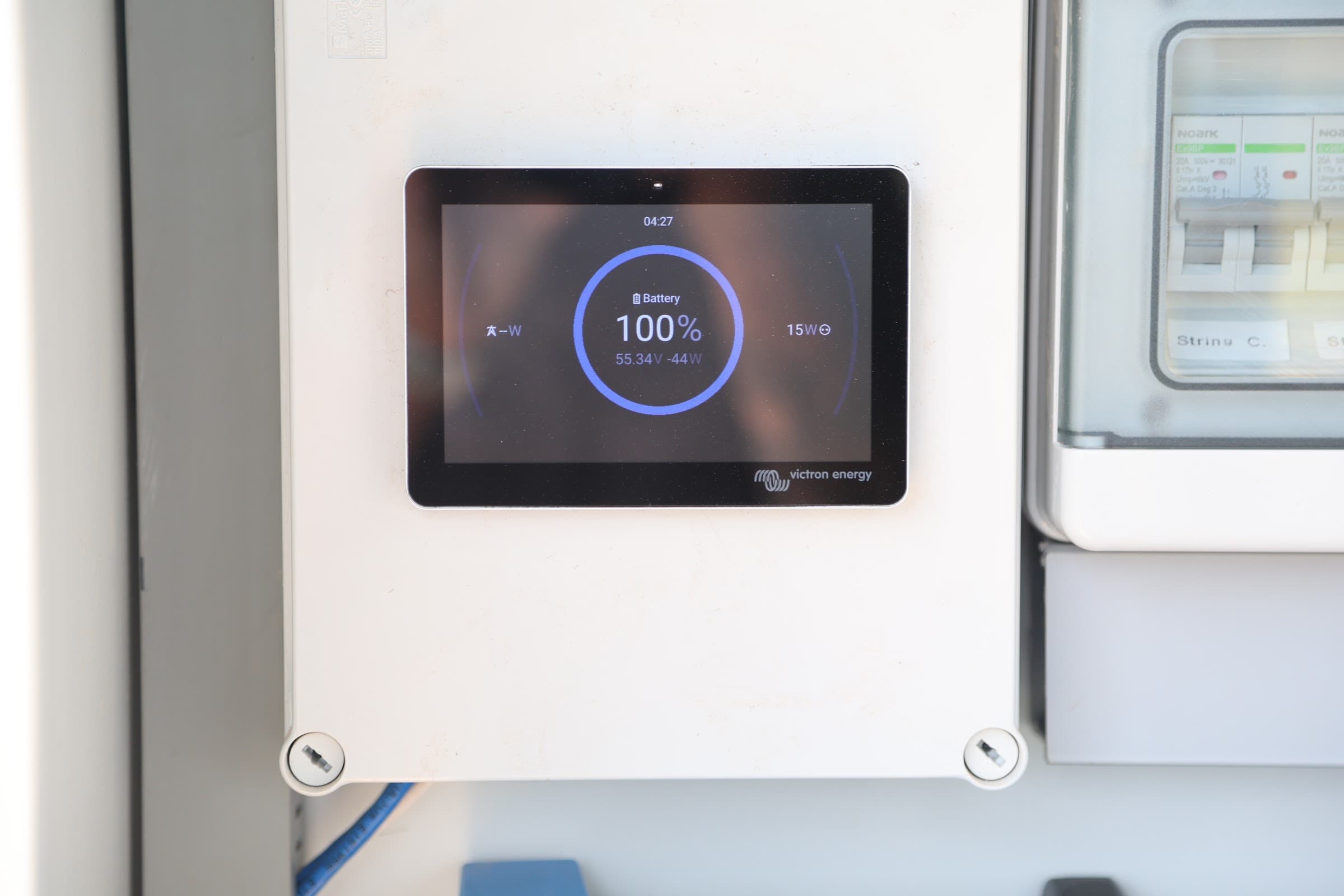
- The brain. The Cerbo GX connects everything, reads the battery's management system, runs the generator start and stop rules, and sends the whole picture to the VRM portal. A touchscreen on the wall shows the owner the same thing.
- The battery. Lithium, with its own management system that the Cerbo reads directly. We fit PowerPlus Energy modules where the design allows; the system is battery agnostic within Victron's compatibility list.
- The generator control. A relay from the Cerbo starts and stops the generator on the battery's state of charge, with quiet hours and test runs programmed in.
Because each part is separate, a failed charge controller is a charge controller, not a whole inverter. And because they all speak the same language, a second inverter or a third array drops in later without redesigning what is there.
What VRM lets us see
The Victron Remote Management portal is the reason we can support a system three hours away. Every system we commission reports to it, and the owner gets the same view on their phone.
From Trentham we can see the battery's state of charge right now and over the last year, what the array made yesterday against what the house used, when the generator started, for how long, and why. We see a string that has stopped producing before the owner sees a dark morning. We see a battery that is being run harder than the design intended and can ring before winter does. Firmware updates, generator start thresholds and charge settings can be adjusted remotely with the owner's permission.
For the owner it is the end of the mystery. The question every off grid household asks, "how are we going for power", has a number on the wall and on the phone.
Why not an all in one unit
All in one off grid inverters exist and some are good. We do not use them for standalone homes for three reasons. When one part fails, the whole unit comes off the wall and the house is dark until the replacement arrives. The system cannot grow except by replacing the unit with a bigger one. And the monitoring is usually the manufacturer's own app, which tells the owner a little and tells us nothing.
Victron's separate parts cost a little more on the day. They cost a great deal less the first time something needs fixing in July.
Warranty and service
Victron products carry a five year manufacturer's warranty, handled in Australia through the distributor network, and the parts are stocked here rather than shipped from overseas when something fails. Because we commission the systems and watch them in VRM, a warranty claim starts with us knowing what failed and when, not with the owner trying to describe a flashing light.
Service follows the monitoring. A system that is behaving does not need a visit. One that shows a string down, a battery cell drifting or a generator running longer than it should gets a call, and often a fix, before anything stops.
Where Victron fits and where it does not
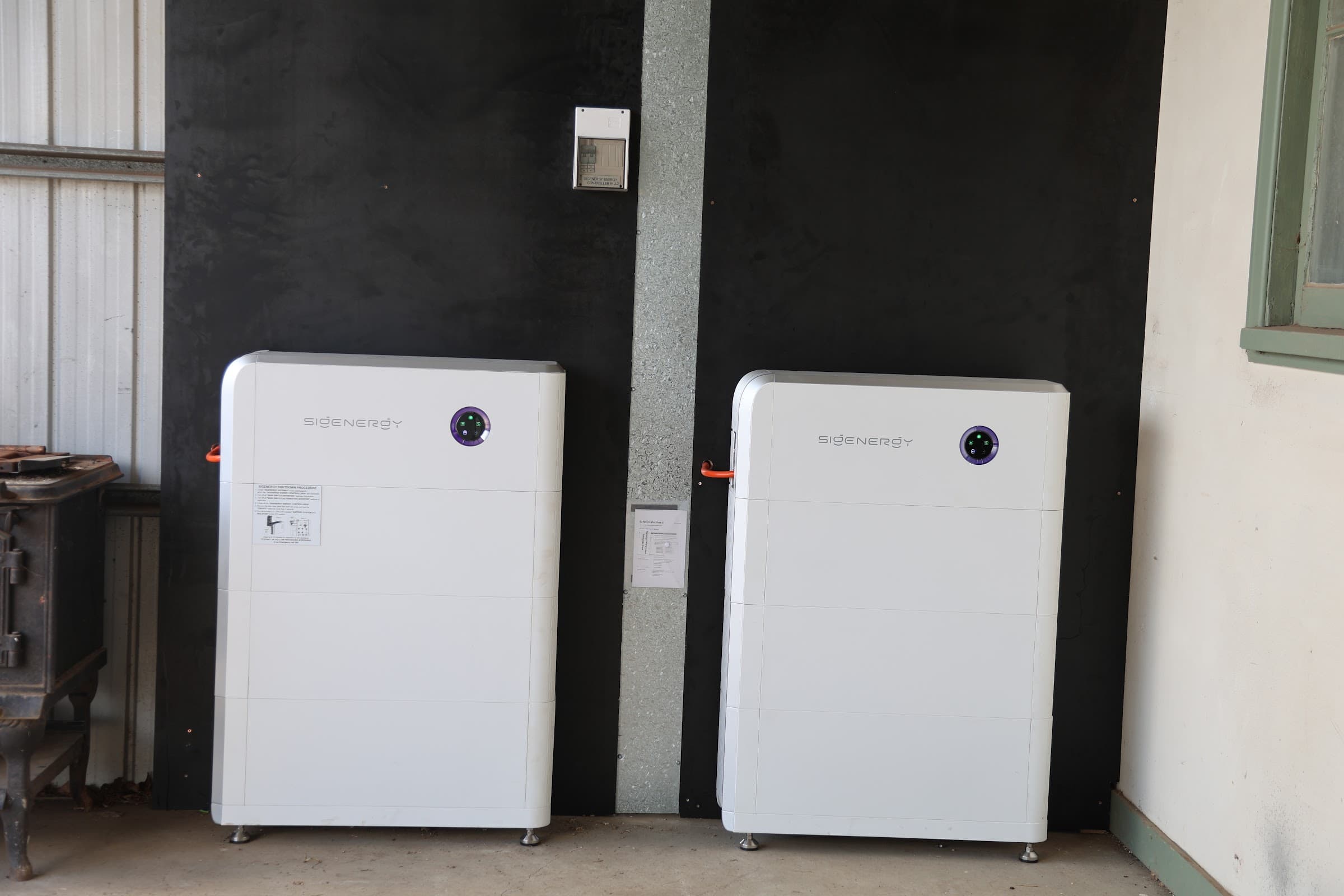
Victron is our off grid platform. For grid connected homes and for hybrid systems that keep the grid and add a battery for outages, we use Sigenergy, which is built for that job: it manages the grid connection, the export and the time of use tariffs in a way an off grid system never needs to. The two do not compete; they answer different questions. If you are on the grid and want backup, read about Sigenergy. If you are off the grid or heading there, this is the gear.
Questions
Can my existing Victron system be expanded?
Almost always. More panels go on another SmartSolar controller, more battery modules join the bank, a second MultiPlus runs in parallel with the first. The board, the cabling and the enclosure are sized for the finished system when we design it, so each stage is an addition rather than a rebuild. Our upgrades page covers staging.
Do you service Victron systems you did not install?
Yes. We work on Victron systems daily, and a system installed by someone else can be added to our VRM view with the owner's permission so we can see what it is doing before we drive out.
What does a Victron off grid system cost?
It depends on the loads, the nights of autonomy and the site, which is why we price after a visit. The cost page shows three typical systems and what moves the price, and the sizing tool gives the size for your own loads in five minutes.
Sources
Written by the Trentham Energy team.