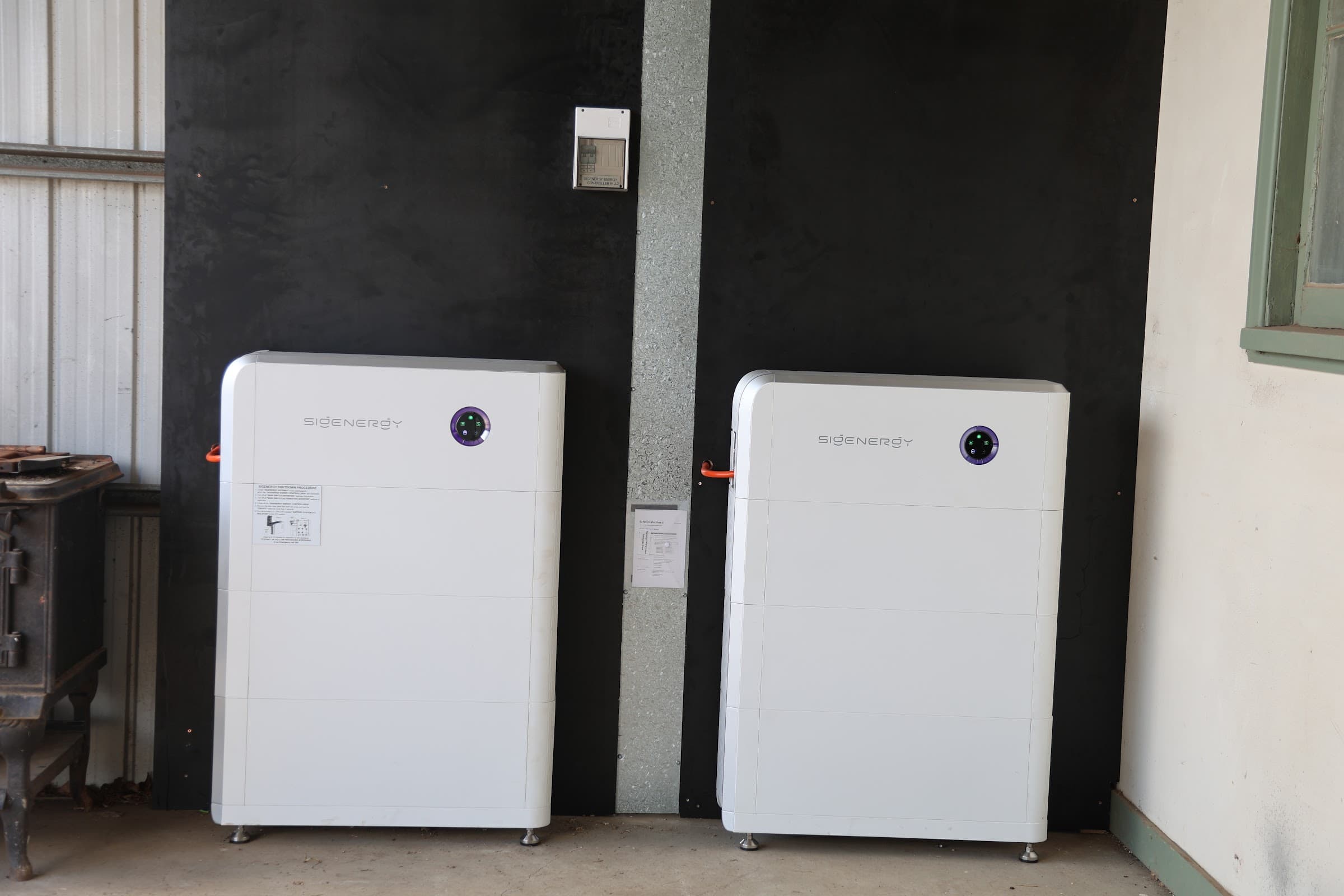
A Macedon Ranges farm on a two phase supply runs two Sigenergy systems. We built a controller that plans each night's cheap charge for both phases.
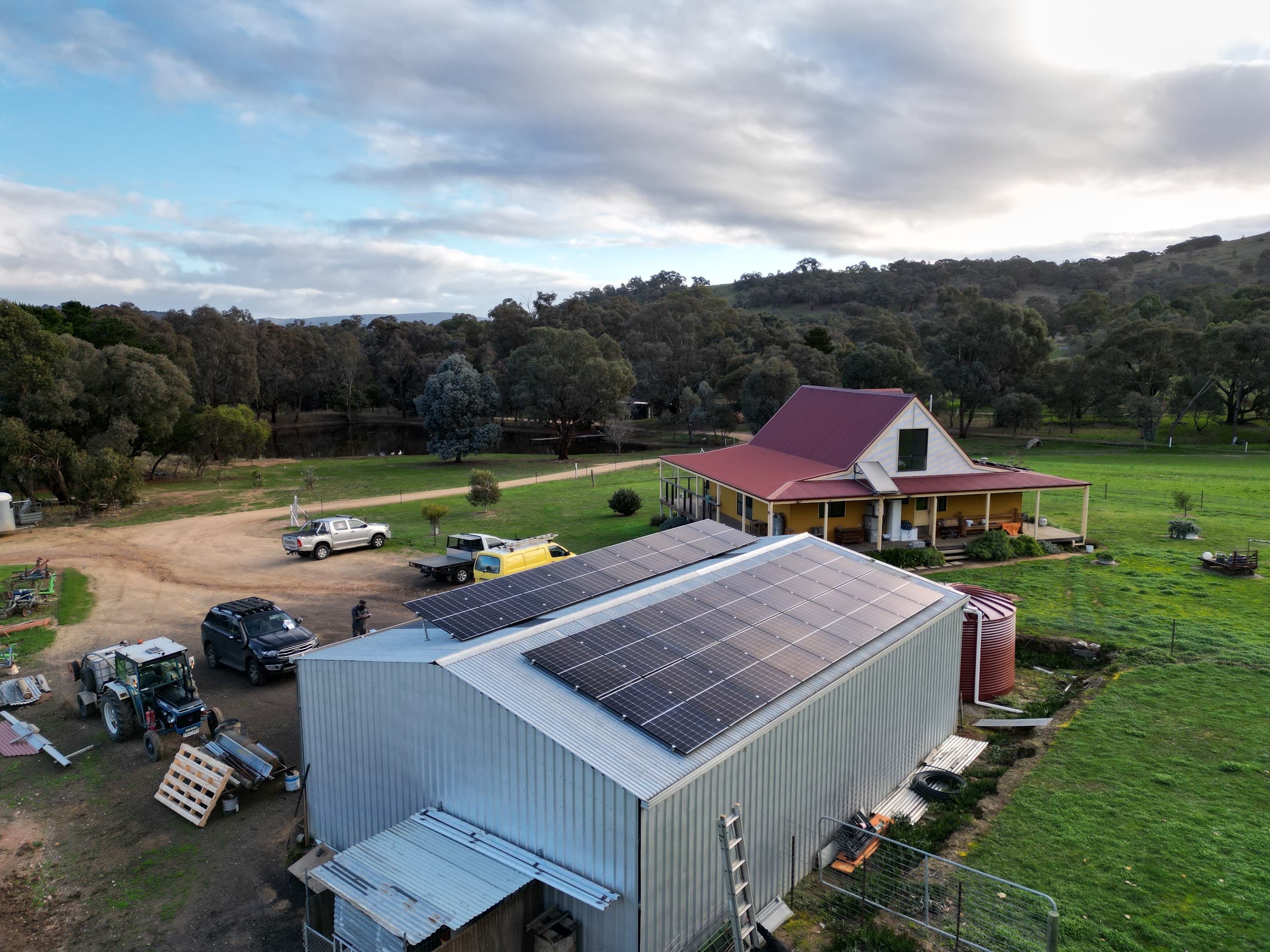
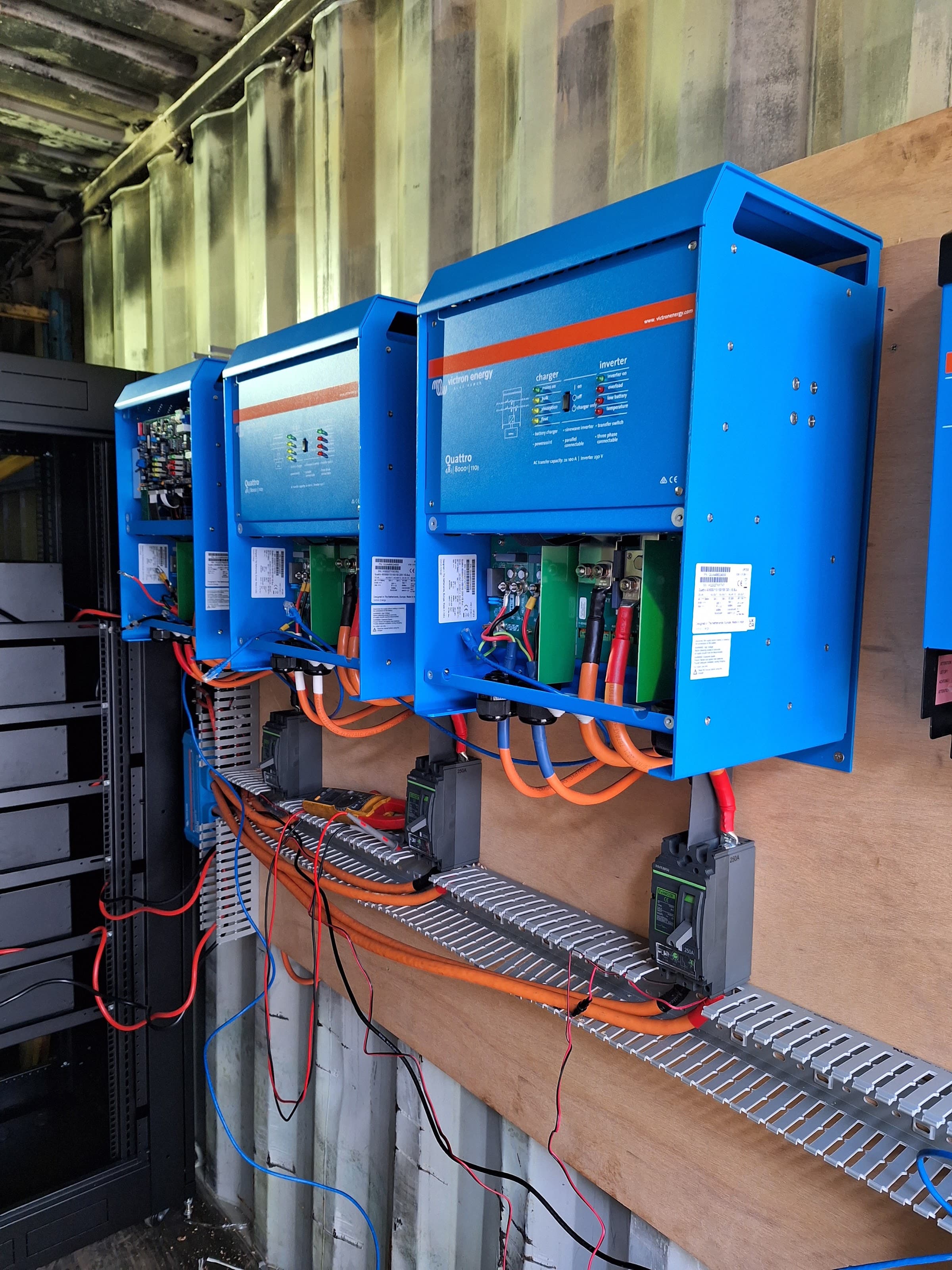
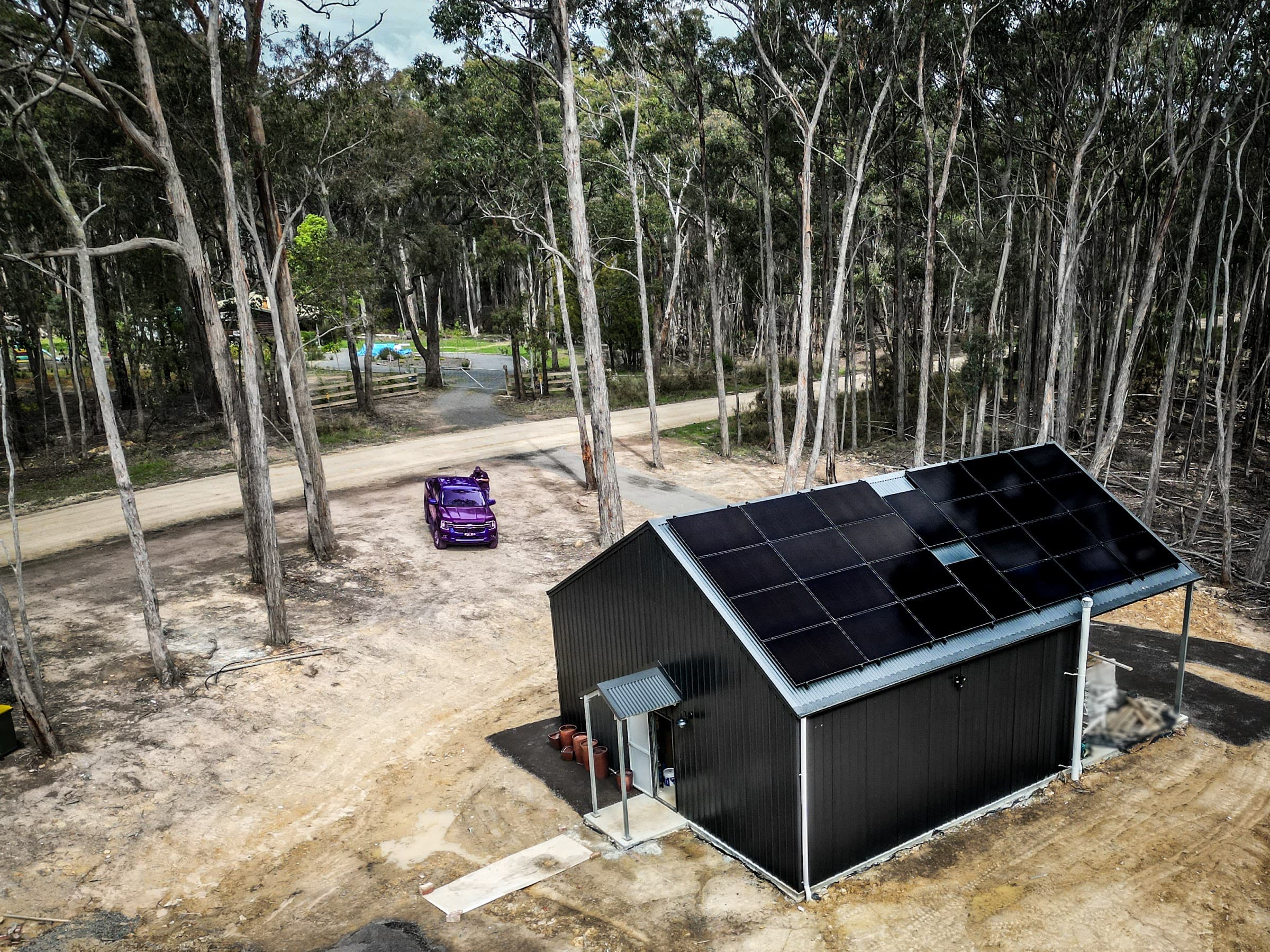
A farm property in the Macedon Ranges runs on a two phase supply, and it carries two separate Sigenergy systems in its farm shed, one on each phase, each with its own battery stack. Sigenergy treats each phase as an independent system, so on its own each one makes its own decisions, and one phase's battery can be full while the other is empty. We built our own controller on Sigenergy's developer API to look after both: it watches the two systems, keeps a ledger, and each evening plans how much cheap overnight power each phase should take on.
What a two phase supply is
Most Victorian homes have a single phase supply, one live conductor and a neutral. Bigger properties and many farms have three phase. A two phase supply sits between them: two live phases, not three.
A hybrid inverter and battery connects to one phase. On a two phase property that leaves a choice: put one system on one phase and leave the other phase with no battery, or put a system on each phase. This property has one on each, so both halves of the switchboard are covered by solar and a battery.
Why two independent systems need a brain
Sigenergy's SigenStor is a modular system: an energy controller with stackable lithium iron phosphate battery modules beside it. Its single phase energy controllers carry Clean Energy Council approval, and each one manages its own phase. What it does not do is coordinate with the system on the other phase.
That matters because two phases rarely carry the same load. Whatever is wired to a phase draws on that phase's battery and no other, so over a day the two batteries drift apart. One can be full and spilling solar to the grid while the other is empty and buying.
The overnight charge makes it sharper. The owner's electricity plan has an 8 cent per kWh window from midnight to 6 am. Charging both batteries to full in that window every night is simple, but it buys energy the panels would have made the next day, and it treats both phases the same when they are not. Charging too little leaves a phase buying at the expensive rate the next evening. The right answer is different each night and different for each phase.
What the controller does
The controller is our own software, built on Sigenergy's developer API. In plain terms it does four things.
- It reads both systems every few minutes, one phase after the other.
- It keeps a daily ledger per phase. Solar made, house load, energy imported and energy exported, day by day, for each of the two systems.
- It plans the night at 9:30 pm. Each evening it takes a solar forecast for the next day from Open-Meteo, calibrated against what the ledger shows this roof actually makes, and the household's own pattern of use, and picks a charge target for each phase for the cheap window.
- It marks its own homework. The next day it scores the decision it made against what simply charging to full would have done, so the planning is judged on results, not on hope.
It runs as a small Node service on Railway, with a dashboard.
Building on the developer API
Sigenergy runs a developer platform, an API that third party software can use to read and manage its systems. The practical limits shape the design. A community integration for the same API documents that its energy flow and summary endpoints are limited to one call every five minutes per station, which is why the controller reads every few minutes rather than every second, and why the ledger is built up patiently rather than pulled in bursts.
The forecast side uses Open-Meteo, a weather API that serves high resolution weather models with up to 16 days of forecast and offers hourly solar radiation, including irradiance on a tilted surface for a given panel angle and direction. A raw forecast is never quite right for a particular roof, so the controller compares the forecast with what the ledger recorded and corrects for the difference.
What we can and cannot tell you yet
Some of the numbers on this project are the owner's business: the size of each system, the town and the results so far. When those are agreed with the owner we will publish them here, with the working.
Who this kind of control suits
Any property with more than one battery system on more than one phase has the same problem in some form, and so does a property on a plan with a cheap window or a free window where the question is how much to buy. Our energy plan finder ranks the Victorian offers for a household's real usage and tells our own customers how to set their battery for the plan they pick, and our article on charging a home battery for free this winter covers the simpler single system case.
If you have two phases, or two systems, and want to talk about how they work together, get in touch. Our Sigenergy page covers the equipment itself.
Questions
Can one Sigenergy battery supply both phases of a two phase property?
A single phase Sigenergy system connects to one phase and supplies the loads on that phase. Covering both phases with storage means a system on each, and each one manages itself.
Why not just charge both batteries to full every night?
Because it buys energy the panels would have made the next day, and the two phases rarely need the same amount. Planning each phase separately, from a forecast and the household's pattern, charges what is needed and leaves room for the sun.
What is Open-Meteo?
A weather API that serves forecasts from high resolution weather models for up to 16 days, including hourly solar radiation on a tilted surface. The controller uses it for the next day's solar forecast.
Does Sigenergy allow third party control?
Sigenergy runs a developer platform that authorised third party software can use to read and manage its systems. Read limits apply, which shape how often any controller can check in.
Sources
- Sigenergy developer portal
- Community Sigenergy API integration, endpoints and rate limits (GitHub)
- Open-Meteo, weather forecast API documentation
- pv magazine Australia, Sigenergy secures CEC approval for single phase models (12 March 2025)
Written by the Trentham Energy team.