
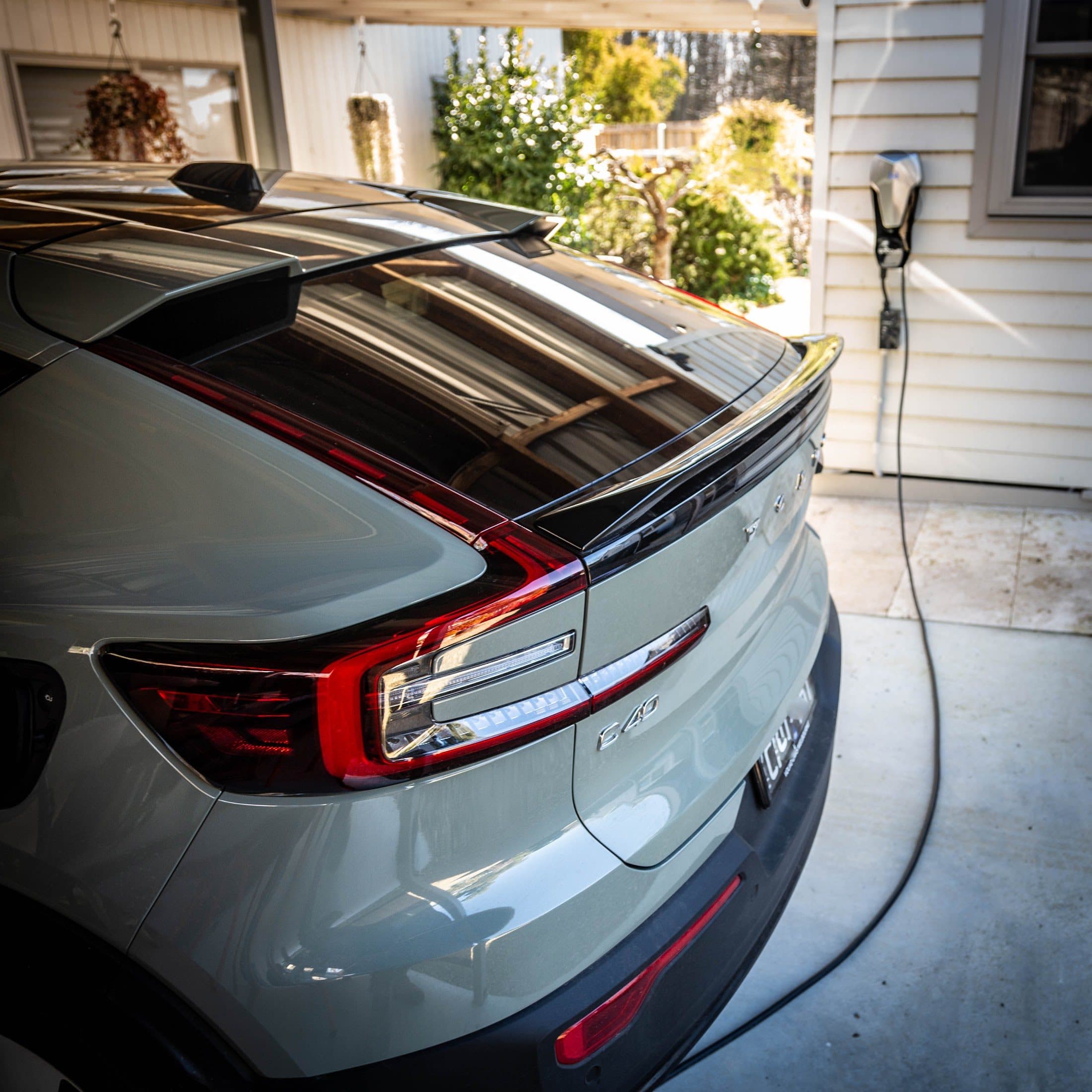
Charge from your roof
Fill the car up on sunshine.
Single phase, three phase, 11 kW, 22 kW or DC. What each one means, what your car can actually take, and why we lead with Sigenergy.
The options
Four ways to charge at home.
Home chargers come in three AC sizes, set by how much power your supply can carry, and one DC option that works differently. Here is what each one gives you.
| Charger | Supply | Power | Range added per hour | 60 kWh car, 10 to 80% |
|---|---|---|---|---|
| Single phase wall box | Any home, 32 A | 7 kW | 44 to 52 km | about 6.5 hours |
| Three phase 11 kW | Three phase, 16 A a phase | 11 kW | 66 to 77 km | about 4 hours |
| Three phase 22 kW | Three phase, 32 A a phase | 22 kW | 132 to 154 km, if the car takes it | about 2 hours, few cars |
| Sigenergy DC | A module in the SigenStor stack | 12.5 or 25 kW | up to 150 to 175 km | under 2 hours at 25 kW |
Range assumes 6 to 7 km per kWh, about what a Model Y or an Ioniq 5 uses. AC times allow for about 10% lost in charging. Real times depend on the car, the weather and how full the battery is.
The part most people miss
The car decides, not the wall box.
The battery in an EV can only take DC power. When you plug into an AC charger, the power goes to a smaller charger inside the car, which turns it into DC. That on board charger sets the limit, whatever is on the wall.
Fit a 22 kW charger to a car with a 7 kW on board charger and it still charges at 7 kW. Very few cars sold in Australia take more than 11 kW from AC.
| Car | Most it takes from AC | What that means |
|---|---|---|
| Tesla Model 3 and Model Y | 11 kW | Three phase 11 kW is the sweet spot |
| Kia EV6, Hyundai Ioniq 5, Polestar 2 | 11 kW | Three phase 11 kW is the sweet spot |
| MG4 Essence 77 Long Range | 11 kW | Three phase 11 kW |
| BYD Atto 3 and BYD Seal | 7 kW | Single phase is plenty. Only DC is faster |
| Most other MG4 models | 6.6 kW | Single phase is plenty. Only DC is faster |
Range added in one hour of charging
The top of each range, drawn to one scale. A 22 kW AC charger only reaches its bar if the car accepts 22 kW, and almost no common car does.
Why we lead with Sigenergy
DC charging straight off your own sun.
Sigenergy's DC charging module slots into the SigenStor stack like a battery module. Because it sends DC straight to the car's battery, it goes around the on board charger entirely. A BYD Atto 3 that is held to 7 kW on any wall box can charge at up to 25 kW from your own system.
Your panels and battery already make DC. An AC charger turns that into AC and the car turns it back into DC. The Sigen module skips both steps.
- 12.5 kW or 25 kW, with a CCS2 plug, the fast charging plug on almost every new EV in Australia
- A 100% solar mode, so the car only takes what the roof is making
- Charges the car without needing a bigger grid connection
- Bidirectional hardware, ready for vehicle to home and vehicle to grid
- Runs in the same mySigen app as the panels and the battery
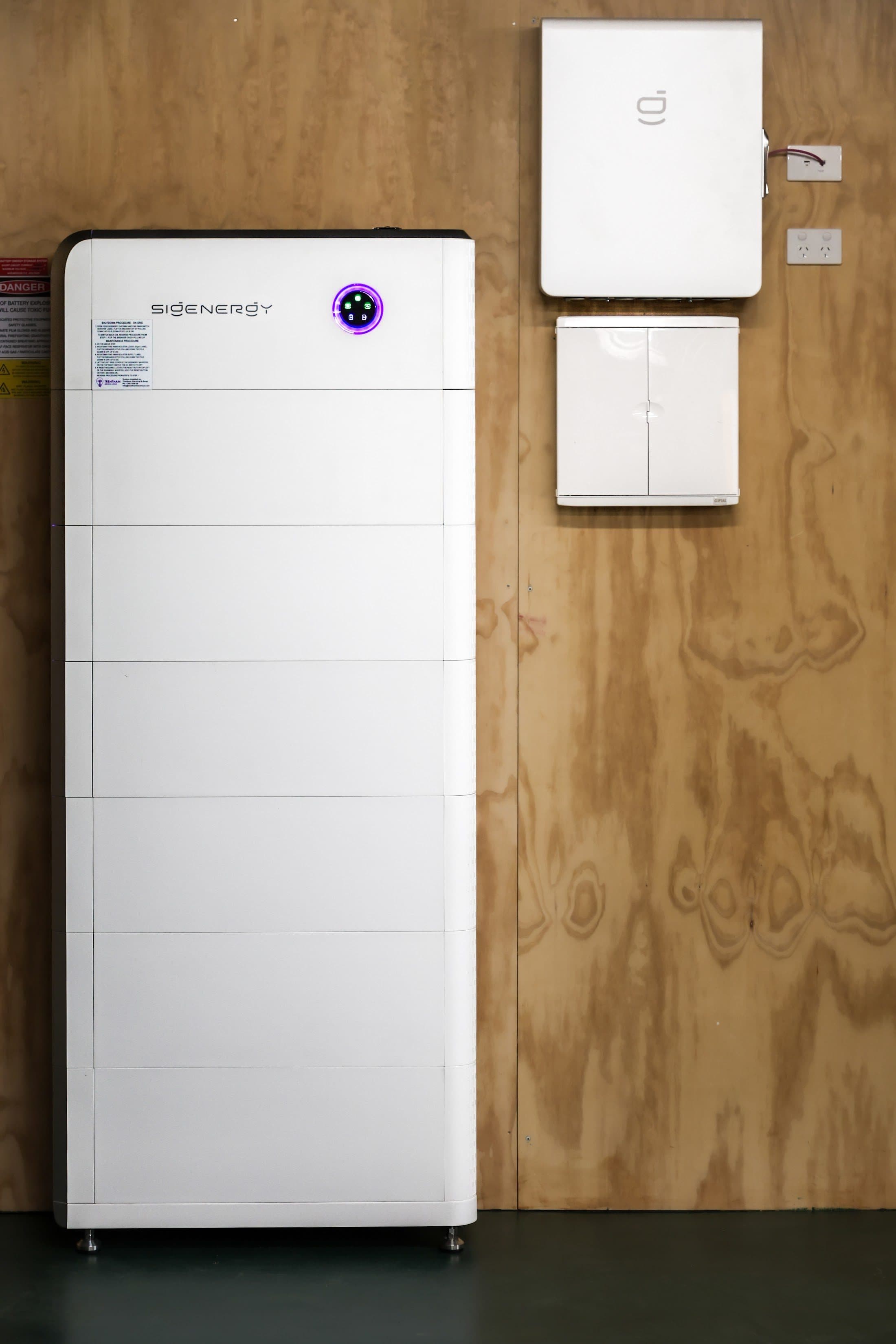
Vehicle to grid for homes is still at the trial stage in Australia, and only some cars support it. The Sigen hardware is approved and ready, and the feature arrives by a software update. We'll tell you plainly when your car and your retailer can use it.
AC from Sigenergy
The Sigen EV AC charger.
For a home without a SigenStor, or a second car, Sigenergy's wall charger comes in all three AC sizes and runs in the same app.
Single phase
The right charger for most homes and most cars.
Three phase
For a three phase home and a car that takes 11 kW.
Three phase
Only worth it for the few cars that accept 22 kW, or a business fleet.
- Charging modes: 100% solar, solar boost, battery boost, fast, and AI
- Switches between one and three phase to follow spare solar
- Load management, so the charger never trips your main switch
- Built in DC fault protection, rated IP65 for an outside wall
Which one for you
Our short answer.
- 1
Single phase home
A 7 kW single phase charger. It adds a full day's driving in about two hours, and you'll rarely need more.
- 2
Three phase home, 11 kW car
An 11 kW three phase charger. Close to twice the speed of single phase, without paying for 22 kW the car can't use.
- 3
You have, or want, a SigenStor
The DC module. The fastest home charging there is for any car with a CCS2 plug, powered by your own panels.
Before we quote a charger
What we look at.
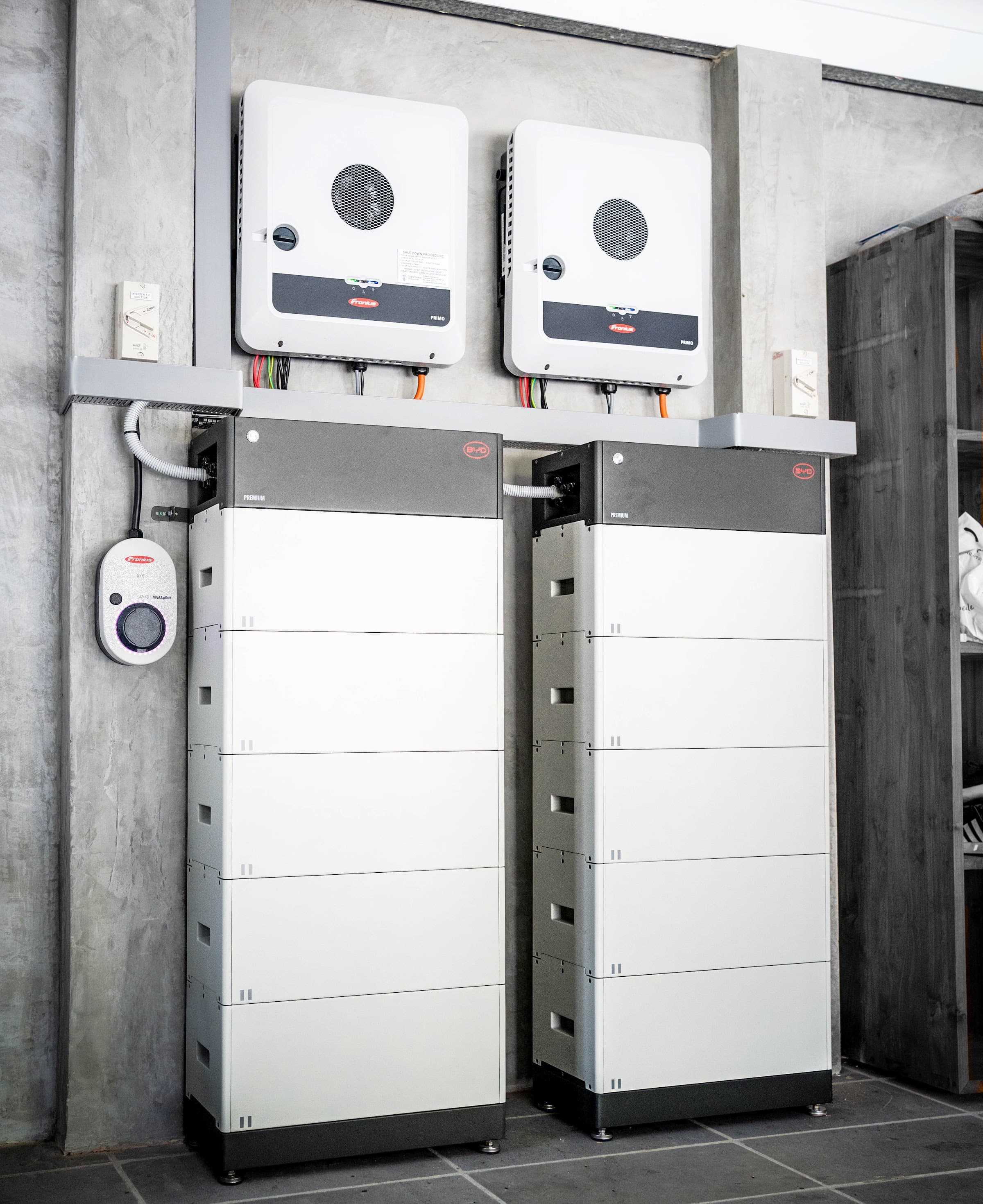
We also install the Fronius Wattpilot and GoodWe chargers where they suit an existing system.
Your supply
Single or three phase, and whether the switchboard can carry a charger without an upgrade. If it can't, we'll tell you.
Your car
Its on board charger limit, so you don't pay for speed it can't use.
Your solar
How much spare power you really have during the day, and whether charging on it beats an off peak rate.
What's next
A second car, a bigger battery or vehicle to home, without redoing the work.
Also from us
The gear behind the charger.

Energy Plan Finder
Is your battery on the right plan?
Drop in your smart meter file or a bill and we rank every plan on your network by what you would really pay, with your solar, battery and EV simulated the smart way. Free, two minutes.
Get the right charger for your car.
Tell us your car, your supply and your address. We'll recommend a charger and show you what it costs to run.