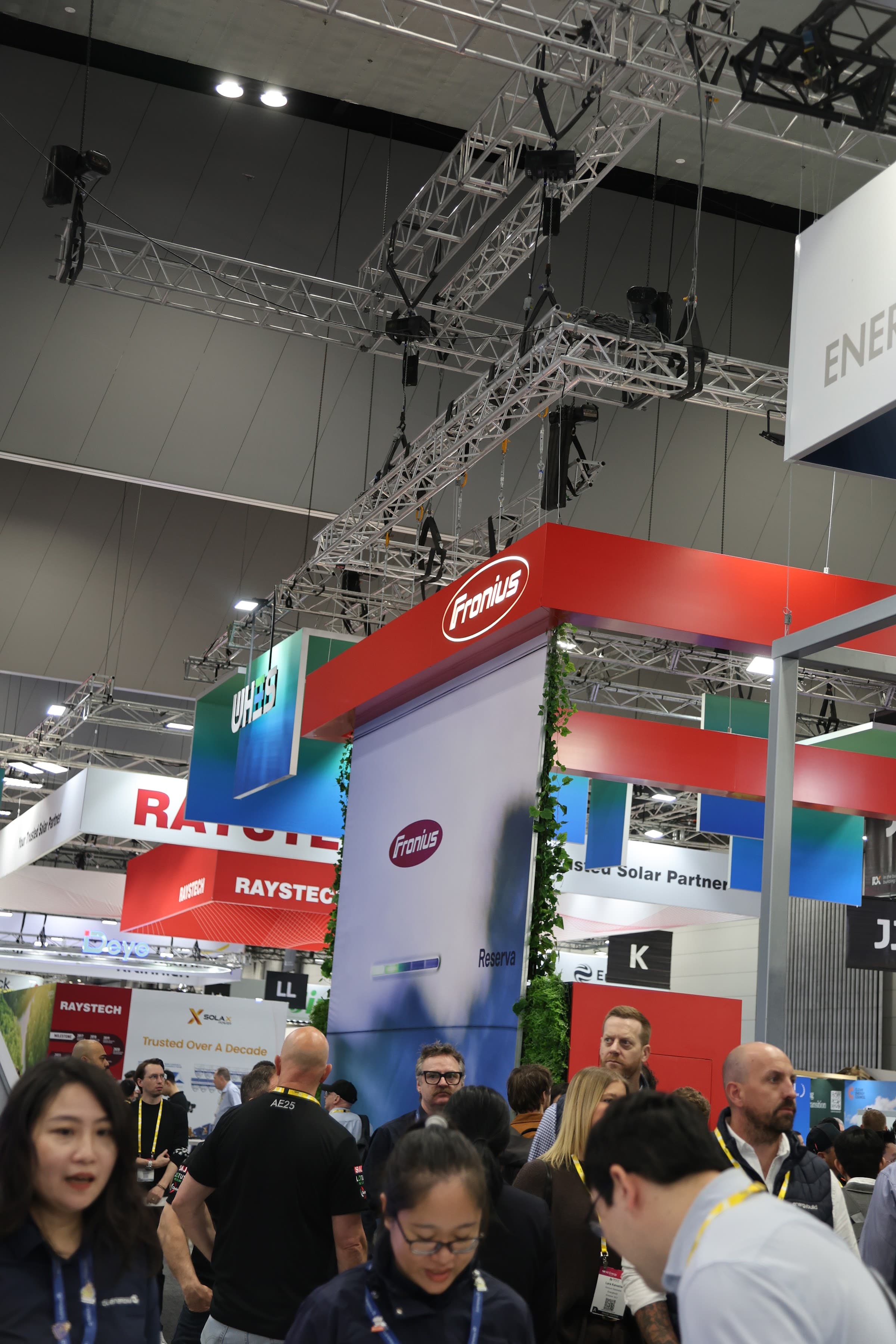
A straight 2026 watchlist: Fronius Reserva, Sigenergy's 9 kWh module and Neo, the 15 kWh FranklinWH aPower, AIKO's 500 W panel and V2G chargers.
Of the solar and battery products launched or announced for Australia over the past year, four are on sale and worth knowing about now: the Fronius Reserva battery, Sigenergy's new 9 kWh SigenStor module, FranklinWH's 15 kWh aPower and AIKO's 500 W Neostar panel. Two more are real but not settled here yet: Sigenergy's SigenStor Neo and bidirectional car chargers. This list sorts what you can buy and have installed in Central Victoria from what is still a press release, as of 31 October 2026.
Available now: Fronius Reserva
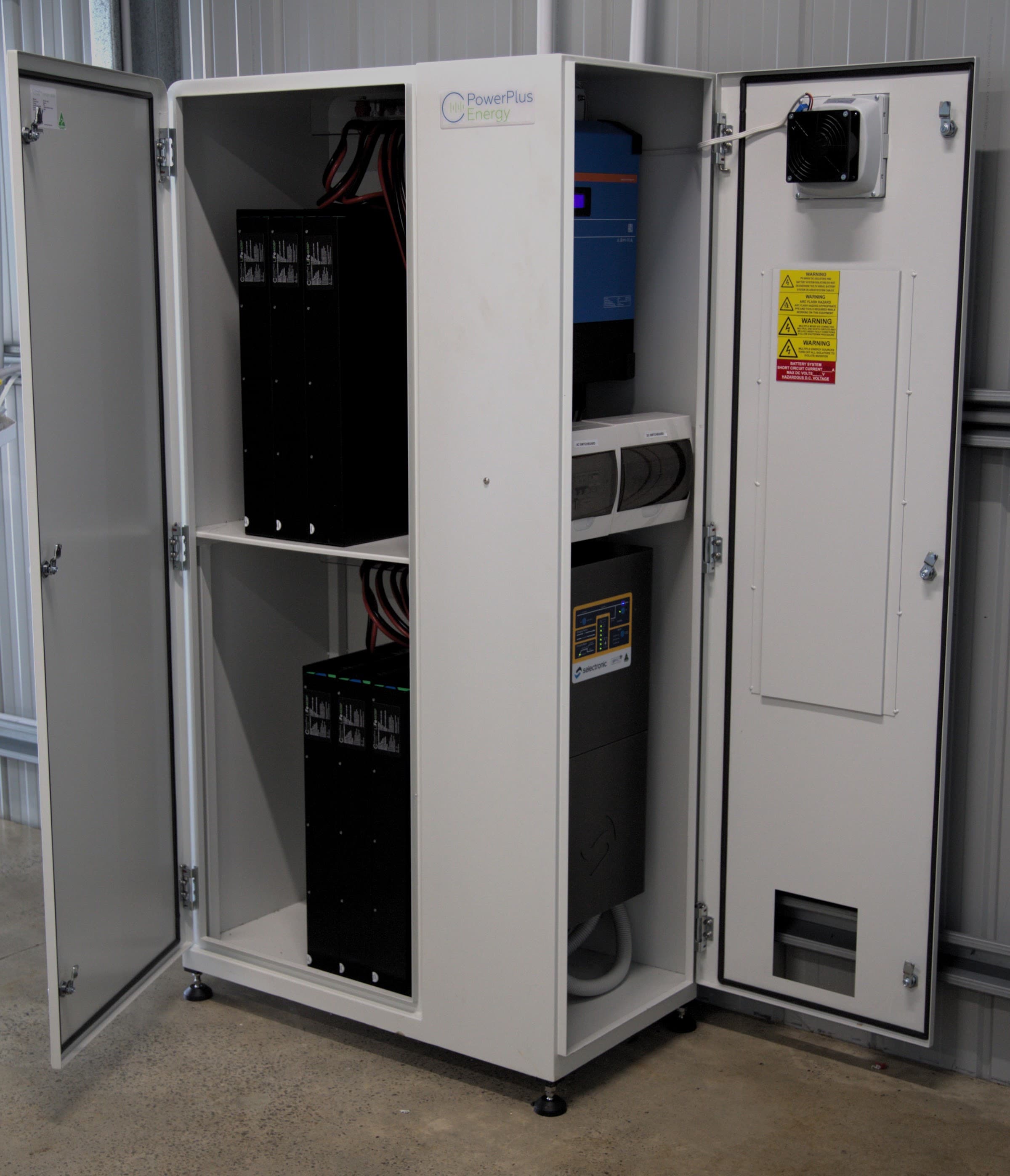
Fronius went back into batteries with the Reserva, announced for Australia in July 2025 and available to install from October 2025. It is a high voltage LFP battery built to sit beside a Fronius GEN24 Plus hybrid inverter.
- 3.15 kWh modules, two to five per tower, for 6.3 to 15.8 kWh usable per tower
- up to four towers in parallel, 63 kWh at most
- the single phase Primo GEN24 works only with the 6.3 and 9.5 kWh versions; the three phase Symo GEN24 takes the larger sizes
- 10 year warranty with at least 80% of usable energy left at year 10
- backup and black start capable, but automatic backup needs Fronius's backup controller and switch
The honest trade off is the switchover. A Fronius backup system does not hold the lights on with no flicker the way a 0 ms system does; there is a short gap while it changes over. For most homes that is a reset of the microwave clock. For a home office or medical equipment it matters. Our Reserva local guide and our Fronius brand page go further.
Available now: Sigenergy's 9 kWh module
On 10 July 2026 Sigenergy announced a new 9 kWh SigenStor battery module for Australia, so a system grows in 9 kWh steps, with a $1,000 discount per module through its installer network. Six modules make a 54 kWh stack. Sigenergy's release pitched the module against the tiers of the federal Cheaper Home Batteries Program, where larger systems earn a smaller rate on the extra capacity, so check the rebate on your exact size before you choose.
Some review sites still list Sigenergy's older 5 and 8 kWh sizes, so read the module name on any quote. Our Sigenergy brand page lists everything the system does.
Available now: the 15 kWh FranklinWH aPower
FranklinWH launched an enhanced aPower in Australia and New Zealand on 4 May 2026. The usable capacity rises from 13.6 kWh to 15 kWh, and the warranted throughput from 43 MWh to 60 MWh, a 40% increase. pv magazine's coverage notes the 15 kWh size suits the Cheaper Home Batteries Program changes that took effect on 1 May 2026.
A naming note: in the United States this battery is sold as the aPower 2. The Australian release calls it the enhanced 15 kWh aPower. If a quote says aPower 2, ask which one it means. FranklinWH matters to us for rural work because the aGate controller handles generator integration and switching circuits on and off, and we have used it on a custom off grid build, written up in our FranklinWH project article.
Available now: AIKO's 500 W Neostar
At SNEC in June 2026 AIKO announced that its Neostar 3P54 had reached 500 W at 25% module efficiency in the standard 1762 by 1134 mm residential size, and that these Gen 3 500 W modules are now available through its authorised Australian distributors. The 54 cell range also added cyclone testing for Australian wind regions C and D, on top of TÜV Rheinland certification to 40 mm hail.
What that means on a roof: more power from the same footprint. On a small or broken up roof that can be a panel or two's worth of extra output. On a big open roof it changes little. We wrote up what AIKO panels actually do in shade and heat in our AIKO field notes.
Announced, not settled here: SigenStor Neo
Sigenergy unveiled SigenStor Neo in March 2026, previewed it in Sydney in May and announced a worldwide launch in July. Its headline change is a 63 A backup switch built into the unit, so most homes would not need a separate gateway. We have not found an Australian datasheet, price or Clean Energy Council listing as of 31 October 2026, and published module sizes disagree. Our SigenStor Neo article sets out what is confirmed and what is not.
Announced, not settled here: bidirectional chargers
A bidirectional charger lets an electric car power the house (vehicle to home) or export to the grid (vehicle to grid). The pieces are arriving in Australia:
- StarCharge launched its Halo bidirectional DC wallbox here in July 2025, in 7.4 and 11 kW versions, and said it was then in the final stage of certification to AS/NZS 4777.2
- Sigenergy's SigenStor DC charging module, 12.5 or 25 kW, is bidirectional hardware
- the Clean Energy Council has been accepting bidirectional charger applications against the updated grid connection standard
But as Electrical Connection reported in July 2026, the harder part is now the coordination between standards, charger approvals and network connection rules, with the networks still in discussion with car makers and charger suppliers. A bidirectional charger also needs a car that supports it, so check your car's handbook before you count on it.
Our position for Central Victorian homes: do not pay extra for vehicle to grid today expecting to use it soon. If you are buying a charger now, buy the one that suits your car and your solar, and treat bidirectional ability as a bonus. Our EV charging page covers the chargers we fit now.
How we judge a new product before we fit it
- Is it on the Clean Energy Council's approved list? No listing, no federal battery discount and, for an inverter, no grid connection.
- Is there an Australian office and an Australian warranty document? A launch event is not support.
- Can we get parts and training through a local wholesaler? A battery we cannot service quickly is a battery we would rather not sell.
- What does it do on the worst day, not the best? A frosty June week, a blackout during a storm, a pump starting under load.
If you are weighing up one of these products for your home or farm, send us a recent bill and your address through our contact page and we will come back with a design that uses what is actually available.
Questions
Is the Fronius Reserva available in Australia?
Yes. Fronius announced it for Australia in July 2025 and it has been available to install since October 2025. It pairs with Fronius GEN24 Plus hybrid inverters, from 6.3 to 15.8 kWh per tower and up to 63 kWh with four towers.
Is the FranklinWH aPower 2 sold in Australia?
FranklinWH launched an enhanced 15 kWh aPower in Australia on 4 May 2026, with usable capacity up from 13.6 kWh and warranted throughput up to 60 MWh. The US version of a 15 kWh aPower is called the aPower 2; the Australian release does not use that name.
Can I use my electric car to power my house in Victoria?
The chargers and the standards are arriving, but network connection rules and the range of compatible cars were still being worked out as of mid 2026. Check with us before you buy a car or charger on the strength of vehicle to home.
Should I wait for new products before buying a battery?
Only if a specific product solves a problem you have. Batteries improve every year, and waiting always looks attractive. If you need backup or want lower bills this winter, the products that are approved and available now are good ones.
Sources
- Fronius gets back into solar batteries with Reserva (SolarQuotes, updated 21 July 2025)
- Sigenergy cuts battery costs with $1,000 a 9 kWh module discount (Sigenergy release via Macau Business, 10 July 2026)
- FranklinWH introduces enhanced 15 kWh aPower in Australia and New Zealand (pv magazine Australia, 5 May 2026)
- AIKO reinforces Australian growth with SNEC 2026 announcements (Energy Matters, 11 June 2026)
- Sigenergy launches SigenStor Neo worldwide (GlobeNewswire via dpa AFX, 5 July 2026)
- StarCharge officially launches Halo V2G charger in Australia (pv magazine Australia, 1 July 2025)
- V2G in Australia: the pathway is finally taking shape (Electrical Connection, 16 July 2026)
Written by the Trentham Energy team.