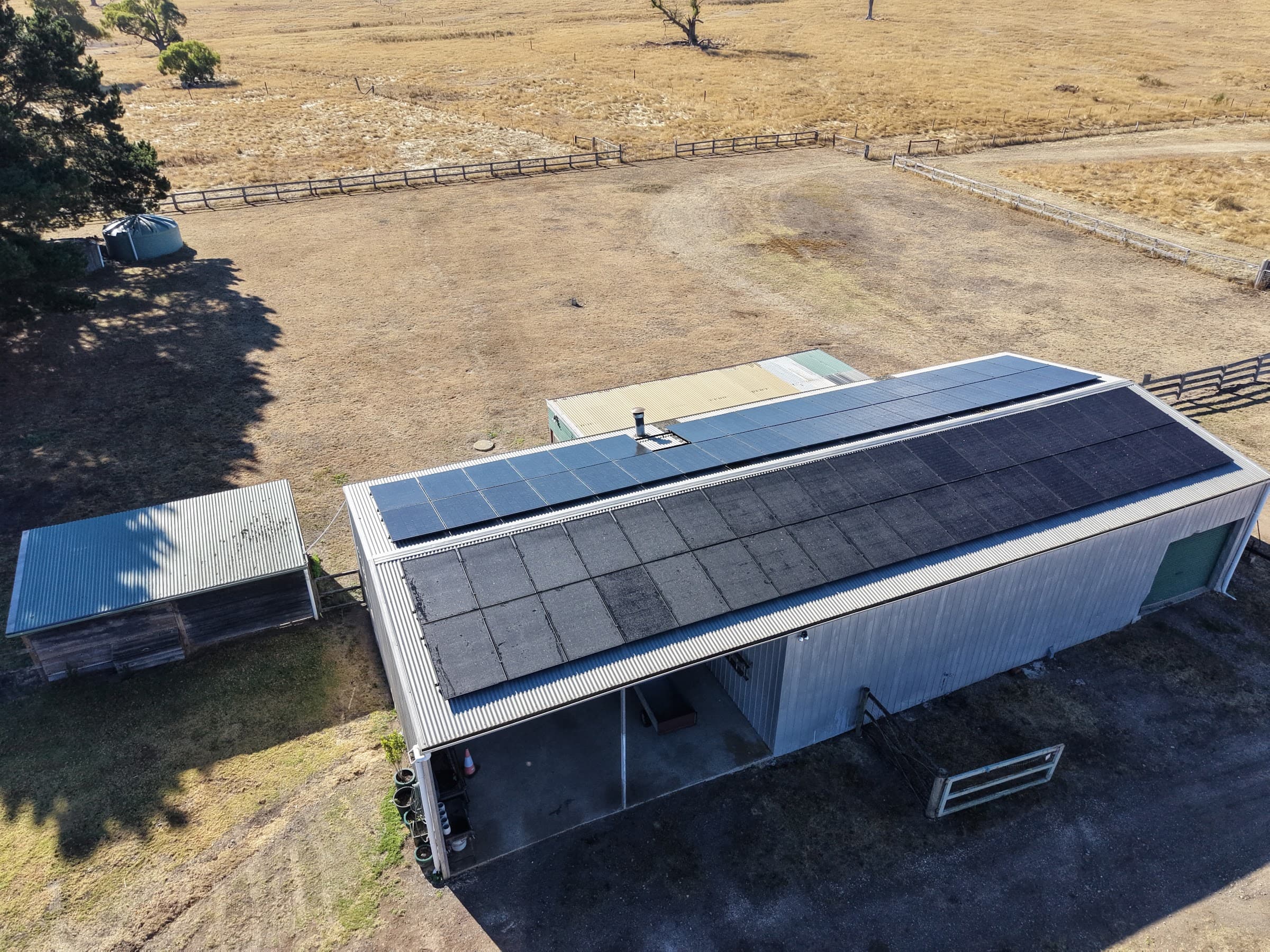
Farrowing heat is the biggest energy use in most piggeries, and it runs at night. How solar, a battery and biogas fit, using Australian Pork audit data.
In most piggeries the biggest energy use is keeping piglets warm in the farrowing shed, and that load is highest on cold nights when solar makes nothing. So the order of work matters: cut the heating load first, put solar on the daytime loads (feed, pumping, effluent and any fans), use a battery for the night heating and for outages, and look at biogas only if you run a conventional piggery with effluent going to a pond, where it can replace both electricity and gas around the clock.
Where the energy goes in a piggery
Australian Pork Limited's Understanding energy in pig production (May 2018) draws on its Energy Audit program. The numbers that matter:
- heating farrow rooms is 69 percent of total energy use on farrow to wean units and 49 percent on farrow to finish units
- farrow room heating averages 10 kWh per pig per year, with a range of 5 to 25
- pumping water averages 10 percent of total energy, ranging from 1 to 37 percent
- ventilation averages 6 to 9 percent of shed energy costs, though it ranged from nothing to over 35 percent of energy use across the farms audited
That last point separates pigs from poultry. On the average piggery in the audits the fans are a small share, while the heaters in the farrowing crates do most of the work.
For scale, a 1,950 sow farrow to finish piggery in Victoria profiled in the industry's PigGas reports in December 2013 used 633,366 kWh of electricity and 44,744 litres of LPG a year across four sites.
Fix the heat lamps before you buy anything
The cheapest kWh is the one you stop using. Australian Pork monitored crate heating through a winter in curtain sided sheds with creep covers and found:
- 175 W heat lamps used 4.0 kWh per crate per day
- 250 W radiant bar heaters used 2.7 kWh per crate per day
The booklet notes 175 W lamps are common in cooler climates such as Victoria. Swapping to radiant heaters with good controllers and creep covers takes about a third off the crate heating load in that trial, and it shrinks every other part of the system you then size: fewer panels, a smaller battery, a smaller backup generator.
Pumps are the other quick win. The booklet says centrifugal pumps can run at 60 to 75 percent efficiency, but many were measured at 30 to 50 percent because of poor selection, suction lines, friction and leaks.
What solar does in a piggery
Solar covers the daytime work: feed milling and liquid feed systems, water and effluent pumping, shed lighting, any mechanical ventilation, and the daytime share of the heating.
Australian Pork's own example is a 425 sow farrow to finish piggery in Victoria using 127,000 kWh a year, where a 44.5 kW solar system was modelled to cut grid consumption by 34 percent while using 71 percent of the solar on site. Across the audit group, systems of 5 to 99 kW used 60 to 99 percent of their output on farm and offset 15 to 48 percent of grid electricity, with smaller piggeries generally offsetting a higher share.
The booklet also carries a warning worth repeating. Of six solar installations the audit group's farmers had made, five were producing 12 to 82 percent less than expected. Monitor generation from day one and compare it to the design figure every month. An underperforming string shows up as a gap in the inverter's data long before it shows up on a bill.
For the energy cost itself: Solar Choice's August 2026 index puts a 50 kW commercial system in Melbourne at $47,090 including GST after the STC discount, or $42,809 excluding GST for a business that claims the GST. The European Commission's PVGIS model gives about 1,460 kWh per installed kW per year at Trentham. Over 25 years that is 1,825,000 kWh from 50 kW, or about 2.3 cents per kWh excluding GST before maintenance, panel ageing and finance. Compare that with what you pay per kWh now, and remember only the solar you use on farm earns that full rate.
What a battery adds
Two things the panels cannot do on their own.
- Night heating. A battery charged by midday solar can carry part of the evening and night crate heating. Size it for the heating load left after the radiant heater swap, not the old lamp load.
- Outages. Newborn piglets depend on the crate heaters, and a winter storm outage takes them out. A battery system with a backup circuit for the farrowing shed holds the heaters, the water and the alarms up through an outage, with a generator behind it for a long one.
A free range piggery at Tooborac in Central Victoria, written up by Agriculture Victoria's Energy Smart Farming program, runs a 15 kW solar system with battery storage at the site that holds its meat cool store and farm shop, because the farm has regular power outages and the cool store has to stay cold for food safety. Its second site added 22.5 kW of solar to a 5 kW system.
Biogas is a different scale of project
Biogas is the one option that makes energy at night as well as by day. The usual setup is a covered anaerobic pond that captures methane from the effluent, feeding a gas engine for electricity, a boiler for heat, or both.
Australian Pork's feasibility work found biogas plants can typically offset 50 to 100 percent of energy purchased, with the largest investment in the audit group at $2.0 million. The Victorian piggery in the PigGas report had built three covered ponds, was flaring the gas from one, and was planning gas engines to replace all of its electricity and LPG use.
Biogas depends on manure reaching a pond, which suits conventional shed piggeries that flush effluent. It needs scale, engineering and ongoing engine maintenance. Solar and a battery suit almost any piggery, and the two are not exclusive: a site with biogas can still use solar for daytime load.
Questions
How much electricity does a piggery use per sow?
It varies widely with the system. The Victorian 1,950 sow farrow to finish piggery in the PigGas report used 633,366 kWh a year, about 325 kWh per sow, and the 425 sow Victorian example in Australian Pork's booklet used 127,000 kWh, about 300 kWh per sow. Your own interval data is the number to design on.
Should I replace heat lamps with heat pads or radiant heaters?
Australian Pork's winter monitoring found 250 W radiant bar heaters used 2.7 kWh per crate per day against 4.0 for 175 W heat lamps. Controllers and creep covers matter as much as the heater type, so measure a few crates before changing a whole shed.
Can solar run a piggery off grid?
The daytime loads, yes. The farrowing heat at night is the hard part, because it peaks on cold winter nights when solar output is lowest. Off grid would need a large battery and a generator, or biogas, and is usually only worth it where the grid connection is poor or expensive.
If you send us a year of meter data and a sketch of the sheds, we will come back with a right sized design. Our generators guide covers backup, and the energy plan finder checks your tariff.
Sources
- Australian Pork Limited, Understanding energy in pig production (May 2018)
- PigGas Report 16, 1,950 sow farrow to finish piggery, Victoria (December 2013)
- Energy Smart Farming, McIvor free range piggery case study (Agriculture Victoria)
- Solar Choice, solar panel costs price index (October 2026, commercial table August 2026)
- PVGIS, European Commission Joint Research Centre (Trentham, 30 degrees, north)
Written by the Trentham Energy team.