
SAPS explained
Standalone power systems in Victoria: who qualifies and how the Powercor and AusNet programs work.
A standalone power system, or SAPS, is an off grid system your electricity distributor owns and runs in place of poles and wires. Powercor and AusNet offer them to a small number of existing customers at the end of long rural lines, at no extra cost compared with staying connected. Everyone else buys their own, and that is most of our customers.
What a SAPS is
The same gear, on the network's side of the meter.
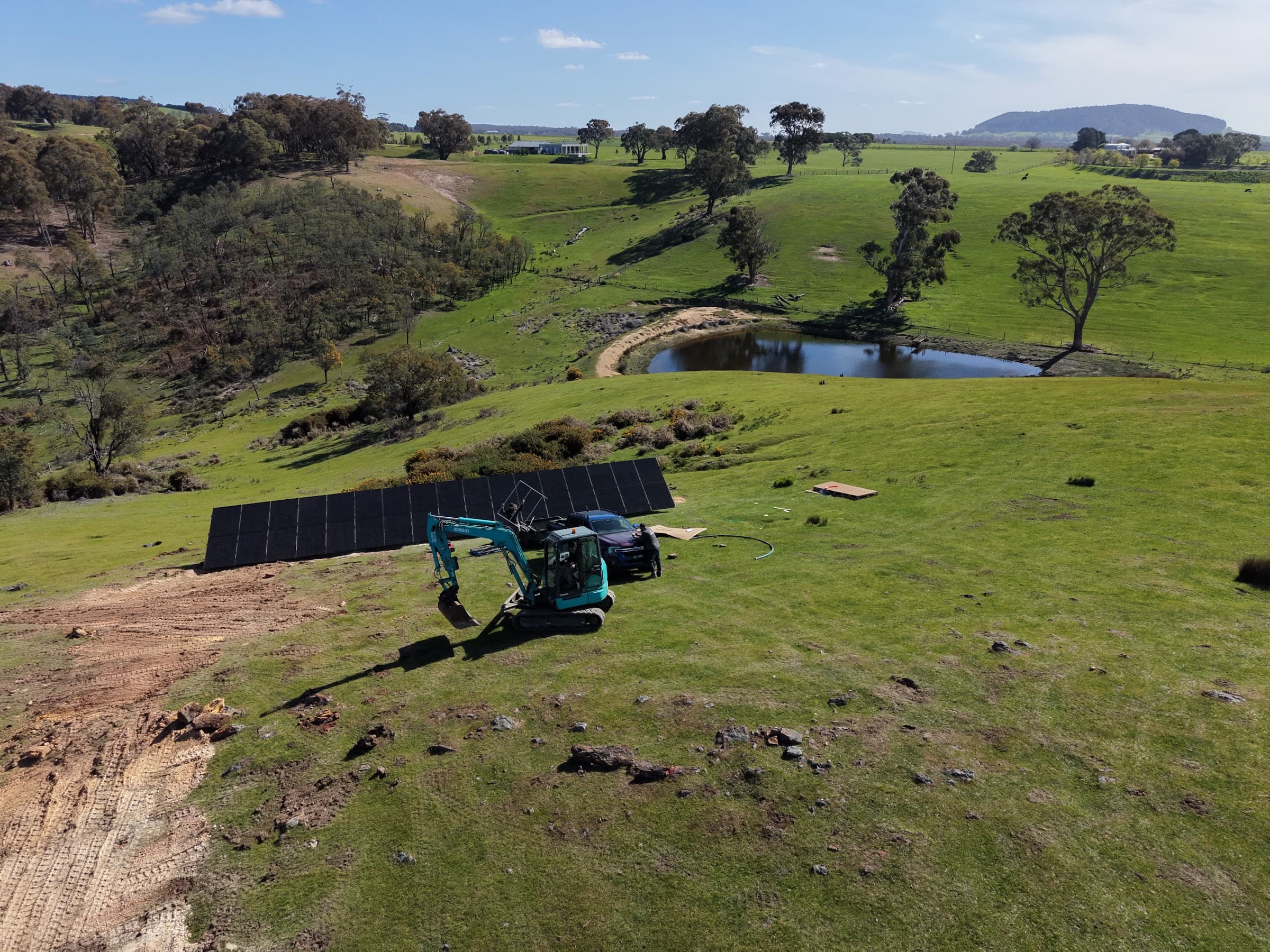
A SAPS is solar, a battery and a backup generator in a cabinet or shed on or near your property, sized to carry the property's full load. The difference from a private off grid system is who owns it. In a regulated SAPS the distributor installs, maintains and operates it, the powerline to the property can be retired, and you keep your retailer, your bill and the consumer protections you have today. The system sits on the network side of your smart meter, so to the house nothing changes.
Powercor
Who Powercor offers one to.
Powercor's own page sets out four tests. A Powercor owned SAPS is available only to customers who are, in its words, "connected to a rural feeder approaching the end of its working life", where "the cost of building, upgrading or maintaining their connection exceeds a SAPS", who agree to "abolish their standard network connection and transition to a SAPS", and who have "suitable land available". Eligible customers get the SAPS at no extra cost compared with a normal connection, and Powercor says it will contact you when a SAPS is the cheaper option for the network. There is no application form; the network identifies the sites, usually the last few customers on a long line that is due for replacement.
AusNet
AusNet's stand alone power program.
AusNet's program is for existing customers already connected to its network who meet its criteria, typically a cluster of one to five remote customers where a line is expensive to keep. It runs a six stage engagement process with the property owners covering the land lease, where the system sits and confirming it can carry the property's maximum load, and most of its systems include a backup generator alongside the solar and battery. AusNet asks interested customers to contact it directly.
The rules
Why distributors can do this now.
Until 2022 a distributor had to keep the wire. In February 2022 the Australian Energy Market Commission changed the national rules so a distributor can supply an existing customer through a standalone system where that is cheaper than the poles and wires, with the customer keeping the same protections and reliability standards. Victoria switched the framework on through its own regulations, approved by the Governor in Council in July 2024. Energy Safe Victoria still requires every system, network or private, to be installed by licensed electrical workers.
The bushfire history
SWER lines, Black Saturday and the first SAPS.
Victoria's standalone systems grew out of the 2009 Royal Commission. The Powerline Bushfire Safety Program that followed, a ten year, $750 million program from 2012, offered standalone power system grants to targeted landowners at the end of high voltage lines in the highest risk areas, so the line could be shortened or retired. The program's benefits report counts 525 SWER lines retired in combination with SAPS installations in the Colac Otway Ranges. Those targeted grant rounds are not open today; the current route to a network owned system is through the distributor programs above.
If you do not qualify
A private SAPS, which is what we build.
Most people asking about SAPS are not at the end of a dying feeder. They are building on a block with no line, facing a connection quote, or living with an old system. For them the standalone system is their own: designed on their loads, owned outright, with a warranty, monitoring and a company in Trentham that answers the phone. The equipment is the same class as the network systems, Victron inverters and chargers with lithium storage and generator integration, and the Solar Victoria panel rebate applies to it.
Size yours in five minutes.
The sizing tool gives the array, battery, inverter and generator for your own loads. Then we come and look at the block.
Questions
Asked about this, often.
- Can I apply to Powercor for a SAPS?
- Not in the usual sense. Powercor identifies the customers for whom a SAPS is cheaper than keeping the line and contacts them. You can ask, and if you are one of the last customers on a long rural line it is worth asking, but the decision is the network's and the test is its cost, not yours.
- Do I lose my retailer or my protections on a network SAPS?
- No. Under the national framework a customer on a regulated SAPS keeps their retailer, their bill and the consumer protections and reliability standards they have today. The distributor owns and maintains the system; you are supplied through it the same way you were through the wire.
- What is the difference between a SAPS and going off grid myself?
- Ownership and eligibility. A network SAPS is the distributor's asset, offered only where it saves the network money. A private system is yours, sized for your loads, and open to anyone with the land and the sun. Both use the same class of equipment.
Sources
- Powercor, stand-alone power systems (eligibility criteria quoted above)
- AusNet, stand alone power systems
- AEMC, new rules allow distributors to roll out stand-alone power systems in the NEM (February 2022)
- Victorian regulated stand-alone power systems regulations, approved July 2024 (tabled paper)
- Powerline Bushfire Safety Program, benefits realisation report
- Victorian Government, stand-alone power system grants (media release)
- Solar Victoria, solar panel rebate: off grid homes are eligible
Written by the Trentham Energy team. Figures without a source are our own sizing model or our own installs.
Tell us about the property.
Where it is, what is on it, and what you need to run. We will tell you honestly whether standalone power stacks up and what it would take.