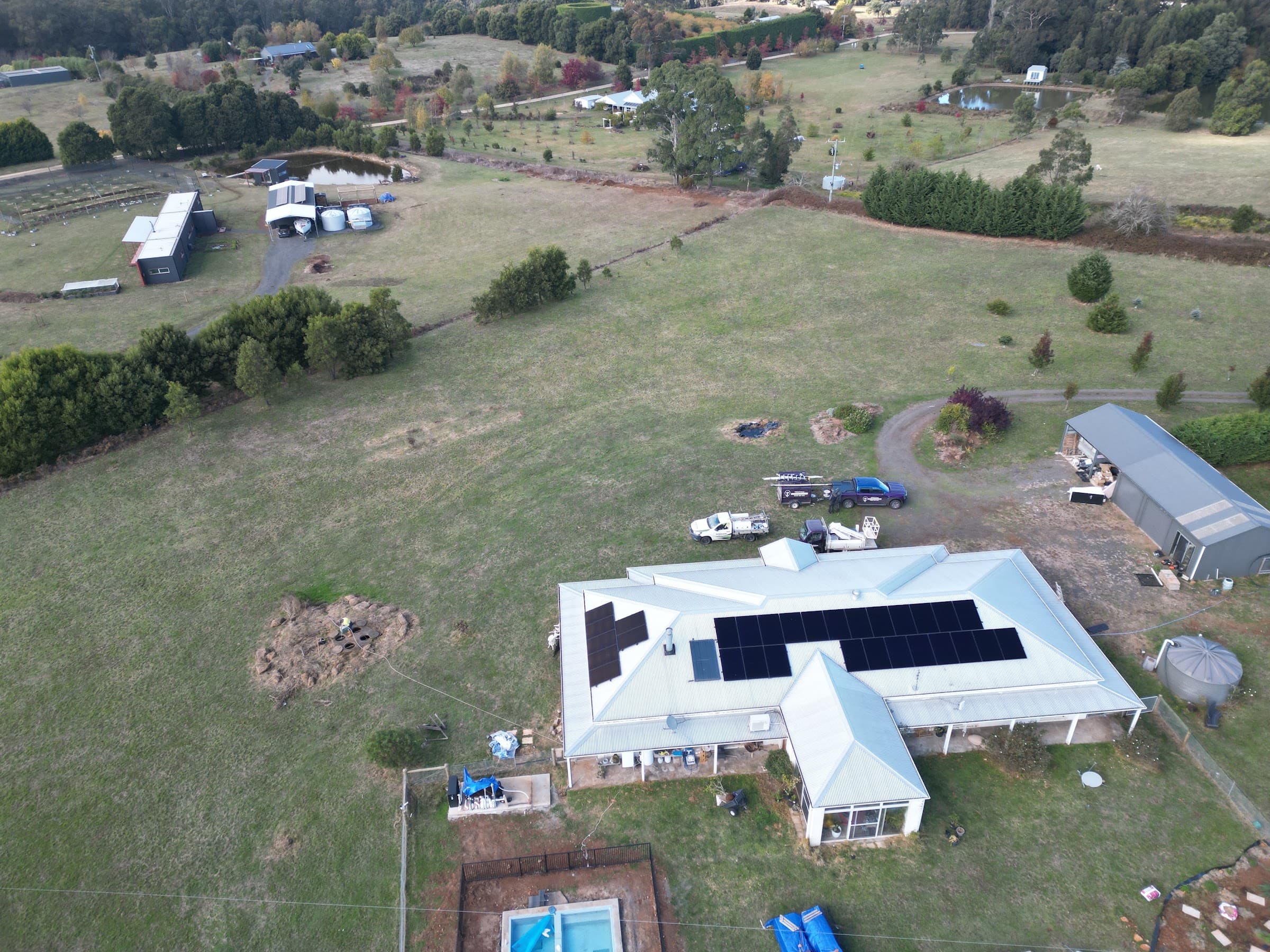
Fans use 68 to 88 percent of a meat chicken shed's electricity and run hardest on hot sunny days. How solar, a battery and a generator fit a poultry farm.
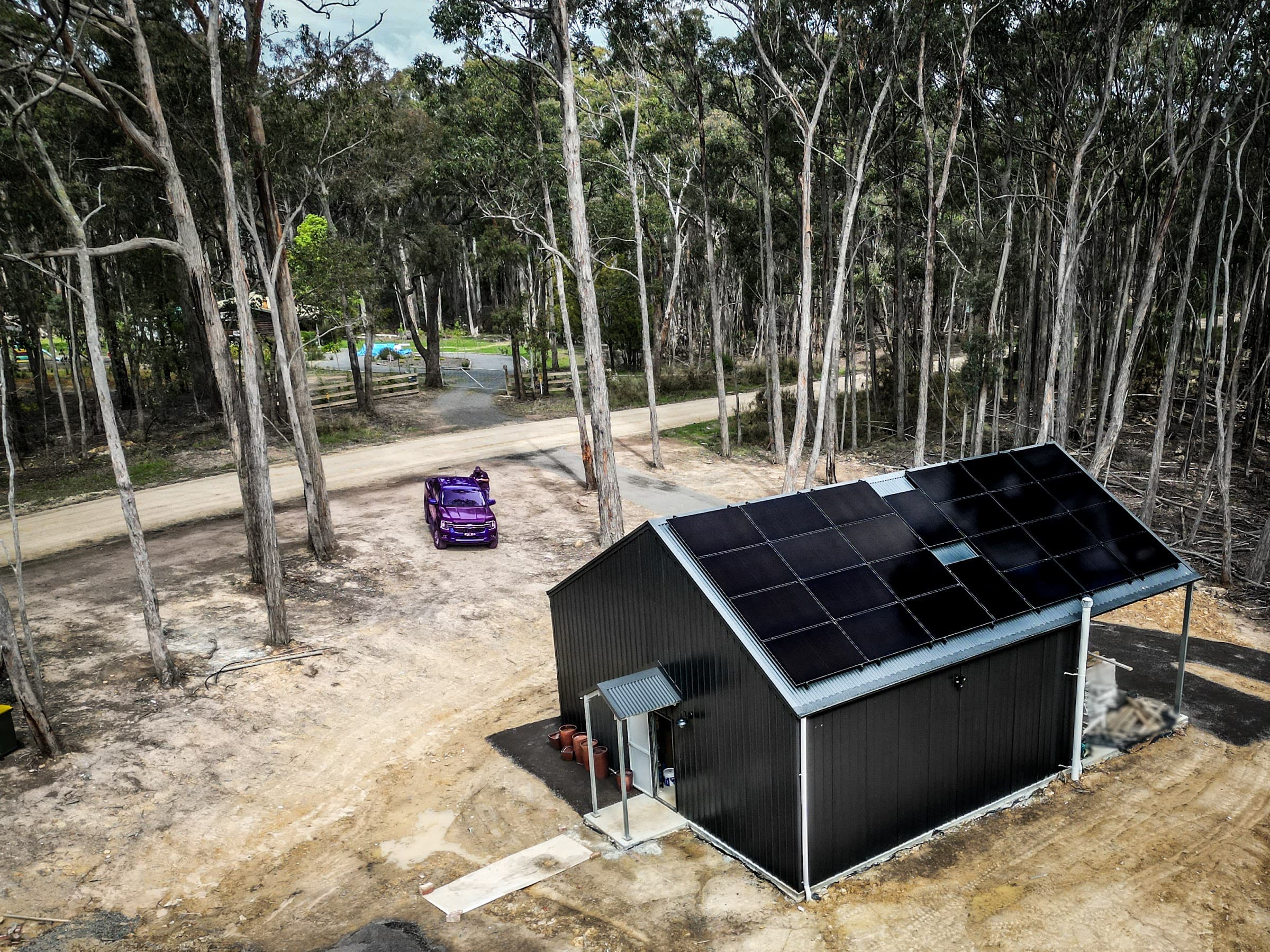
A poultry shed is one of the better farm loads for solar, because the fans that use most of its electricity work hardest on hot, sunny afternoons, exactly when panels make the most. A battery adds two things: it carries the night ventilation, and it holds the shed up the instant the grid drops, which matters because mechanically ventilated sheds must have backup power under the new welfare standards. The brooder heat is usually gas, so solar and a battery rarely replace that part.
What the electricity in a chicken shed is doing
The best Australian measurements come from energy monitoring at three meat chicken farms (four sheds) in southern Queensland in 2011 and 2012, by FSA Consulting and the University of Wollongong for the industry's research program, with the results published in 2014. They found:
- ventilation fans used 68 to 88 percent of each shed's electricity
- lighting was the second largest electrical load but under 10 percent on three of the farms
- electricity use was 43 to 67 kWh per tonne of liveweight produced, for comparable winter and summer batches
- summer peaks reached 350 to 430 kWh a day, and that peak use lasted around one week of the batch
- heating was LPG, and gas use varied widely between farms
So the shed's electricity is overwhelmingly fan power, it climbs with temperature and bird weight, and it peaks for a week or so at the end of a summer batch.
Victorian sheds sit in a cooler climate than southern Queensland, so the balance between summer fans and winter heating will differ, but the shape is the same.
Why fans and solar line up
Ventilation rate follows heat. On a 35 degree afternoon in January the tunnel fans and the evaporative cooling pumps are all running, and that is the middle of the solar day. The European Commission's PVGIS model puts a north facing array at Trentham at about 5.25 kWh per installed kW per day in January, falling to 2.43 in June, so the panels make the most in the months when the fans need the most.
At night the shed drops to minimum ventilation, and in winter the electric load is small while the gas heaters do the work. That is why most poultry solar is sized to the daytime fan load and exports or stores the rest, rather than chasing the whole year's usage.
The backup power rule
Agriculture Victoria says Victoria will bring in new poultry welfare regulations in mid 2027, aligned with the national Australian Animal Welfare Standards and Guidelines for Poultry. For chicken meat producers, its summary (updated 24 September 2026) says mechanically ventilated sheds must:
- be fitted with a back up power supply, tested in accordance with the manufacturer's recommendations
- have an automatic alarm system that immediately warns of ventilation failure
and corrective action must be taken if there are ventilation faults. The same summary sets stocking density limits by housing type and requires densities to be reduced when relative humidity above 70 percent, temperature above 32 degrees and ammonia above 15 ppm all occur for three consecutive days.
A diesel generator with an automatic changeover is the familiar answer. The weak point of a generator is the gap: it has to sense the outage, start, come up to speed and take the load, and on a hot afternoon a shed of heavy birds has little margin.
Where a battery fits in the backup plan
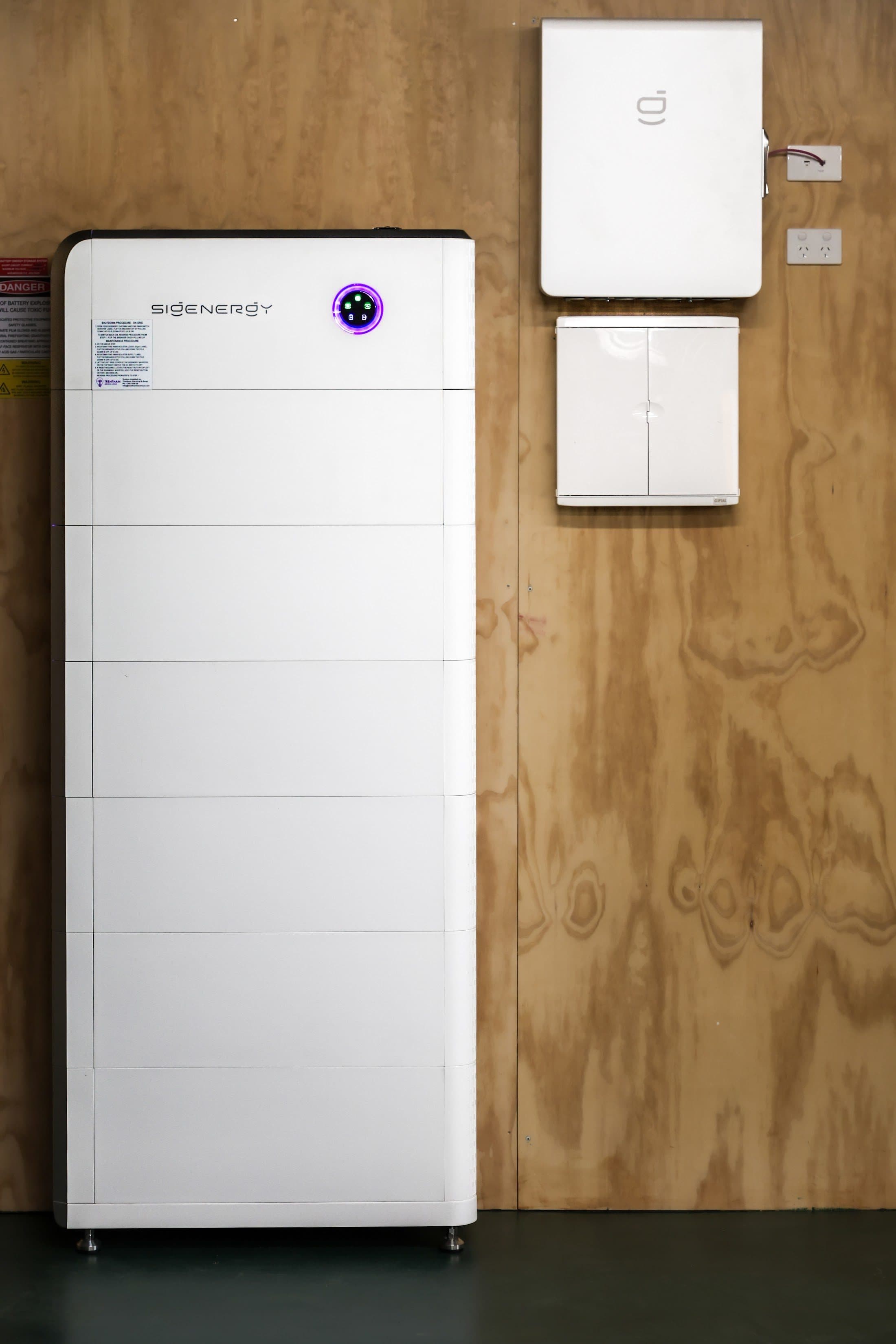
A battery and inverter can carry the fans through the first minutes or hours of an outage while the generator starts, or carry the whole night load on its own if the outage is short. It also covers the dips and brief interruptions that trip fans and controllers without ever starting the generator.
How fast it takes over depends on the equipment. Some battery systems switch to backup in a fraction of a second; others take a moment longer, which can be enough to drop a fan contactor or reset a controller. Check the inverter's switchover time against the shed's controller and fans before choosing one, and keep the generator starting automatically for a long outage.
A worked sizing example, with assumptions shown:
- night minimum ventilation of 10 kW across the shed (assumed, measure yours)
- carry it for four hours without the generator: 40 kWh of usable battery
- carry a summer afternoon fan load of 40 kW (assumed) for 30 minutes while the generator starts: 20 kWh and an inverter rated for 40 kW plus the motor starting surge
The surge matters as much as the kWh. Large fan motors draw several times their running current to start, so the inverter has to be sized for the start, or the fans need soft starters or variable speed drives. Variable speed fans, which the industry's research has looked at as an energy saving in their own right, also make a battery's job easier.
The alarm has to work when the power is off
An alarm that runs off the same supply as the fans is no alarm in a blackout. Keep the ventilation alarm on its own battery backed supply, test it on the schedule the maker sets, and make sure it reaches a phone, not just a siren in an empty yard. A battery system with remote monitoring adds a second set of eyes: an outage, a generator start and a low battery all show up on the dashboard.
Sizing solar for a poultry farm
- Get interval data from the meter for at least a full summer and winter, so the batch cycle and the fan peaks show up.
- Size the array to the daytime fan and cooling load across the year, not the one week peak.
- Check the tariff. A farm using more than 40 MWh a year is not on the Victorian Default Offer and is often on a demand tariff, where a battery that trims the summer kW peak earns more than it does on energy alone.
- Plan the backup as one design: battery, inverter, generator, changeover and alarm, tested together.
If the shed is three phase, every part of that has to suit three phase.
Questions
Does a chicken shed need backup power by law in Victoria?
Agriculture Victoria says the new poultry welfare regulations due in mid 2027 will require mechanically ventilated sheds to have a back up power supply, tested to the manufacturer's recommendations, and an automatic alarm that immediately warns of ventilation failure. Check the final regulations when they are published.
Can a battery replace the generator?
For short outages and the switchover gap, yes. For a long outage on a hot day the fan load is too big for most batteries to carry for hours, so the generator stays as the long run backup and the battery covers the start and the night.
Will solar heat the brooders?
Usually not. Brooding heat in meat chicken sheds is mostly LPG, and the Queensland monitoring found gas use varied widely between farms. Solar and a battery cut the electricity bill; reducing the gas is a separate question of insulation, heater type and shed management.
How much electricity does a chicken shed use?
The Queensland study measured 43 to 67 kWh per tonne of liveweight produced, with summer peaks of 350 to 430 kWh a day. Your own meter data is the only reliable number for your sheds.
If you send us a year of meter data and your shed layout, we will come back with a right sized design, or start at our contact page. Our guide to generators covers the backup side, and battery basics explains how backup circuits work.
Sources
- McGahan, Warren, Davis, Phillips and Naylor, Optimising farm energy use (meat chicken sheds), 2014
- Agriculture Victoria, new requirements for chicken meat producers (updated 24 September 2026)
- Brown, Variable speed exhaust fans for meat chicken sheds, AgriFutures Australia, 2018
- PVGIS, European Commission Joint Research Centre (Trentham, 30 degrees, north)
- Essential Services Commission, Victorian Default Offer 2026 to 27
Written by the Trentham Energy team.