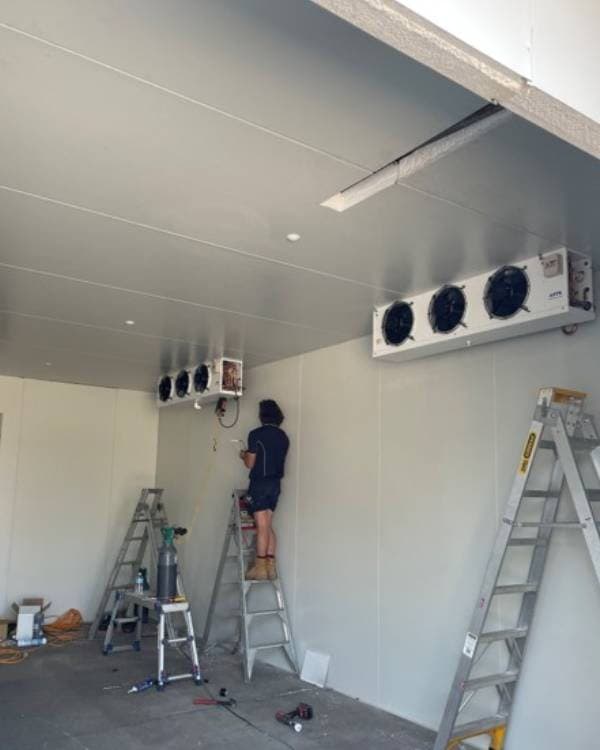
A coolroom works hardest on hot sunny days, when solar makes the most. How to size solar and a battery for farm, winery and orchard cold storage.
A coolroom is one of the best loads on a farm to run from solar. It runs every day of the year, and it works hardest on hot, sunny days, which is exactly when the panels make the most. Solar covers the daytime running; a battery covers the night and, more importantly, keeps the compressor going through a blackout so the stock stays below 5 degrees. Before adding either, make sure the coolroom itself is not wasting power, because every kWh saved is a smaller system.
Why refrigeration and solar line up
A coolroom compressor does not run constantly. It cycles: it runs until the room reaches its set point, stops, and starts again as heat leaks back in through the walls, the door and the product. On a hot afternoon heat comes in faster, the condenser outside rejects it less easily, and the compressor runs longer.
Solar follows the same season. The European Commission's PVGIS model puts a north facing array at Trentham, tilted 30 degrees, at about 5.25 kWh per installed kW per day in January and 2.43 in June. The panels make the most energy in the months the coolroom needs the most.
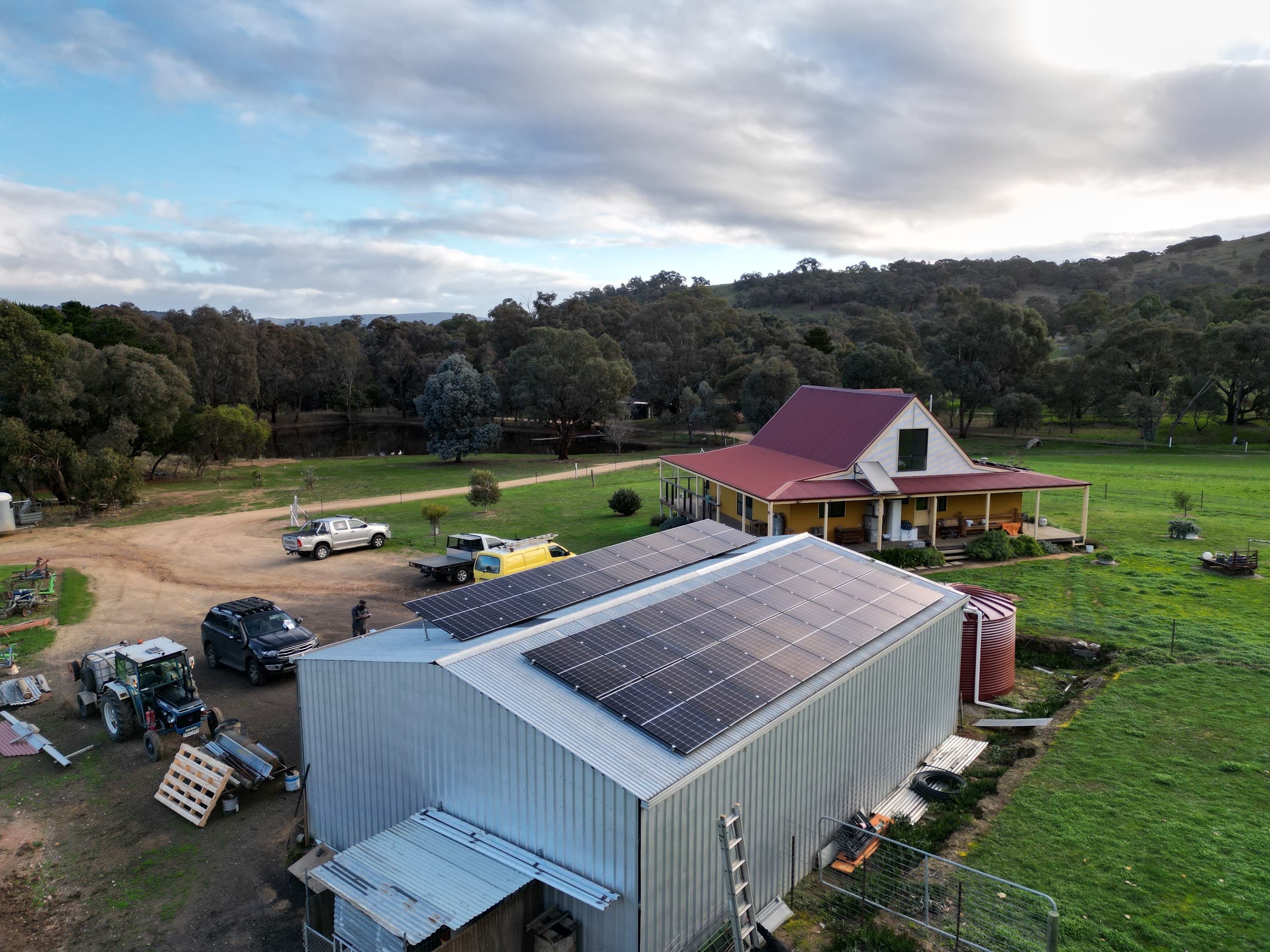
Refrigeration is often a farm's biggest single power user where produce is stored. A pear and stone fruit grower in the Goulburn Valley, reported in April 2019, said refrigeration was the most energy intensive part of the business; it put 200 kW of solar on the roofs of its storage sheds, cut its grid consumption by a third and reported its annual power bill falling by $62,000.
What the food rules ask of a coolroom
Food Standards Australia New Zealand's guidance under the Food Standards Code says potentially hazardous food should be kept at 5 degrees or below, or 60 degrees or above, unless a business can show another temperature is safe, and frozen food must stay frozen hard. For a farm gate shop, a winery kitchen or a meat cool store, a long blackout on a hot day is a stock loss and a food safety problem at once.
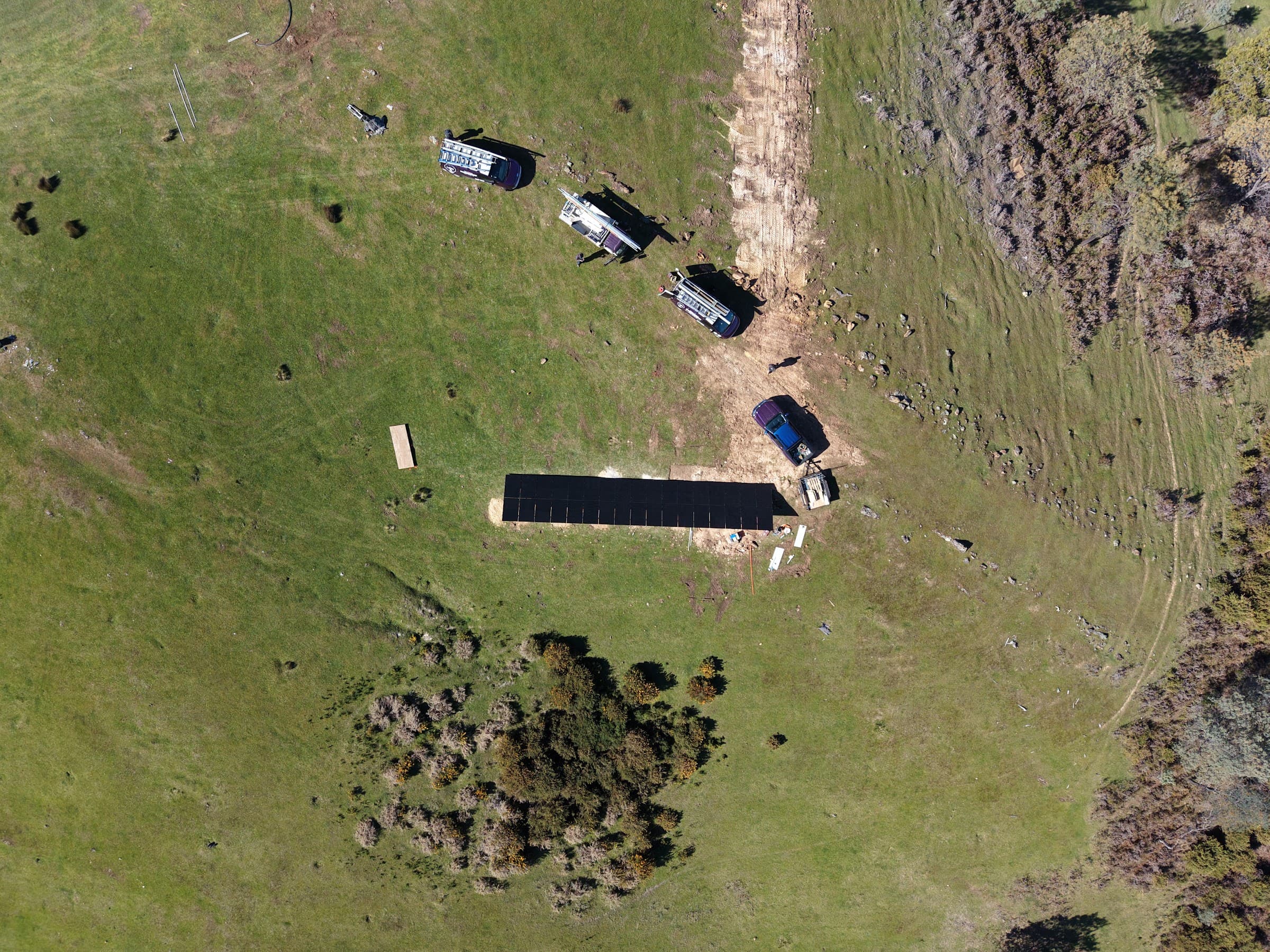
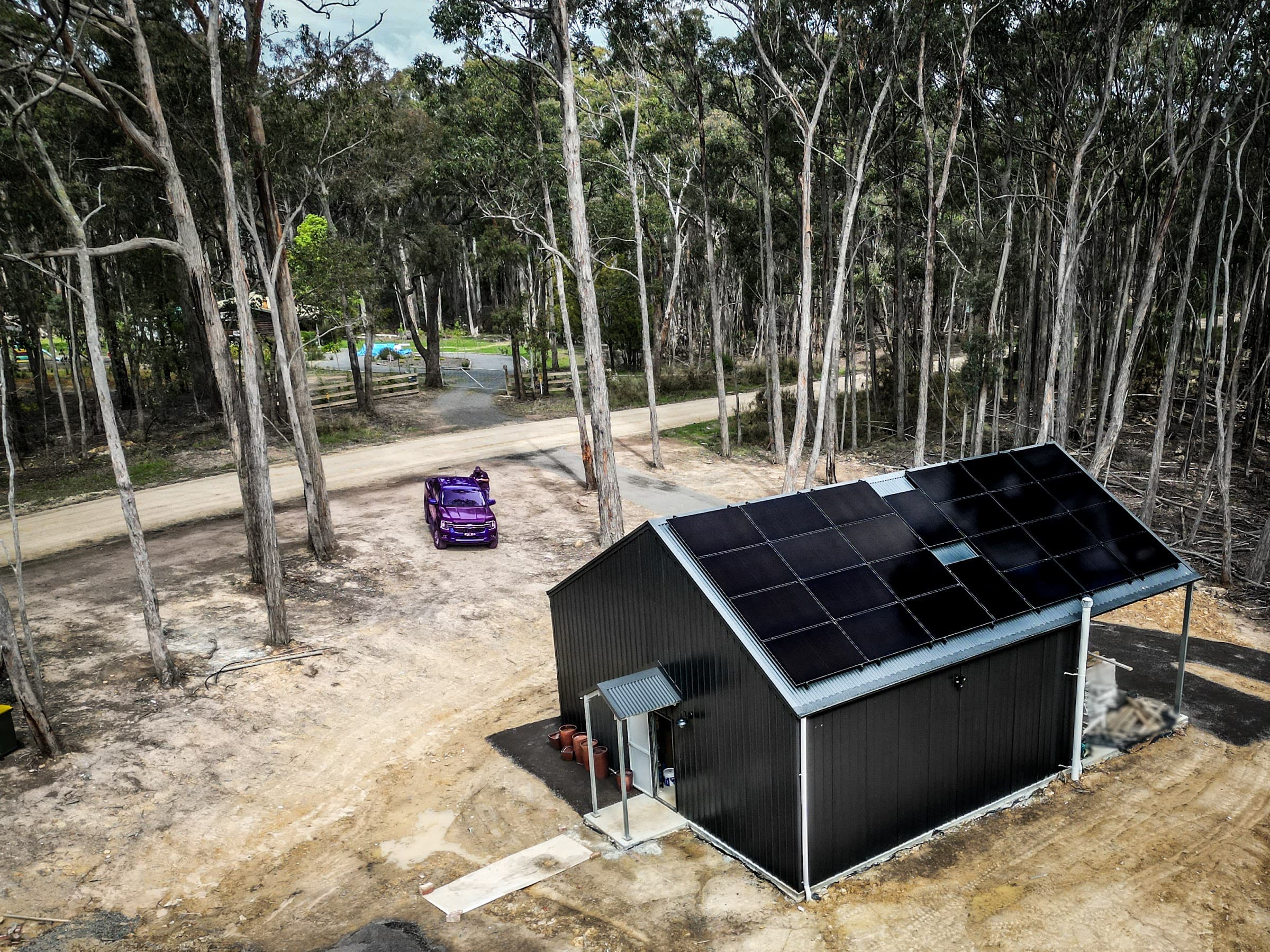
That is why an Agriculture Victoria Energy Smart Farming case study at a free range piggery near Tooborac put its meat cool store and farm shop on a 15 kW solar system with battery storage. The farm has regular power outages, and the battery lets the cool store hold temperature for food safety.
Fix the coolroom first
An industry and government study reported by HVAC&R News in 2019 found the potential energy waste in walk in coolrooms and freezers is more than 25 percent, and the Australian Institute of Refrigeration, Air Conditioning and Heating publishes a design manual, DA12 Energy Efficiency in Cold Rooms, on doing it properly. The usual culprits are the ones you can see:
- door seals that leak, and doors left open
- missing or torn strip curtains
- a condenser in full afternoon sun or with blocked fins
- iced up evaporator coils and poorly set defrost
- panels and floors with damaged insulation
- product loaded warm straight into the room
This is refrigeration work, not electrical work. Our sister business Spa Refrigeration in Daylesford, which has the same owner as Trentham Energy, works on coolrooms, commercial fridges and freezers across Hepburn Shire, Castlemaine, Kyneton, Trentham and Woodend.
What it costs to run, with the inputs shown
Assume a farm coolroom averaging 30 kWh a day across the year (measure yours; it could be half that or double).
- On the grid, at Powercor's Victorian Default Offer small business flat rate of 27.36 cents per kWh including GST: 10,950 kWh a year is about $3,000 a year plus the supply charge.
- On a time of use tariff, much of a coolroom's running falls in the 9 am to 9 pm weekday peak at 36.29 cents. That is the part solar removes.
- On a generator, the same 10,950 kWh at quarter load on a 16 kW diesel set, which burns about 0.63 litres per kWh by Cummins' published fuel table, at a net $2.04 a litre after GST and the 53.7 cent fuel tax credit, is about $14,000 a year in fuel. A generator should never be a coolroom's main supply.
Sizing solar and a battery for cold storage
- Measure first. Put a meter on the coolroom circuit for a few weeks, ideally across a hot spell, so you know its daily kWh and its peak.
- Size the solar for the summer daytime load, then check what it covers in winter. The Essential Services Commission no longer sets a minimum feed in tariff and retailers may pay as little as zero, so the aim is to use the solar on site.
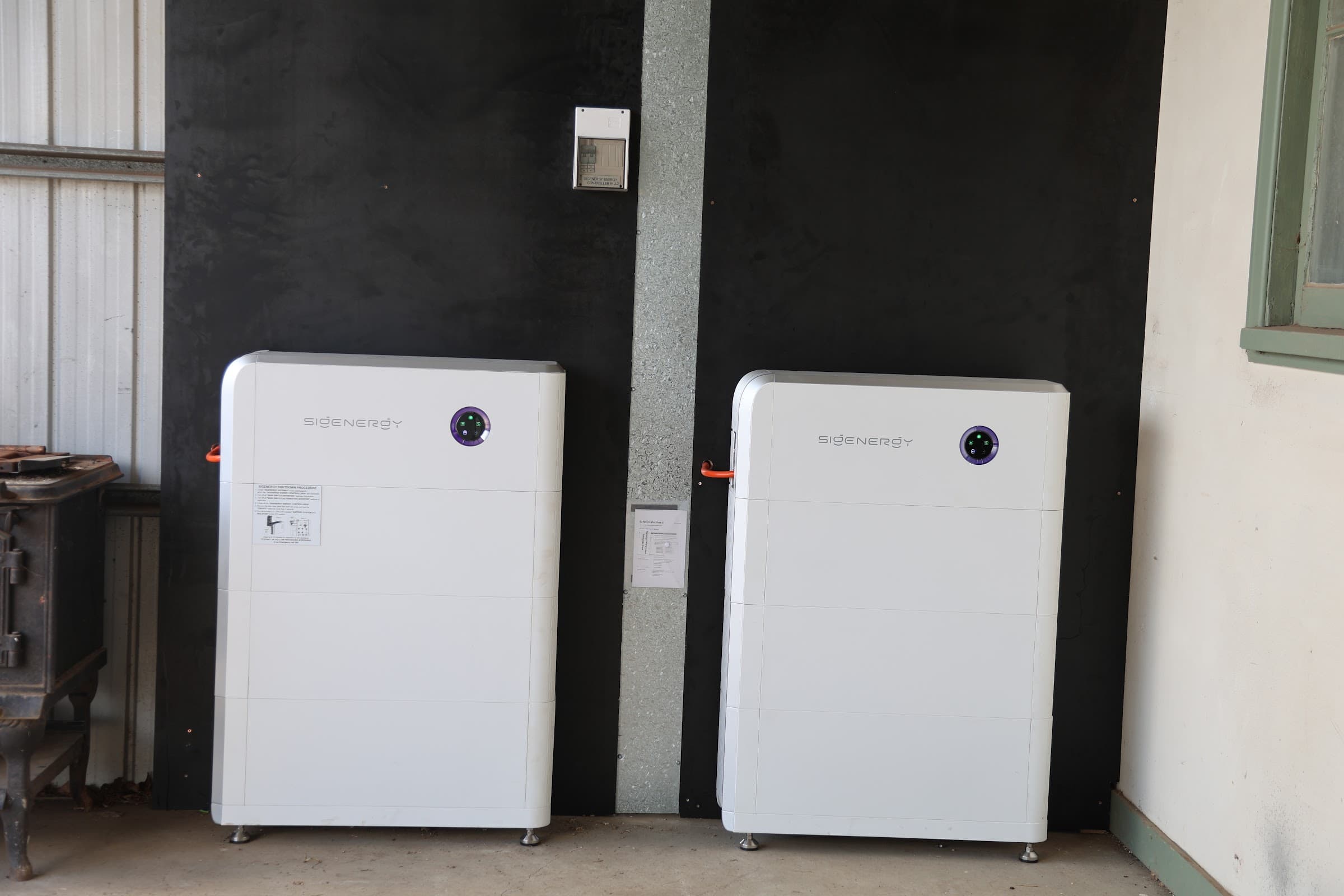
- Size the battery for the outage you care about. A coolroom compressor of 3 kW running 60 percent of the time (assumed) uses about 14 kWh over eight hours of night or blackout. Add the compressor's starting surge to the inverter rating, not just its running power.
- Put the coolroom on the backed up circuit. A battery system's backup circuits are a choice made at the switchboard, so make sure the coolroom, the controller and the alarm are on them.
- Know the switchover. Some battery systems change to backup almost instantly; others take a moment. Check what that gap does to your coolroom controller and compressor before choosing the gear.
- Keep a generator inlet for the long outage, so a portable or fixed generator can take over before the battery runs flat.
Our battery basics guide explains backup circuits, and the generators page covers the long outage.
Questions
Can a coolroom run on solar power alone?
Not through the night without a battery, and not through a run of cloudy days without the grid or a generator. With solar plus a battery sized for the night, a coolroom can run mostly on its own energy, with the grid or a generator as the backstop.
How long will a coolroom stay cold in a blackout?
It depends on the insulation, the door seals, how much product is in it, the outside temperature and whether anyone opens the door. Keep it shut and log the temperature. A battery takes the guesswork out by keeping the compressor running.
Does a winery or orchard cool store need three phase?
Only if its compressors are three phase. If they are, the inverter and battery have to suit three phase too. Our article on single phase to three phase covers the options.
Who services the refrigeration side?
A refrigeration mechanic. In our area that is our sister business, Spa Refrigeration in Daylesford. The electrical, solar and battery side is ours.
Send us a recent bill, your address and what the coolroom stores, and we will come back with a right sized design, or start at our contact page.
Sources
- PVGIS, European Commission Joint Research Centre (Trentham, 30 degrees, north)
- FreshPlaza, Goulburn Valley farmer cuts power costs by $62,000 a year (8 April 2019)
- Food Standards Australia New Zealand, displaying food
- Energy Smart Farming, McIvor free range piggery case study (Agriculture Victoria)
- HVAC&R News, best practice guide for coolrooms (29 August 2019)
- AIRAH, DA12 Energy efficiency in cold rooms
- Essential Services Commission, minimum feed in tariff
- Essential Services Commission, Victorian Default Offer 2026 to 27
- Cummins C22 D5 generator set data sheet DS340-CPGK
- ATO, fuel tax credit rates for business, 1 July 2026 to 30 June 2027
Written by the Trentham Energy team.