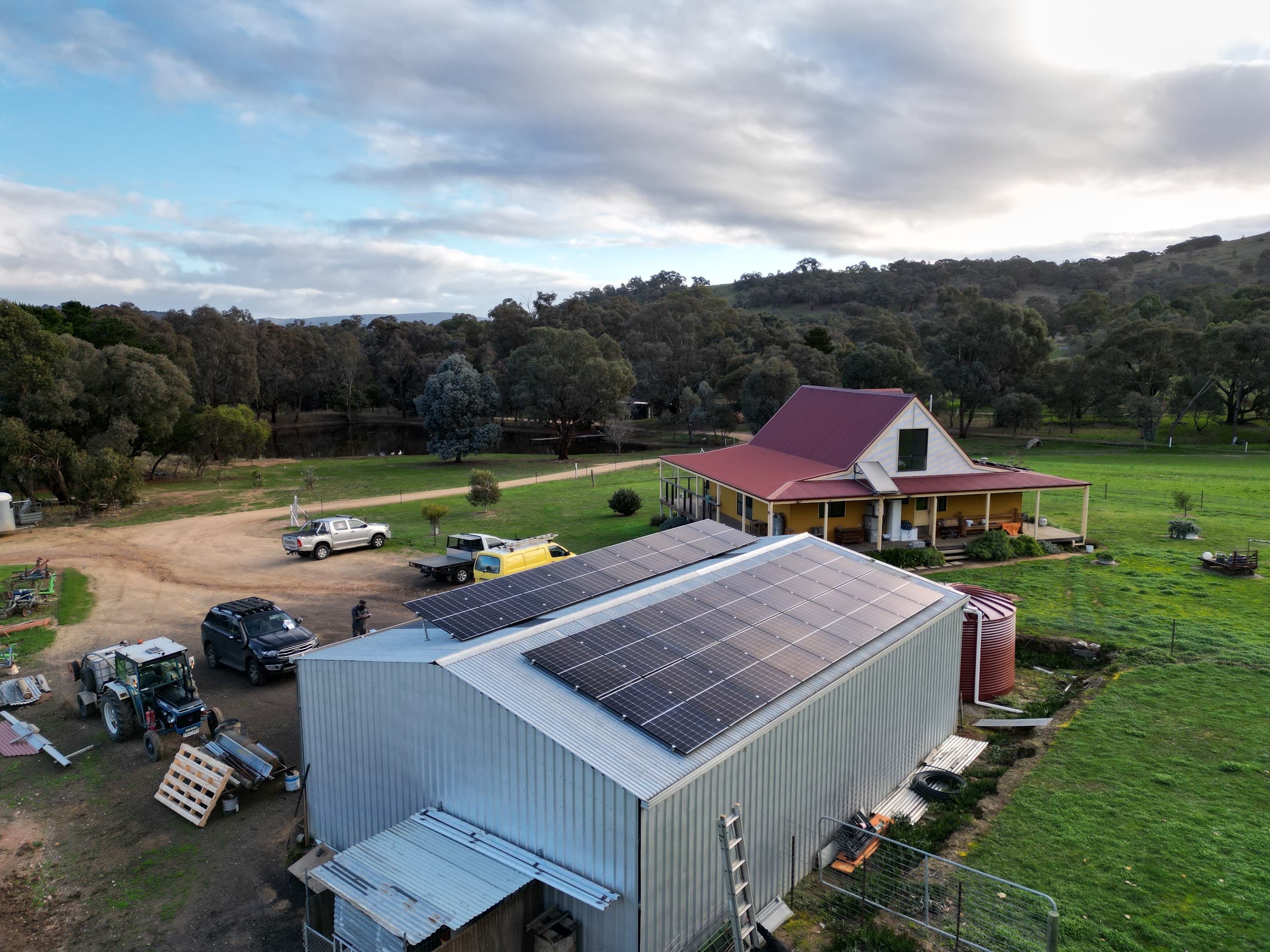
Single wire earth return lines feed thousands of rural Victorian properties, are the first switched off on extreme fire days, and started some of the Black Saturday fires. Why standalone power replaced hundreds of them, what the programs are today, and what a SWER customer can do now.
If your property is fed by a single wire earth return line, a SWER line, you already know two things about it. It is the line that drops out first in a storm, and it is the line the distributor switches off on the worst fire days. What is less known is that standalone power systems were first rolled out in Victoria precisely to retire lines like yours, and that the programs that followed have shaped what a SWER customer can do today.
What a SWER line is
A SWER line carries high voltage on a single conductor and uses the earth as the return path. It was the cheap way to electrify rural Australia in the 1950s and 60s: one wire, long spans, few poles, a small transformer at each farm. Thousands of kilometres of it still run across regional Victoria, including the bush blocks around Trentham, Blackwood and the goldfields.
The design has costs. A single wire has no redundancy, so a fallen branch or a broken conductor means an outage until a crew drives out. The small transformer limits what the property can draw, which is why a SWER customer who adds a workshop or an EV charger can hit the ceiling. And a broken conductor lying live on dry grass is an ignition source, which is where the bushfire history begins.
Black Saturday and the Royal Commission
The 2009 Victorian Bushfires Royal Commission found that several of the Black Saturday fires were started by electricity assets, and recommended that SWER lines and 22 kV lines in the highest risk areas be replaced within ten years. The Victorian Government's answer was the Powerline Bushfire Safety Program, a ten year, $750 million program from 2012 to cut the fire risk from the distribution network.
Replacing every rural line underground was never affordable. So the program did three things: it funded protection technology on the network, it required the distributors to switch lines off on the most dangerous days, and it paid for standalone power systems for targeted landowners at the end of high voltage lines in the highest risk areas, so the line could be shortened or retired altogether. The program's own benefits report counts 525 SWER lines retired in combination with standalone power system installations in the Colac Otway Ranges.
That was the first large scale use of standalone power in Victoria. It proved the case: a solar, battery and generator system on the property is safer than a wire through the forest, and cheaper than replacing the wire.
The rules that followed
Until 2022 a distributor had to keep the wire even when a standalone system was cheaper. In February 2022 the Australian Energy Market Commission changed the national rules so a distributor can supply an existing customer through a standalone system where that is more economic than the poles and wires, with the customer keeping the same protections and reliability standards. Victoria switched the framework on through its own regulations, approved in July 2024.
Powercor and AusNet now each run a program under those rules. Powercor's own page sets out who qualifies: a customer connected to a rural feeder approaching the end of its working life, where the cost of building, upgrading or maintaining the connection exceeds a standalone system, who agrees to abolish the standard connection, and who has suitable land. Eligible customers get the system at no extra cost compared with staying connected, and Powercor contacts them. AusNet's program is for existing customers in clusters of one to five where a line is expensive to keep. Our standalone power systems page has the detail and the sources.
Switched off on the worst days
The other half of the SWER story is the days the line is switched off on purpose. Under the arrangements that came out of the program, distributors can switch off high risk lines on days of extreme or catastrophic fire danger, and SWER lines in the bush are at the top of that list. For a property on one of them, a hot north wind now means no power for the day, which is the day the pump, the fridge and the phone matter most.
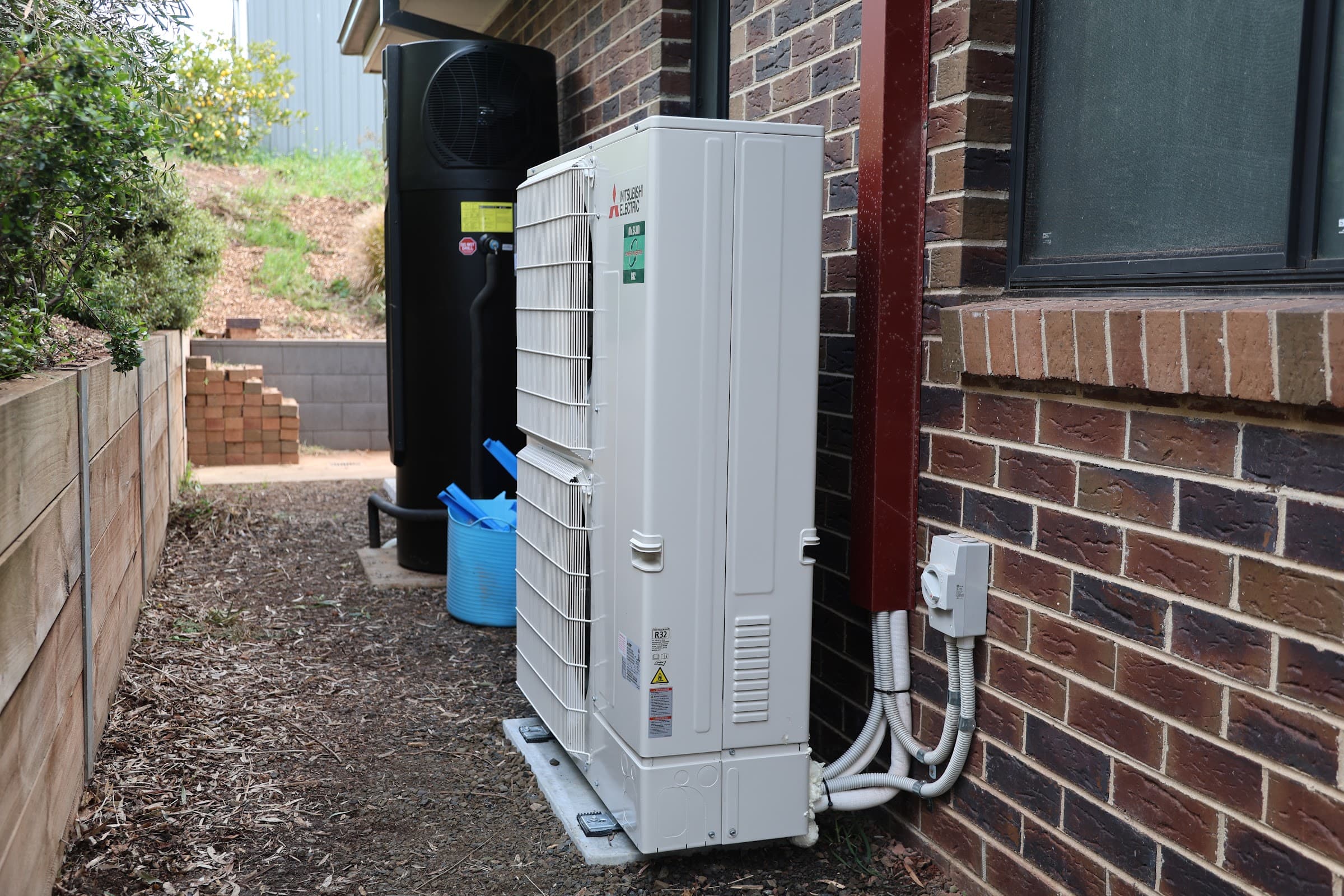
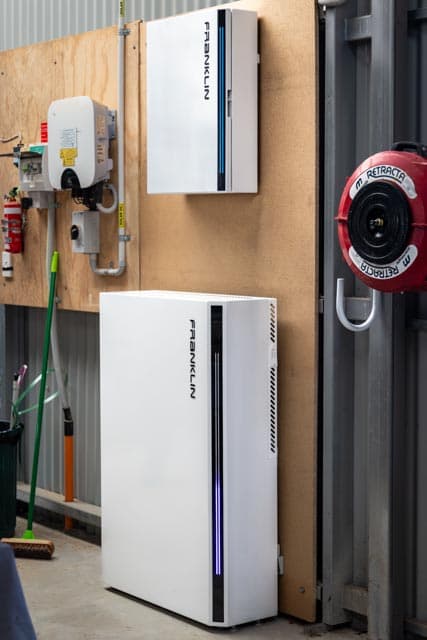
A battery and a generator fix that without going off grid: the house rides through the switch off on stored sun, and the generator covers a long one. A standalone system removes the dependence entirely.
What a SWER customer can do now
There are three paths, and we design all three.
- Ask the distributor. If your property is one of the last on a long rural line that is due for replacement, ask Powercor or AusNet whether a network owned standalone system is on the table. It is their decision and the test is their cost, but it is worth the question.
- Keep the line and add backup. A hybrid battery system keeps the grid, charges from the sun, and carries the house through the switch offs and the storm outages. For a block with the line already at the boundary this is usually the right call.
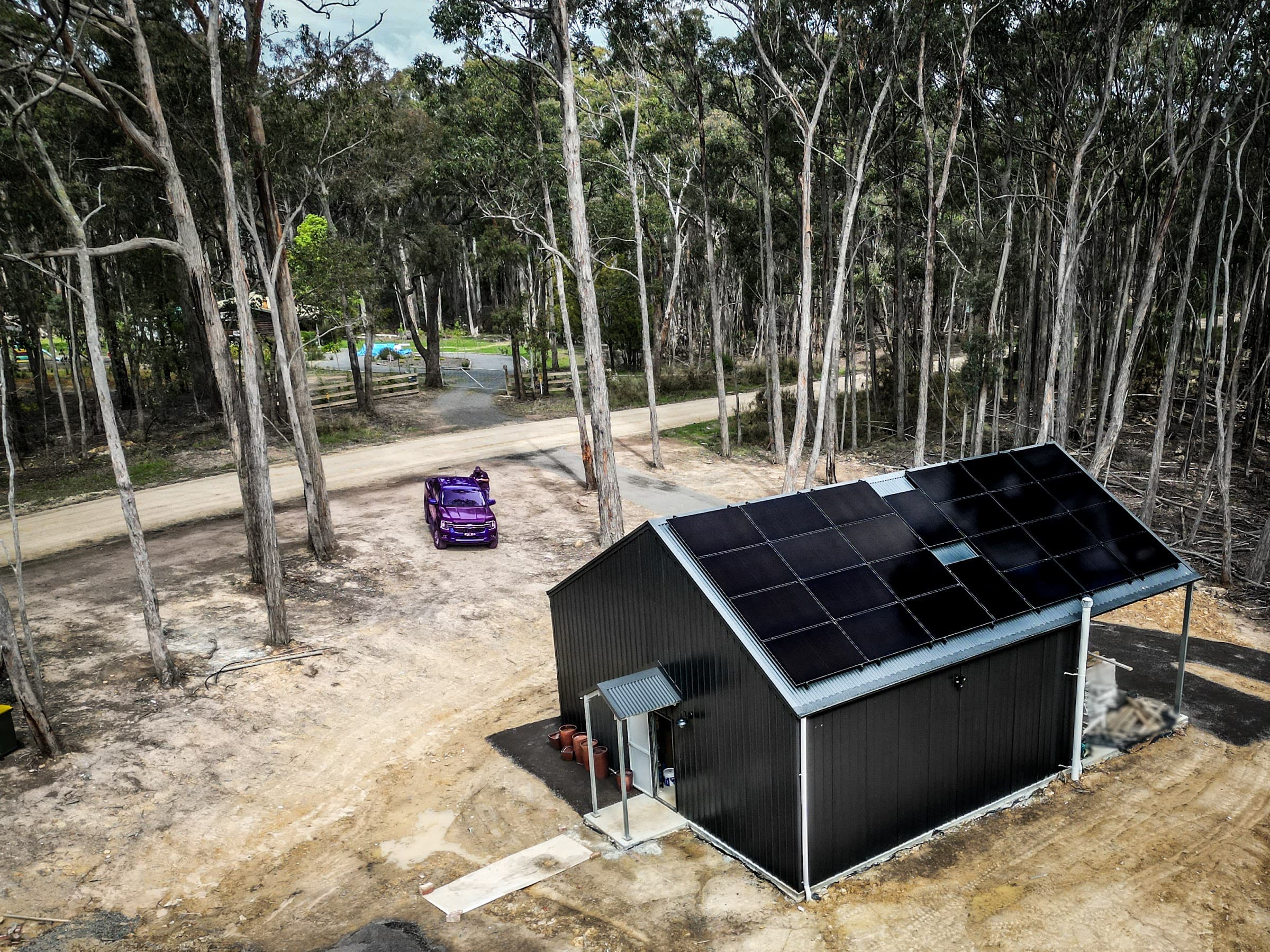
- Go standalone. Where the SWER connection limits what you can run, where the next bill for the private pole is due, or where the line is simply not worth keeping, a private standalone system sized for your loads replaces it. You own it, it is monitored from Trentham, and the Solar Victoria panel rebate applies. The sizing tool gives the size in five minutes and the cost page explains what moves the price.
Questions
Will the distributor pay for my system?
Only where a network owned standalone system is cheaper for the network than keeping your line, and only for an existing connection. Powercor identifies those customers itself; AusNet asks interested customers to contact it. Everyone else buys their own.
Can I keep the SWER connection as a backup to an off grid system?
You can, but it defeats the purpose and keeps the supply charge coming. A standalone system is designed to stand alone, with the generator as the backup. Many customers keep the connection until the system has proved itself through a winter, then have it removed.
Is a standalone system safer in a bushfire than the line?
The reason the program funded them was to remove the ignition source that a live conductor on dry ground represents. The system itself is designed and installed to the Australian standards for bushfire prone areas, with equipment placement and cabling to suit the site's bushfire attack level.
Sources
- Powerline Bushfire Safety Program, benefits realisation report (energy.vic.gov.au)
- Powerline Bushfire Safety Program, progress report 2012 to 2019
- Victorian Government, stand alone power system grants
- AEMC, new rules allow distributors to roll out stand alone power systems (February 2022)
- Powercor, stand alone power systems
- AusNet, stand alone power systems
Written by the Trentham Energy team.