An off grid system in Central Victoria is sized on June, not on the year. The four numbers that matter, worked through for a real home, and why a calculator built for Brisbane will leave you in the dark in July.
An off grid solar system in Central Victoria is sized on the worst week of June, not on the average year. Get that one idea right and the rest follows: the array is bigger than a grid system for the same home, the battery is leaner than most people expect, and a generator covers the fortnight nothing else can. Most online calculators skip the first step, which is why their answers fail here.
This is how we size a system, with the numbers we use, so you can check our working or run your own loads through the sizing tool.
Start with the load, in kilowatt hours a day
Everything hangs off one number: how many kilowatt hours the property uses on a typical day. Not the peak, not the annual bill, the day. For an existing home the monitoring or the bill tells you. For a new build you add it up appliance by appliance, which is what the tool's Loads step does.
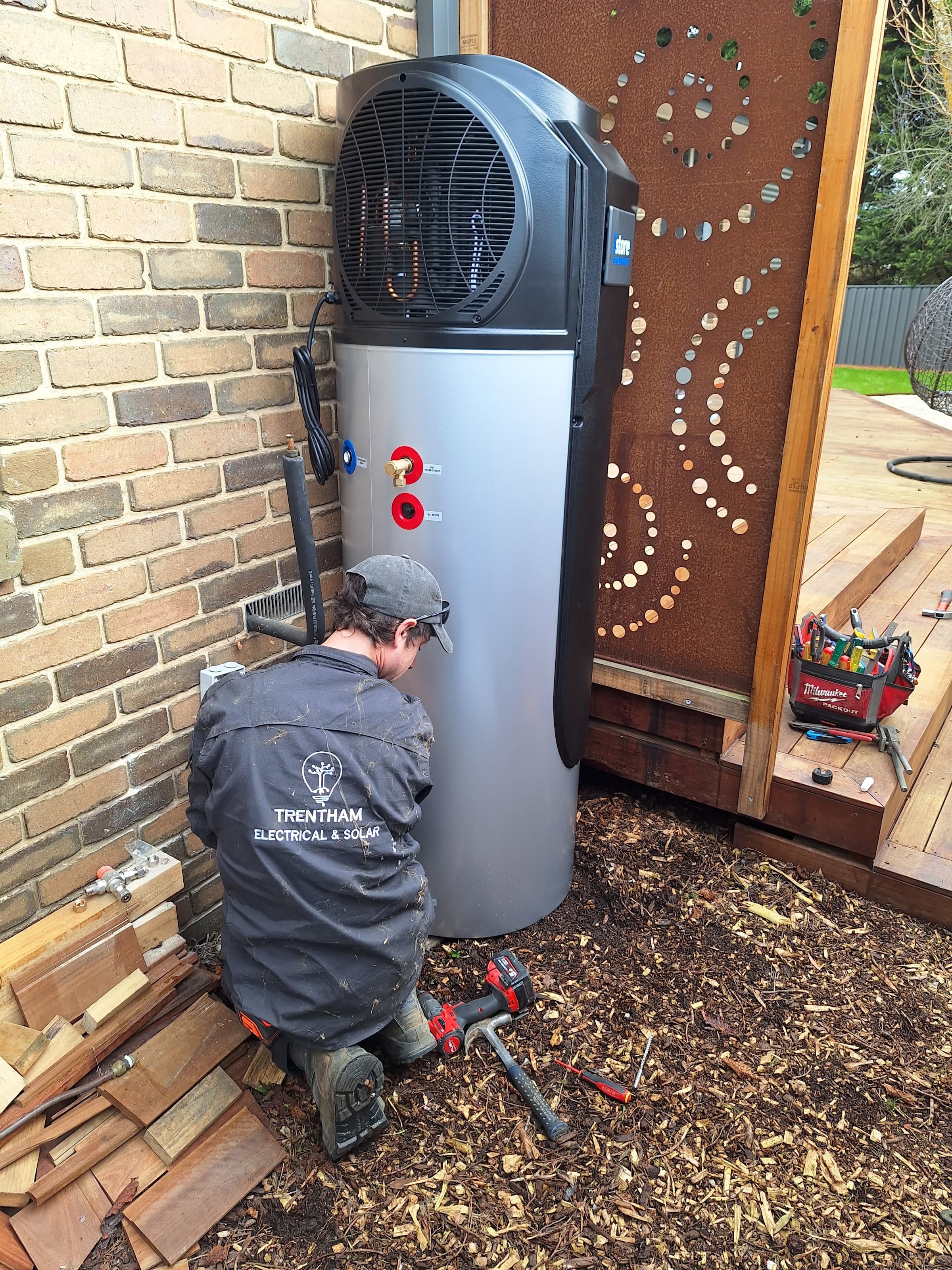
A few loads dominate in this part of Victoria. Heat pump hot water runs about three hours a day at a kilowatt. A reverse cycle heat pump heating a house through a Trentham winter is the biggest line of all, often five hours a day at a kilowatt and a half. An EV adds about seven kilowatt hours for forty kilometres of driving. A fridge, a freezer, lights, the washing machine, the pressure pump and a laptop between them are only four or five kilowatt hours.
The family homes we size typically land between 12 and 20 kilowatt hours a day. A weekender is nearer six. A farm with a workshop, a bore pump and a cool room can be 30 or more.
Then June, not the year
Here is where the generic calculators go wrong. They take an annual average of sun hours, or a figure for a sunnier city, and size the array to make the year's energy. Averaged over twelve months that array looks fine. In June it makes a third of what the house needs, and the battery is flat by the second morning.
A north facing panel in Central Victoria makes about 1.9 kilowatt hours per kilowatt of panels on an average June day. The same panel makes 6.3 in January. June is the number that sizes everything, because an off grid system that works in February and fails in July is not a system.
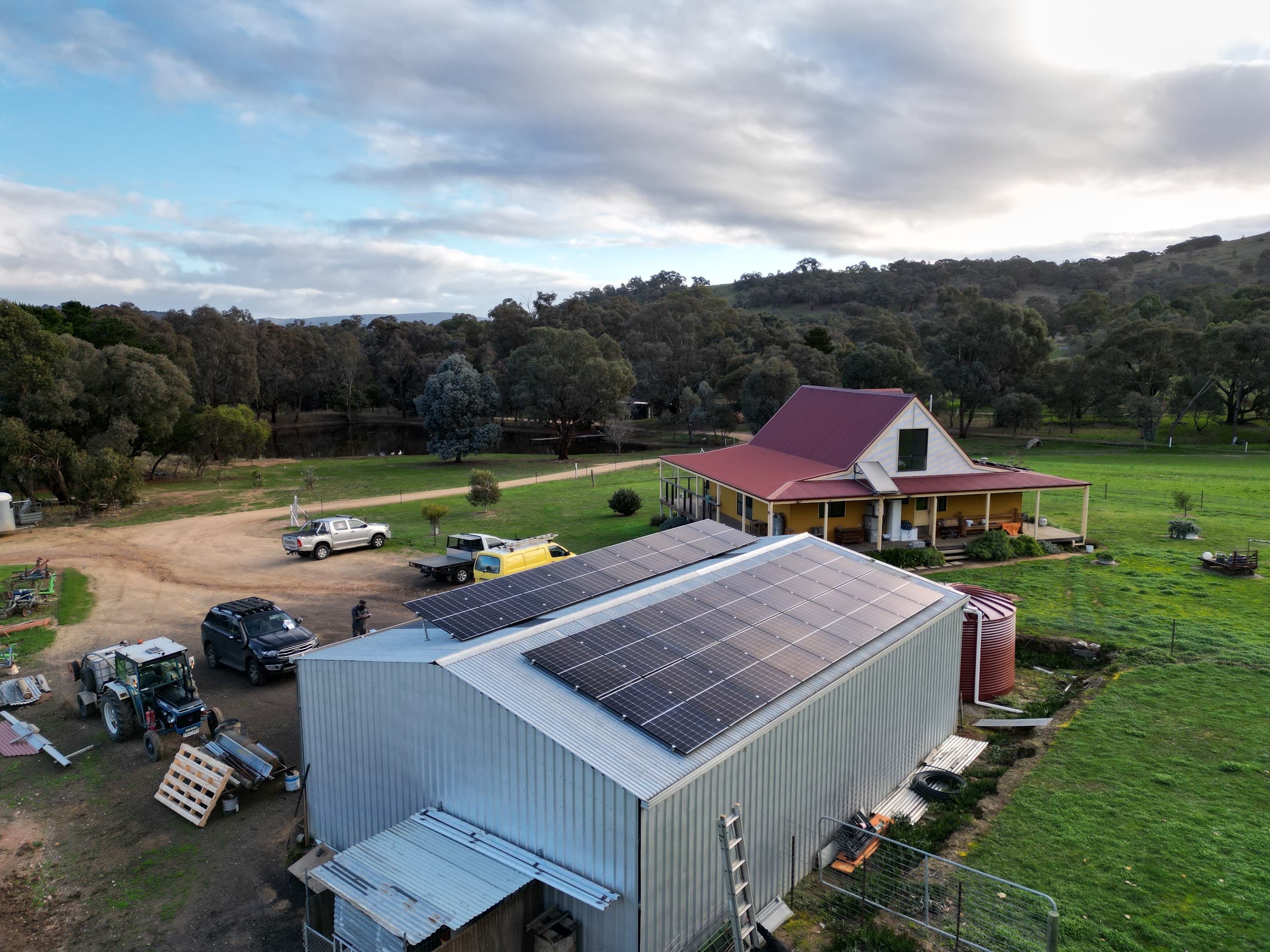
So the array size is the daily load, divided by June's 1.9, divided again by a whole of system efficiency of 82 percent (inverter losses, cable losses, battery round trip, dust on the glass), and then 25 percent on top. For a 16 kilowatt hour home that comes out near 11 kilowatts of panels. A grid connected home with the same bills would carry six or seven.
Why the 25 percent? Because panels are the cheap part of an off grid system and every extra night of battery is the expensive part. A solar heavy array clears the June average with room to spare and recharges the bank faster after a grey day. In summer it makes three times what the house needs, and that surplus is the price of a quiet winter. Plenty of our customers point it at hot water, a pool pump or the car.
The battery: nights of autonomy, not kilowatt hours
People ask for a battery size. The right question is how many nights it should carry the house with no sun. One or two is normal. Each extra night is another bank of batteries, so this is the single biggest lever on the price of the whole system.
The maths is the nights you choose, times the daily load, divided by the usable share of the battery. Lithium gives about 90 percent of its nameplate as usable storage; a lead acid bank gave half. For the 16 kilowatt hour home at two nights that is about 36 kilowatt hours usable, so a 40 kilowatt hour lithium bank. At one night it is 20.
Then a check: a winter night's use, about 63 percent of the day's energy in June when the sun is only up from half past seven to ten past five, has to fit in the usable storage with margin. If it does not, the bank steps up.
The inverter: peak load and the motors
The inverter is sized on the peak demand, the most the house draws at once, with headroom for motors. A pressure pump, a bore pump, a compressor and the fridge all draw about three times their running load for a moment at start up. Add a workshop or three phase machinery and the design moves to a three phase inverter bank. For the family home the peak is five or six kilowatts and an eight kilowatt inverter carries it with the surge covered.
The generator: for the darkest week, not every day
Within a winter month the darkest week makes roughly 65 percent of the monthly average. A solar heavy array clears the June average; the generator's job is those below average stretches. We size it at about 1.25 times the inverter so it can run the house and charge the battery at the same time: a 10 kVA unit for the eight kilowatt inverter.
On a system sized this way the generator sits idle from spring to autumn and earns its keep in a handful of runs across May, June and July, a few hours each. A generator running most mornings through winter is a sign the array or the battery is undersized, not that generators are part of daily life off grid. Our generators page covers auto start, fuel and placement.
Worked example: an all electric family home near Trentham
Daily use 16 kilowatt hours. Peak demand about 5.6 kilowatts. North facing roof, two nights of autonomy, generator yes.
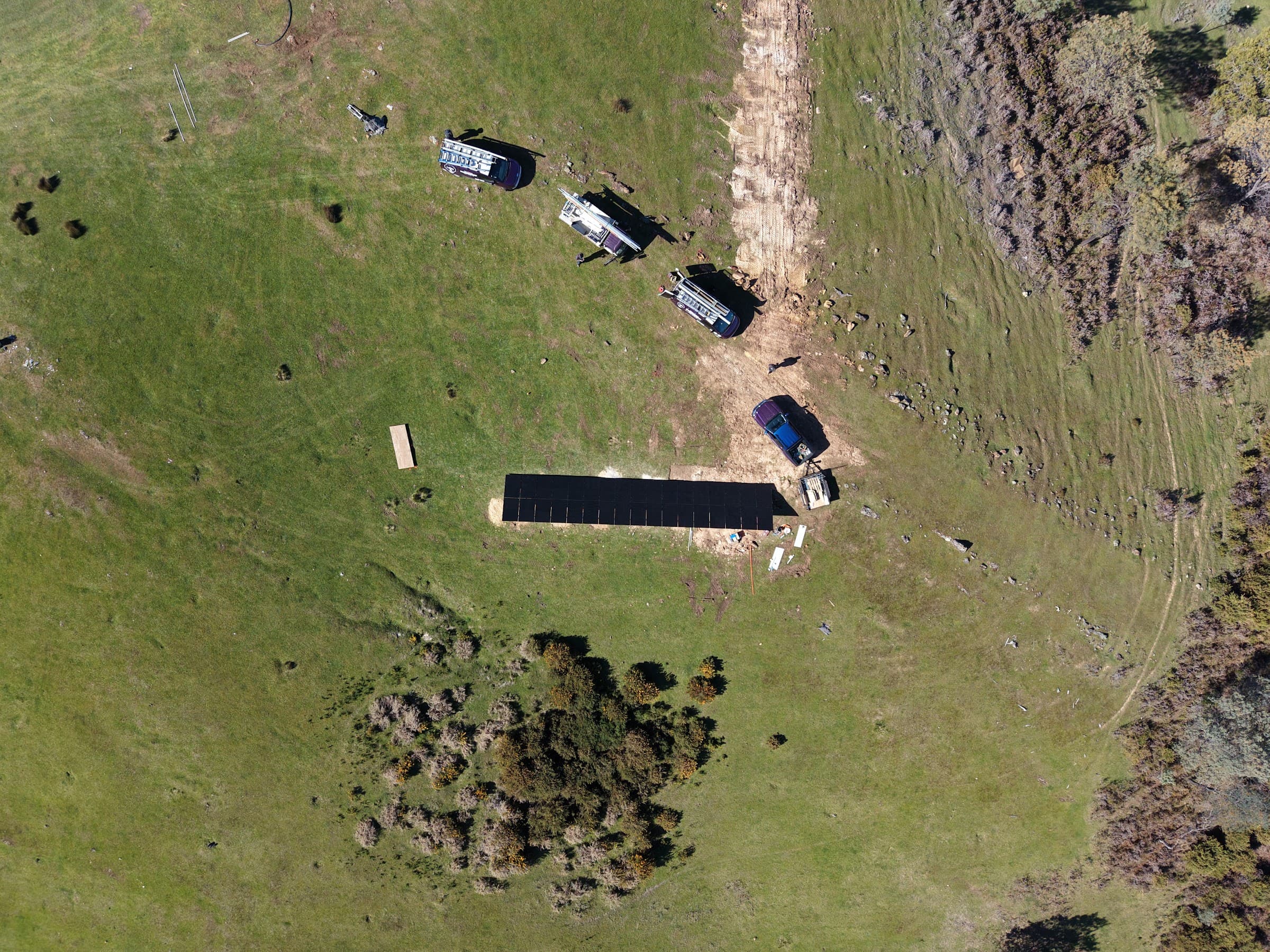
- Array: 11 kilowatts of panels, making about 17 kilowatt hours on an average June day against the 16 used, and about 57 in January.
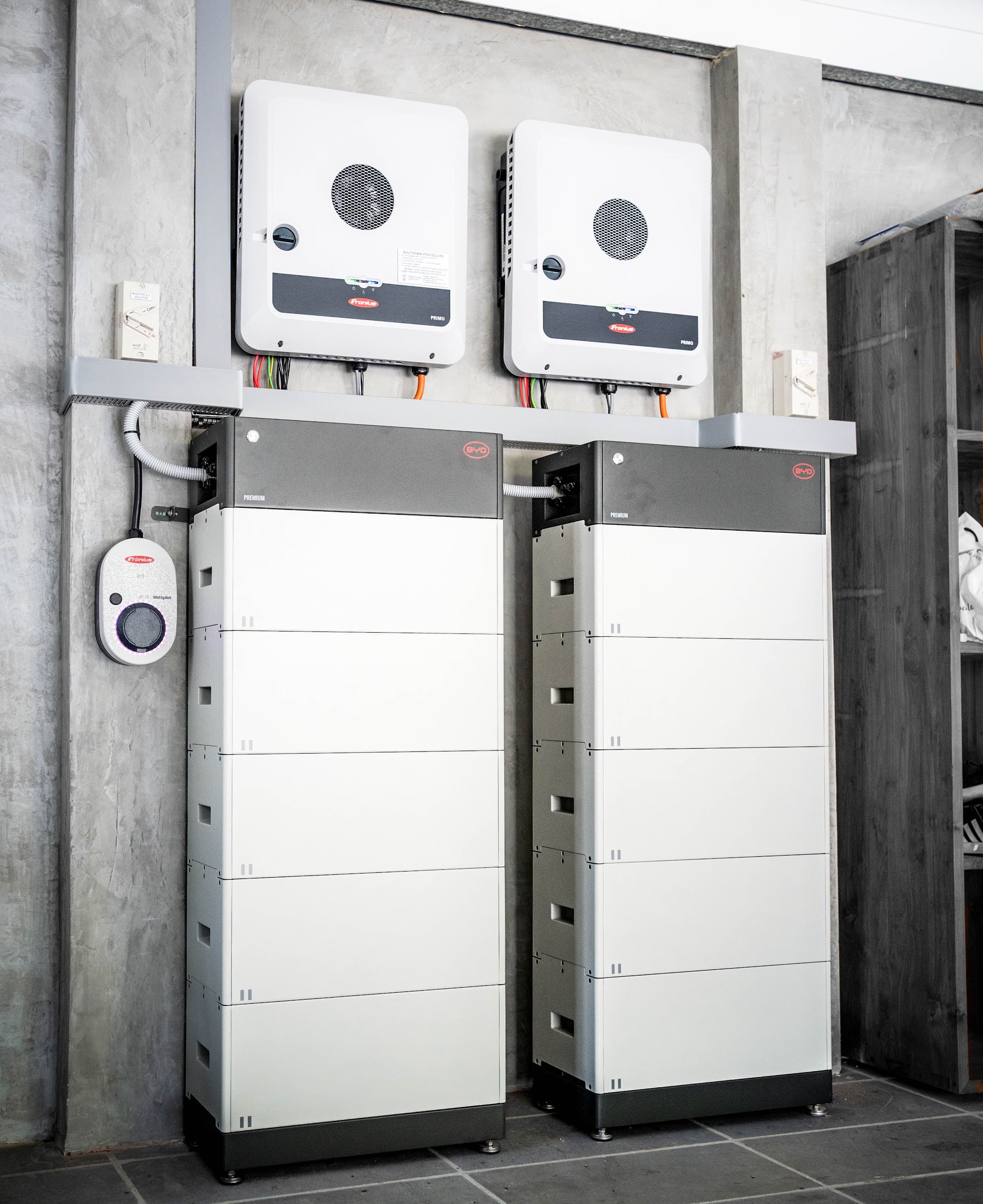
- Battery: 40 kilowatt hours of lithium, about 36 usable, which carries two winter nights.
- Inverter: 8 kilowatts, with surge headroom for the pumps.
- Generator: 10 kVA, auto start on battery state of charge, expected to help in May, June and July.
Drop the autonomy to one night and the battery falls to 20 kilowatt hours while everything else stays. Add an EV charging from the sun and the array grows by about a third. The tool shows each change as you make it.
Where the site changes the answer
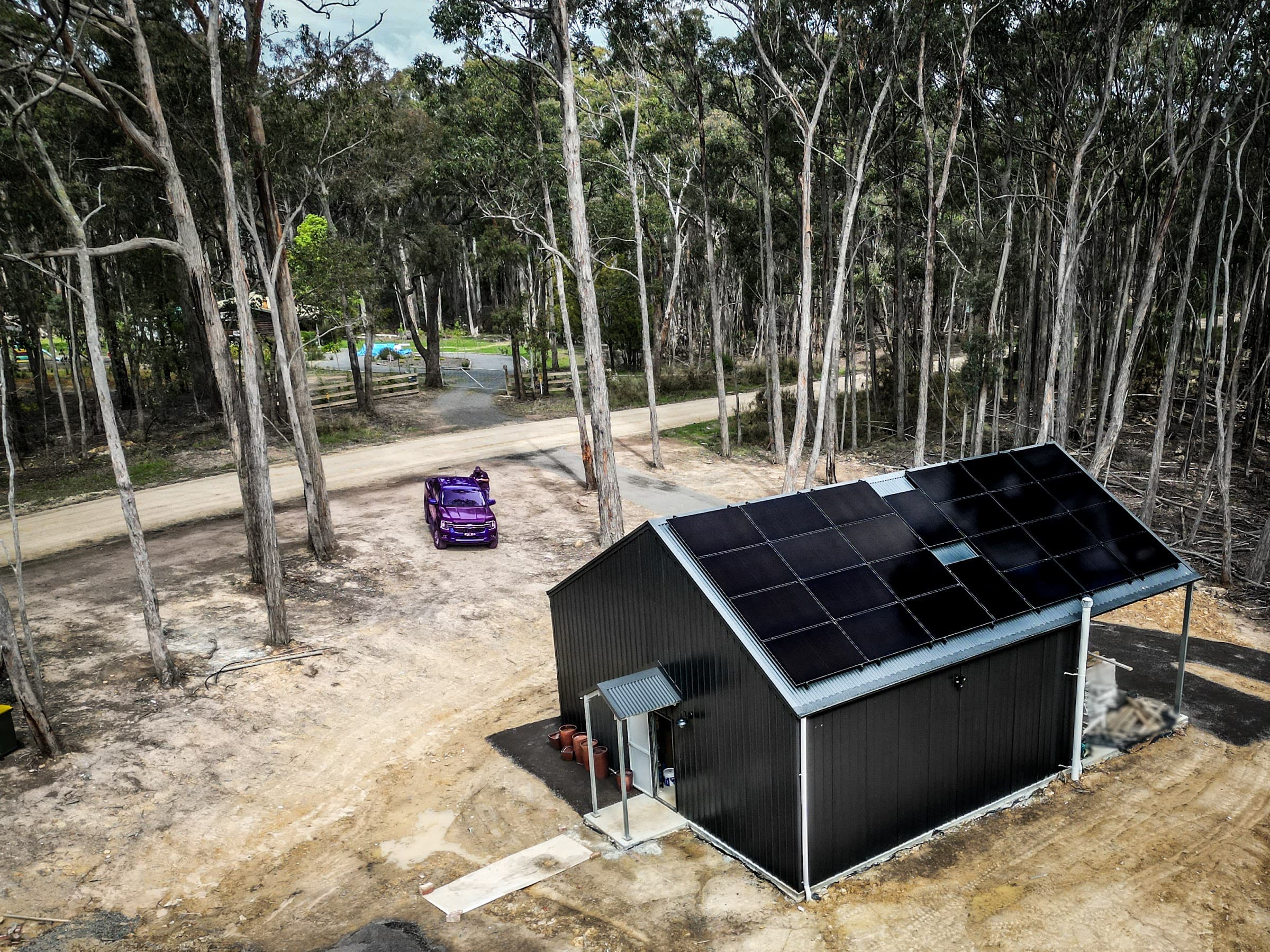
Everything above assumes north facing panels with clear sky. Real blocks are not like that. An east west roof makes about 15 percent less across the day. Tall gums on the northern side can take a third off June generation, which is why we often recommend a ground mount in a clear paddock over a shaded roof, even though it costs more up front. Northern Victoria gets about eight percent more winter sun than Trentham; the High Country about five percent less; Gippsland about eight percent less. The tool asks for the region and the orientation for exactly this reason, and a site visit settles the shading.
Questions
Can I run the numbers for my own place?
Yes. The sizing tool runs this method on the loads you pick and shows the result straight away, no login, with the method printed under it.
Why is the array so much bigger than a grid system's?
Because a grid system is sized to make the year's energy and sells the summer surplus. An off grid system has to make June's energy on its own, and June in Central Victoria gives under two sun hours a day.
What does the tool not know?
Your shading, your cable runs, your roof pitch, and the price. Those come from a site visit, which is where the quote comes from too.
Sources
- The sizing method, printed in full on our sizing tool page. The sun figures are our own design baselines for Central Victoria.
- Standalone power systems in Victoria for the network side of the same question.
Written by the Trentham Energy team.