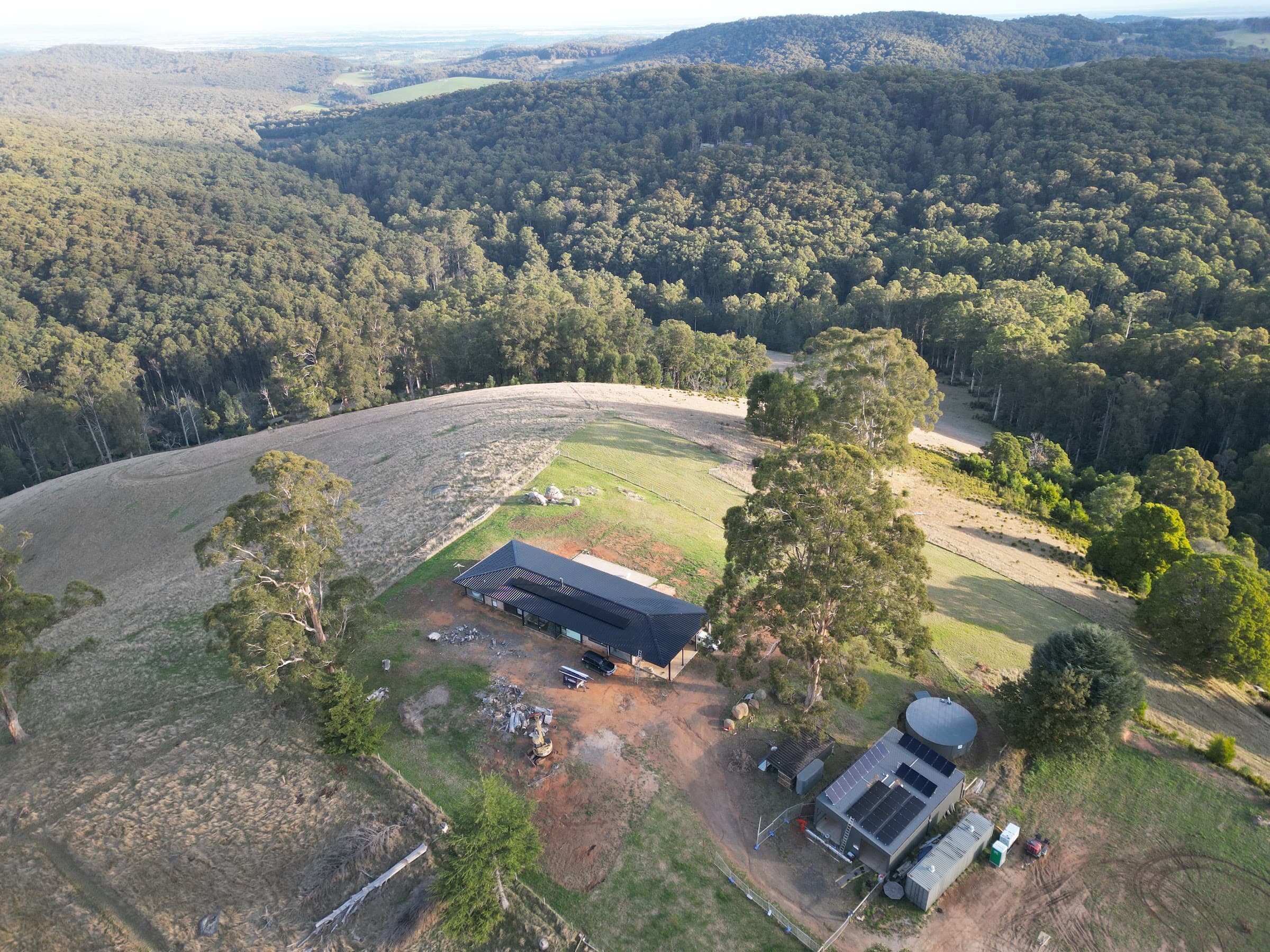
How a Powercor connection works: eConnect or mySupply, the Quick Calculator, typical fees from $600 to $4,100, offer timeframes and what to ask.
Powercor connection fees depend on which of two doors your job goes through. If supply is already available at your property, your electrician applies through Powercor's eConnect portal and Powercor says typical new connection costs are $600 to $4,100. If the network has to be extended or upgraded, the application goes through mySupply, you pay an upfront application fee, and the offer covers whatever line, transformer and upgrade work your site needs, which on a rural block can run to tens of thousands of dollars. Powercor's Supply Quick Calculator gives an estimate first, but only a firm offer is a price.
How does the Powercor connection process start?
It starts with a registered electrical contractor (REC). Powercor's new supply page says only a qualified REC can submit a new connection application, and recommends bringing one in early to avoid unexpected costs or delays.
Your electrician works out how much power you need, whether supply is available at the boundary, and which of Powercor's paths you are on:
- Supply readily available. No extension or upgrade is needed. The REC registers in eConnect, lodges a new connection request and the fee is paid.
- Supply not readily available. The site needs more than standard supply. The request goes through mySupply, where Powercor checks the connection method, phasing, capacity and voltage, and makes a formal supply capacity offer, with a separate offer for any network upgrade.
- The network must be extended, altered or upgraded. Also mySupply: Get Power, then Residential or commercial, then New or increased supply.
What are Powercor's connection fees?
For a straightforward connection where supply is at the boundary, Powercor says typical new connection costs range from $600 to $4,100, depending on phasing and metering, with pit costs on top where needed. That was the figure on its page when we read it in November 2026.
A pit is its own job. Powercor's pit page says there is an upfront, non refundable application fee, that construction is charged at standard prices in 5 metre steps depending on whether the route crosses a road, and that the pit must be fully paid for before the connection is approved. It does not publish the application fee amount on that page.
For extension work, the best published guide is Powercor's indicative cost guide, at April 2024 prices including GST:
- Single phase rural substation on an existing pole: $30,016
- Three phase rural substation on an existing pole: $36,261
- High voltage overhead extension up to 250 m, single phase and substation: $59,728
- The same, three phase: $69,254
- High voltage extension up to 250 m underground, single phase and substation: $181,806
Powercor says these are indicative only, based on averages for typical minor projects, and that they exclude tree clearing, preliminary design, other works by Powercor or others, and Aboriginal Heritage Act compliance, which it says has minimum commencement costs above $10,000. Our Powercor connection cost page walks through each line.
How do you get a Powercor connection estimate?
Use the Supply Quick Calculator inside mySupply. Powercor describes it as giving an indicative cost for new residential or small business supplies, and its pit page says the calculator works from how close your boundary is to Powercor's assets. Powercor strongly recommends getting a firm cost through a mySupply application before entering any financial agreement, and so do we.
There is no separate Powercor connection calculator outside the portal that we could find; the Quick Calculator is the tool. Treat its number as a planning figure. It cannot see the trees on your road reserve, a neighbour who won't grant an easement, or a heritage check.
How do you make a Powercor connection application through mySupply?
Register in mySupply, choose Get Power, then Residential or commercial, then New or increased supply, fill in the form, pay the calculated upfront application fee, and attach:
- a site plan (mandatory)
- maximum demand calculations to AS3000, mandatory for requests over 80 amps
- the plan of subdivision, if the land is subdivided
- a cover letter, optional
Powercor then assesses the request. If there is not enough design certainty, it may need a preliminary design before it can quote; its cost guide says preliminary design is quoted separately and is non refundable.
How long does a Powercor connection take?
For a simple connection where supply is available, Powercor's page says 4 to 10 weeks, and that missed appointments, failed site visits or retailer delays can stretch it.
For a negotiated connection, the one most rural extensions need, Powercor's connection policy for 2026 to 2031 (as lodged with the Australian Energy Regulator in December 2025) says it will use best endeavours to make an offer within 65 business days of a completed application and paid application charge, and that the offer stays valid for 20 business days. A pit offer usually comes within 20 business days, with 30 days to accept, and 6 to 10 weeks to build after that. Once the network work is done, your electrician still lodges the final connection in eConnect.
What is in Powercor's figure, and what is not?
Powercor's offer covers its side of the point of supply: the line, poles, transformer and any upstream upgrade. Your side is yours. Powercor's rural residential brochure, an older guide still on its site, says all cabling inside your boundary from the point of supply must be installed by a REC and paid for by you, and that Powercor does not clear trees. Its connection policy says a basic overhead service wire can be no longer than 20 metres on your property and 45 metres in total, so a house set well back needs either a longer private run or a bigger network job.
Two other items catch people:
- Shared network charges. Under the 2026 to 2031 policy, only connections above 100 amps per phase, or above 40 amps on a single wire earth return (SWER) line, pay toward upgrading the shared network.
- The pioneer scheme. If you connect to an extension another customer paid for within the last seven years, you may owe them a share, and if someone later connects to yours, you may get some back. The policy sets the minimum payment at $1,508 in 2026 dollars.
What should you ask Powercor for?
Ask for these in writing before you sign:
- A firm offer, not just the Quick Calculator figure, with the price stated including or excluding GST.
- What the offer leaves out: tree clearing, easements, heritage checks, your private cabling.
- The capacity you are getting in amps per phase, and whether a later upgrade would trigger shared network charges.
- Whether any part of the work is contestable. Powercor's policy says it must call for tenders when it offers to modify the network unless you agree not to, and on written request it will give you an itemised breakdown of the tenders.
- Whether a pioneer scheme payment applies to your extension.
If the offer lands high, it is worth asking whether you might qualify for Powercor's network owned stand alone power program. Our piece on the Powercor stand alone power pilot explains who that is for; it is aimed at existing customers, not new connections.
Mick McDonald
Technical Director, Trentham Energy
Questions about your own system? Call 1300 3458 00 or send us a message.
Sources
- Arrange a new electricity supply, Powercor
- Pit installations, Powercor
- Customer's selection guide: indicative powerline construction costs, April 2024, Powercor
- Connection policy 2026 to 2031 revised proposal, Powercor (AER)
- Contestable works, Powercor
- Arranging an electricity supply to your property: rural residential properties, Powercor