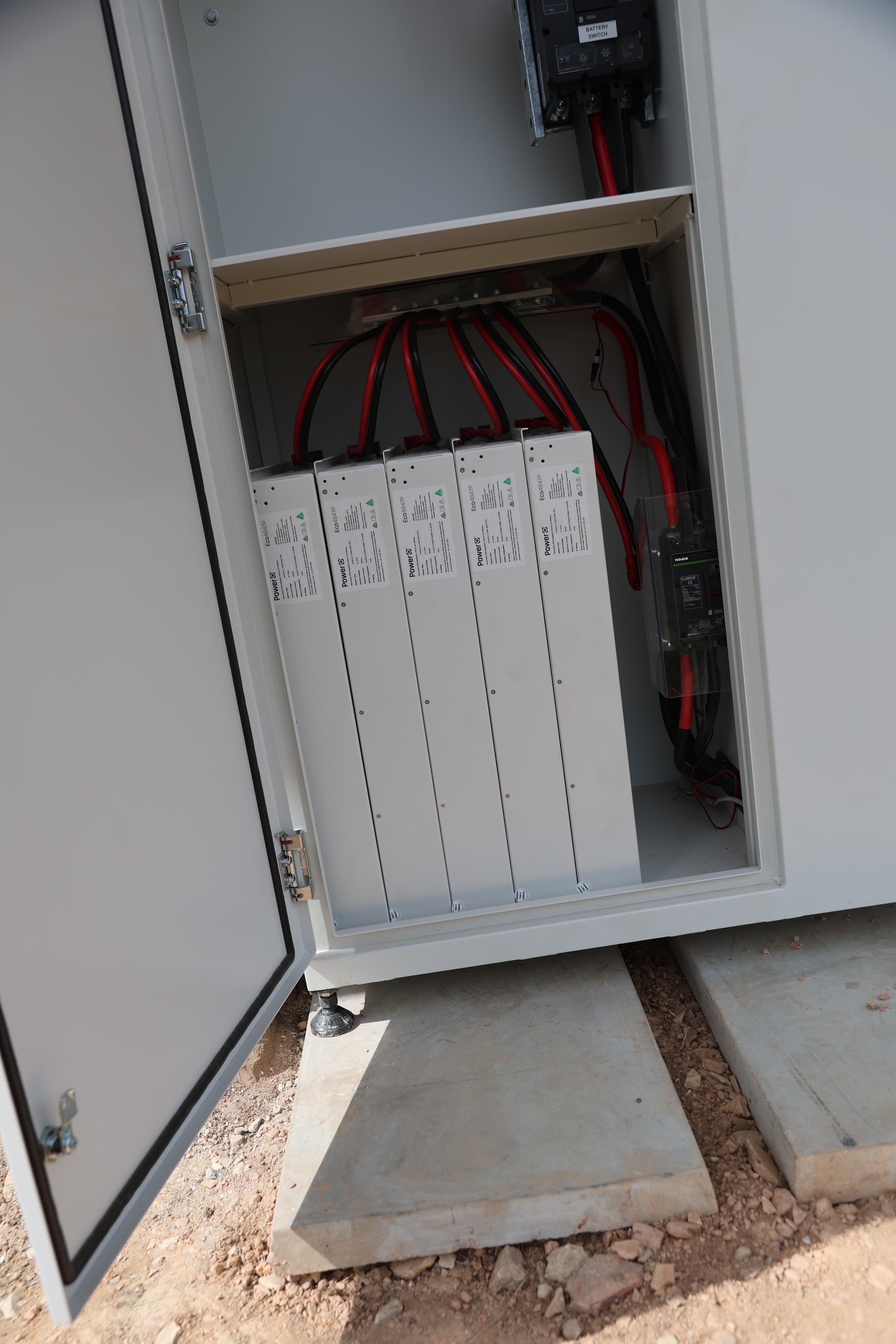
Yes. LFP batteries keep running below freezing but lose some capacity, and many will not charge below 0°C to 5°C. Placement and heating solve that.
Yes. Lithium iron phosphate (LFP) batteries, the chemistry in most modern home and off grid batteries, work through a Central Victorian winter. They keep discharging well below freezing, but they lose some usable capacity in the cold, and the batteries we checked will not take a normal charge once the cells drop below somewhere between 0°C and 5°C. Put the battery where it stays above that, or choose one that warms itself, and the cold becomes a design detail rather than a problem.
What does cold do to a lithium battery's capacity?
Cold makes the battery temporarily smaller. Victron's datasheet for its Lithium Battery Smart range rates a 100 Ah battery at 100 Ah at 25°C, 80 Ah at 0°C and 50 Ah at minus 20°C, at a discharge current of 1C or less.
In practice a cold battery reaches its low voltage cut off sooner than it would on a mild day, and the capacity comes back as it warms.
There is a second catch. Victron's Lithium Battery Smart manual points out that state of charge is calculated by the battery monitor, not the battery, so it may not show the real figure. When discharging in the cold, Victron says battery and cell voltages matter more.
Minus 20°C is not our climate, but a battery sitting near freezing can give up about a fifth of its rated capacity, which is why it should be sized for a July morning. Our guide to how much battery an off grid house needs goes through that, and if you are still choosing a chemistry, lithium versus lead acid for off grid covers the wider trade offs.
Why won't a lithium battery charge near freezing?
Because the manufacturers do not allow it, and the battery management system (BMS) enforces that by stopping charging below a set temperature to protect the cells. Victron's datasheet says its BMS stops the charging process when the temperature becomes too high or too low, and its manual allows charging only from 5°C to 50°C.
Discharging is still allowed, so the house keeps running; refilling is the trouble. Picture a clear, frosty morning: the panels are making good power, the battery is at its coldest after a night of supplying the fridge and pumps, and the BMS will not accept the charge. That solar is lost, and if the generator auto starts on a low state of charge it can run while the battery takes very little.
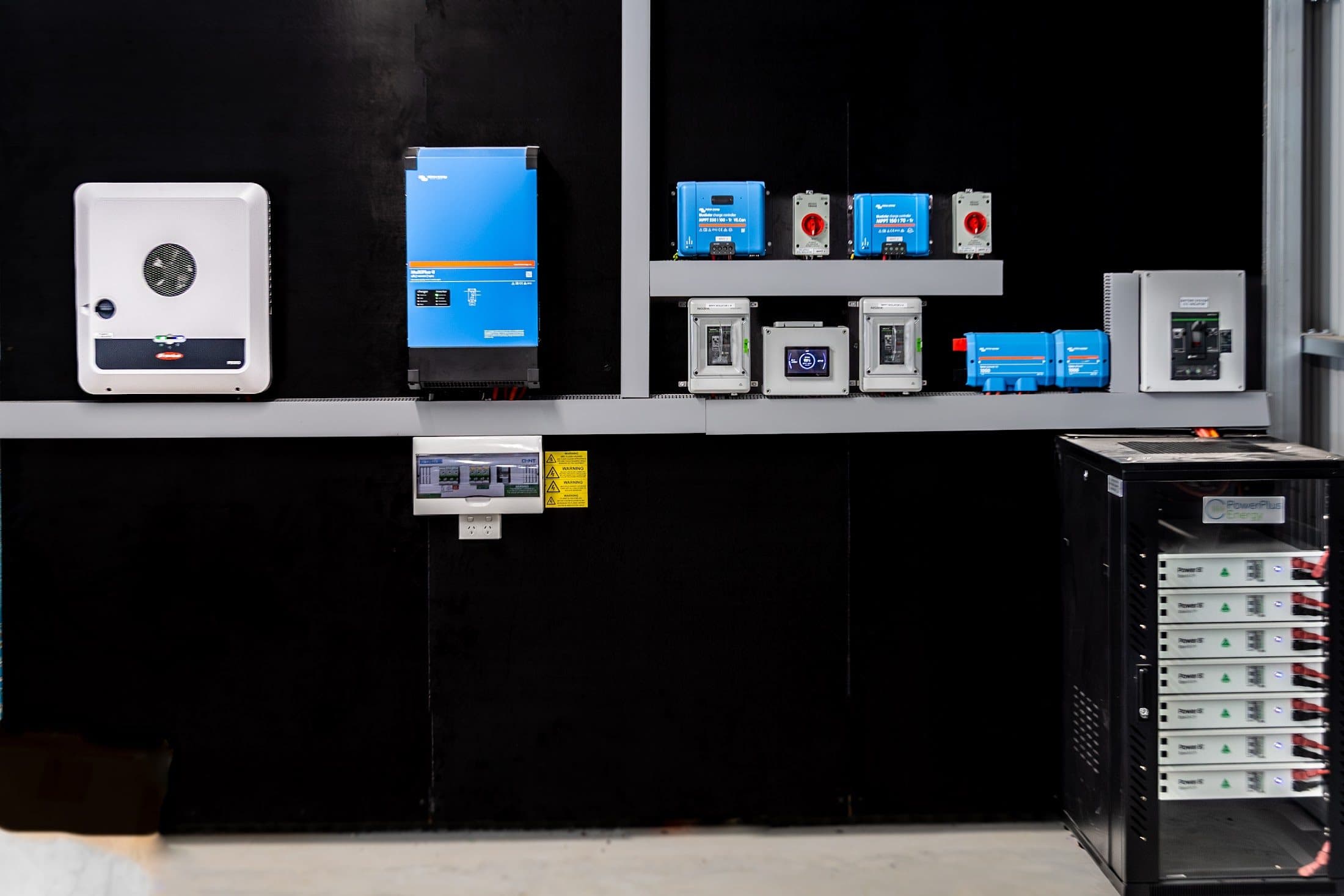
Victron's manual says every charger must be switched off once the minimum charge temperature is reached, ideally under control of the BMS. In an off grid Victron system that means the SmartSolar charge controllers and the MultiPlus-II or Quattro when it charges from the generator, not just one of them.
What temperature ranges do the manufacturers publish?
All four below quote operation down to minus 20°C. Where they differ is the charging limit and the range they consider ideal.
- PowerPlus Energy LiFe Premium P series (installation manual V8.1, 12 August 2024): charge 0°C to 55°C, discharge minus 20°C to 60°C. The ideal temperature around the battery is 15°C to 30°C, and outside that range charging and discharging should be limited to 0.2C, about 0.66 kW for a 3.3 kWh module.
- Victron Lithium Battery Smart (12.8 V and 25.6 V): charge 5°C to 50°C, discharge minus 20°C to 50°C, rated IP22, so it belongs indoors.
- Sigenergy SigenStor (SigenStor Home user manual for single phase systems, version 04, 31 May 2024): operating range minus 20°C to 55°C, recommended 10°C to 35°C. Below 0°C the battery pack cannot charge straight away; its built in heating switches on automatically and best charging performance comes after less than two hours of heating. The manual notes the heating uses power.
- Fronius Reserva (datasheet dated June 2025): ambient range minus 20°C to 55°C, IP65, for indoor and protected outdoor areas. A footnote on the datasheet says charging and discharging capacity can be limited depending on temperature.
For any battery, check the charge range in the installation manual, not the brochure.
How cold does it get where the battery lives?
Cold enough to matter. At the Bureau of Meteorology's Ballarat Aerodrome station, with temperature records from 1908, the July mean minimum is 3.2°C and the mean maximum 10.1°C. The station averages about four days a July (4.3) and about 16 a year with a minimum at or below 0°C. A site higher than the aerodrome's 435 m, or in a frost hollow, can be colder again, so treat those figures as a guide.
What counts is the temperature of the cells, not the air. A battery in an unlined tin shed will tend to follow the outside temperature, a few hours behind. A battery in a laundry or an insulated room inside the house rarely gets near its charging limit. Over a long, still night with light loads, an exposed battery can end up close to the outside temperature.
The Victron systems we install are monitored remotely from Trentham, and a winter of real battery temperature readings beats any guess.
Do you need a battery heater?
Usually not, if the battery is inside an insulated building. A heater earns its place when the battery has to live somewhere that regularly drops near its charging limit.
The options are a battery with built in heating, such as the SigenStor, or an insulated enclosure with thermostatically controlled heating. The trade off is that any heater draws energy at the time of year you have least to spare, so it needs to switch on only when it is needed. It must be designed and wired by a licensed electrician. A portable fan heater left running in a battery room is not a solution; it is a fire risk, and Sigenergy's manual warns against keeping heat sources such as heaters around its equipment for long periods.
Where should the battery go, and does an enclosure help?
Inside the insulated part of a building, out of direct sun, is the best spot. An enclosure slows heat loss and keeps out weather and vermin, but it does not make heat on its own.
- Stable beats warm. PowerPlus asks for temperature and humidity to stay as constant as possible, out of direct sunlight.
- Match the IP rating to the site. PowerPlus wants an IP54 or better enclosure if its batteries go outdoors. The Reserva is IP65 for protected outdoor areas. A battery rated IP22 stays indoors.
- Insulate, but ventilate. Inverters make heat, and a sealed box that stays warm in July can cook in January. Sigenergy notes its equipment may derate above 40°C and that the higher the temperature, the shorter the service life.
- Watch condensation. In its advice for very humid sites, PowerPlus says a cabinet should be held above dew point at all times, which is worth keeping in mind in a damp shed on a foggy morning.
- Rules come first. The manufacturer's site requirements and the installation rules limit where a battery can go, so the warmest spot in the house is not always an allowed one.
If you are moving an existing battery or rebuilding an enclosure, our upgrades and repairs page covers that work.
What can you check yourself this winter?
You can safely look at your monitoring and around the outside of the battery. Anything inside the battery cabinet, the switchboard, the generator wiring or a heater circuit is a job for a licensed electrician.
Safe for an owner:
- Check the battery temperature in your monitoring or battery app early on a cold morning. For Victron Lithium Battery Smart batteries, the VictronConnect app shows it.
- See whether solar charging stays near zero on frosty, sunny mornings. That is a sign the BMS is blocking a cold charge.
- Keep vents and the space around the battery clear, dry and free of rubbish.
- Keep generator fuel, gas bottles and anything flammable well away from the battery. PowerPlus asks for no explosive or flammable materials nearby.
Leave to a licensed electrician:
- Opening battery modules, cabinets or terminal covers.
- Changing BMS, charger or generator start settings.
- Installing any heater, thermostat or new circuit near the battery.
- Adding insulation that could block ventilation.
If you are planning a new system or rethinking where the battery lives, send us a recent bill and your address through our contact page and we will come back with a right sized design.
Mick McDonald
Technical Director, Trentham Energy
Questions about your own system? Call 1300 3458 00 or send us a message.
Sources
- Victron Energy: Lithium Battery Smart 12.8 V and 25.6 V datasheet
- Victron Energy: Lithium Battery Smart manual, operation
- PowerPlus Energy: LiFe Premium P Series installation and operation manual V8.1
- Sigenergy: SigenStor Home user manual, single phase system, version 04
- Fronius Reserva battery datasheet (June 2025)
- Bureau of Meteorology: climate statistics, Ballarat Aerodrome
- Bureau of Meteorology: all years climate statistics, Ballarat Aerodrome