Multiply your winter daily use by your days of autonomy: about two days with an auto start generator, four to five without. Then size on usable kWh.
To size an off grid battery, start from what you use on a typical winter day, not your yearly average. Multiply those kWh by the number of days you want the battery to carry the house without help, and the answer is the usable storage you need. With an auto start generator as backup, the usual design point is about two days, so a family using 12 kWh a day needs roughly 24 kWh usable before any headroom. Without a generator, the design standard points to four or five days, which means at least twice the battery.
What is the difference between kWh and usable kWh?
The rated, or nominal, kWh is all the energy the cells can hold. Usable kWh is the part the battery management system will actually let you draw. Always size on usable.
The gap between the two depends on the chemistry. Lithium makers usually quote usable energy at 80 to 100 percent of rated energy. Lead acid batteries are normally limited to 50 to 80 percent, depending on the maker. Both figures come from the training body GSES. Some lithium brands print the usable figure on the spec sheet and some print the rated figure, so check which one you are being quoted before you compare prices.
Batteries also come in fixed steps. The Fronius Reserva, for example, runs from 6.3 to 15.8 kWh using two to five modules, so you round up to the next module. Capacity also fades with age, which is why sensible designs leave some headroom.
What does depth of discharge mean for sizing?
Depth of discharge is how far you run the battery down, as a percentage of its rated capacity. For sizing, it turns the usable energy you need into the rated capacity you have to buy: rated kWh equals usable kWh needed divided by the maximum depth of discharge.
Take a design that needs 24 kWh usable:
- A lithium battery allowed to go to 90 percent needs about 26.7 kWh rated.
- A lead acid bank held to 50 percent needs 48 kWh rated.
How deep you cycle every day also matters for battery life. GSES gives an example for one brand of lead acid battery with a 70 percent maximum depth of discharge. Sized for one day of autonomy, it cycles to 70 percent daily and lasts about 2,300 cycles. Sized for two days, it cycles to 35 percent and lasts about 5,000. GSES notes that many lithium batteries are rated for 6,000 to 10,000 cycles at their full usable depth, but even so, a battery that empties every day works much harder than one with room to spare.
How many days of autonomy do you need in a Central Victorian winter?
Days of autonomy is the number of days the battery can run the house with no input from a generator. The 2010 edition of AS/NZS 4509.2, the design standard for stand alone power systems, gives typical figures: about two days with an auto start generator, two to three days with a manual start generator, and four or five days with no generator at all, adjusted for local weather.
Winter decides this question. The standard designs for the worst month, and in Central Victoria that means short June and July days and runs of grey weather when the panels make only a fraction of their summer output.
GSES ran 28 years of daily weather station data for Bairnsdale, the Victorian site in its study, to count the days a system would fall short. With an array sized exactly to the worst month, one day of autonomy left an average of 23.55 short days a year. Three days cut that to 4.31, and five days to 1.14. The more autonomy, the more the short days bunched into June and July: at five days, every one of them fell in those two months. The most useful finding in the full GSES analysis: with two days of autonomy and an array 30 percent bigger, the average dropped to 0.66 short days a year. GSES also points out that adding panels is now far more economical than adding battery, and that changes the whole calculation.
How much battery for a small, family or large home?
The worked examples below use winter daily use as the input, multiply it by days of autonomy, and then add 20 percent headroom to cover battery ageing and conversion losses. These are illustrations, not quotes.
Small home or weekender: 5 kWh a day
A fridge, lights, a water pump, phone and laptop charging, with wood or gas for heating and cooking.
- With an auto start generator: 5 × 2 = 10 kWh, about 12 kWh usable with headroom.
- No generator: 5 × 4 to 5 × 5 = 20 to 25 kWh, about 24 to 30 kWh usable.
Family home: 12 kWh a day
Four people, heat pump hot water, a fridge freezer, washing, and some reverse cycle heating.
- With an auto start generator: 12 × 2 = 24 kWh, about 29 kWh usable.
- No generator: 48 to 60 kWh, about 58 to 72 kWh usable.
Large home: 25 kWh a day
A bigger house with reverse cycle heating through winter, plus a workshop, pool pump or EV.
- With an auto start generator: 25 × 2 = 50 kWh, about 60 kWh usable.
- No generator: 100 to 125 kWh, about 120 to 150 kWh usable.
The winter figure is the input that matters most, and most people guess it wrong. Our free off grid sizing tool runs the sums with no login.
When does a generator let you buy less battery?
A generator lets you buy less battery because it covers the long grey spells that the battery would otherwise have to carry alone. Under the standard's typical figures, an auto start generator drops the design from four or five days of autonomy to about two, which roughly halves the battery.
The standard goes further for hybrid systems with automatic generator control. It allows three days or less of storage, as long as the generator's starting gear can handle frequent starts, and it expects the generator to run regularly as part of the mix. A manual start generator gets less credit, because someone has to be home to start it.
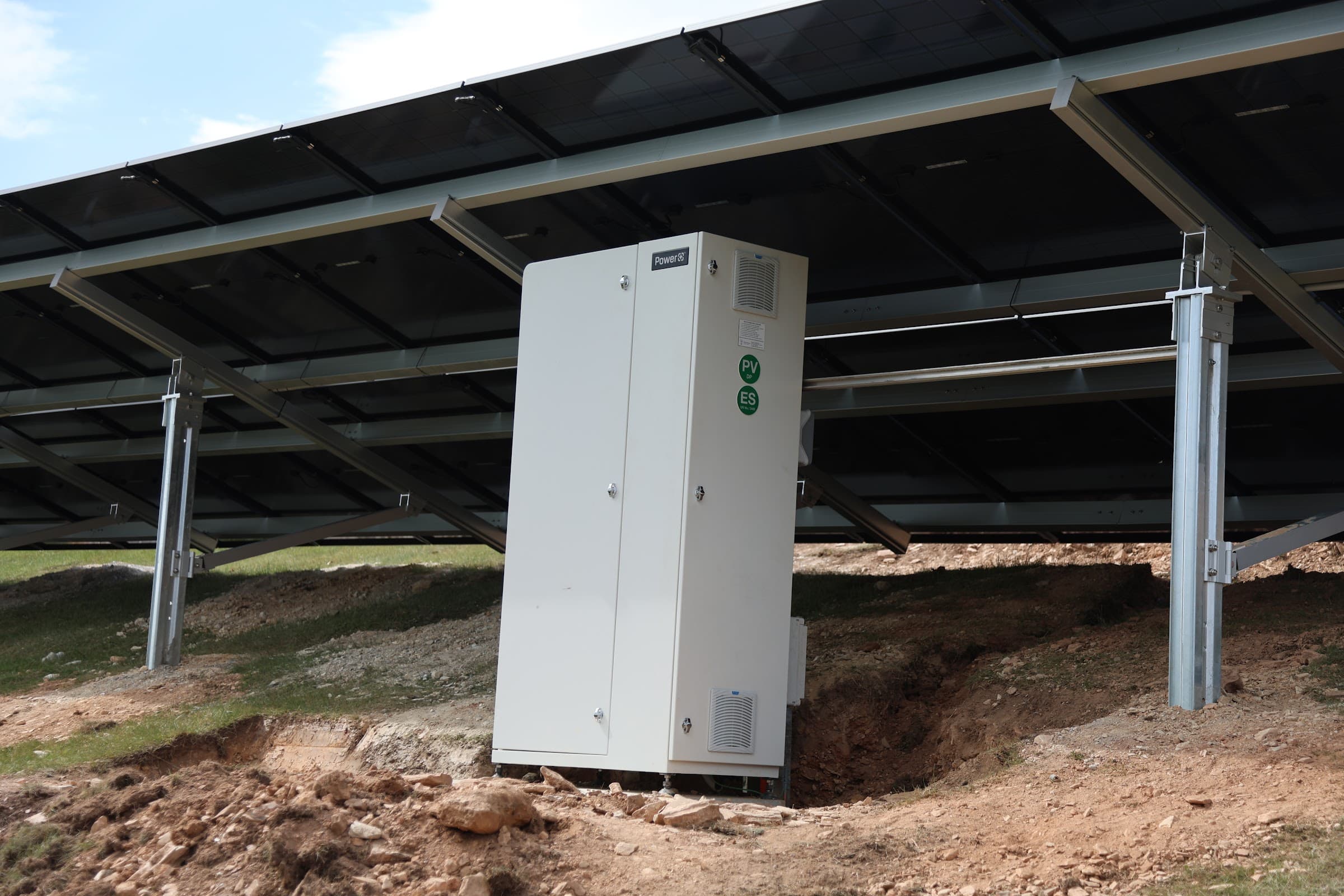
The trade offs are real. A generator means fuel, servicing, noise and a machine that has to start reliably on a cold July morning. The best way to keep its hours low is a solar array sized for winter, not a bigger battery. Our off grid systems are built on Victron inverter chargers with lithium batteries, a winter sized array and an auto start generator as backup. Through the GX monitoring and the VRM portal we can see from Trentham how often the generator is running. There is more on choosing one on our generators page.
What can an owner safely check on a battery system?
You can safely watch your battery's state of charge and generator run hours on the display or the monitoring app. That tells you more about whether the battery is the right size than anything else. A battery that falls to its low limit most winter evenings, or a generator that starts every day in June, means the system is undersized or your use has grown.
Other things an owner can safely do:
- Keep vents and the space around the battery and inverter clear of stored gear.
- Check the generator's fuel level, and only refuel with the engine stopped and cool.
- Write down any alarm messages so your electrician can see them.
Leave the battery enclosure, DC isolators, switchboard and generator wiring alone. Battery systems store a lot of energy and can deliver very high currents. Any work inside them, adding modules or changing settings needs a licensed electrician.
Mick McDonald
Technical Director, Trentham Energy
Questions about your own system? Call 1300 3458 00 or send us a message.
Sources