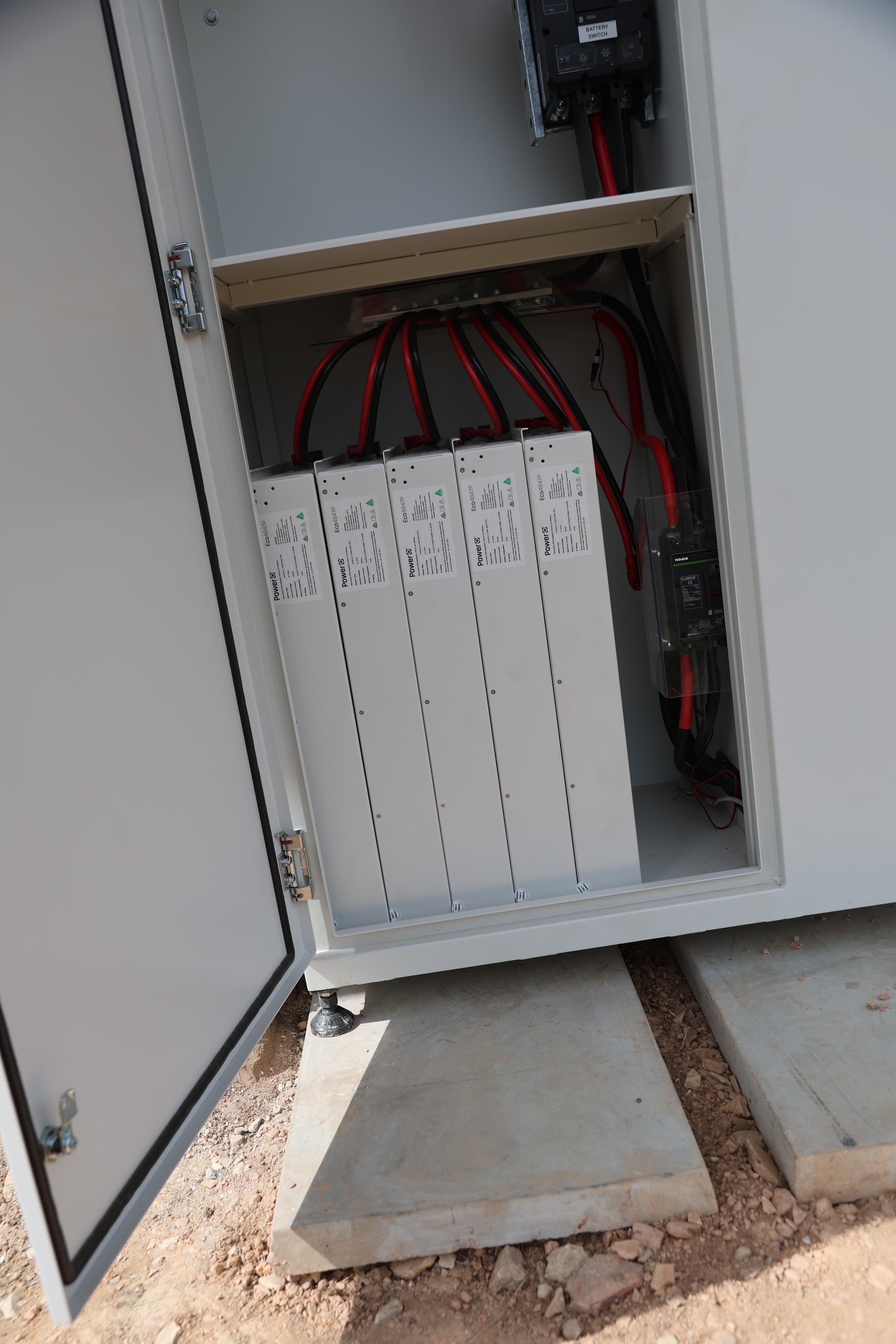
Lithium costs more on the day and less over the life of an off grid system. Cycle life, usable capacity, cold weather, maintenance and what to do with a lead acid bank that is on its way out, explained for Central Victoria.
Every off grid system we design today uses lithium batteries. Ten years ago nearly every system in Central Victoria ran on lead acid, flooded or gel, in a vented box in the shed, and a lot of those banks are now failing. If you are weighing a new system or wondering what to do with an old bank, this is the honest comparison.
The short version
Lithium costs more per kilowatt hour on the day you buy it and less per kilowatt hour over the years you own it. It gives you about 90 percent of its capacity to use, lasts thousands of cycles, needs no maintenance, does not mind sitting half charged through a grey week, and tells the system exactly how it is feeling. Lead acid gives you half its capacity, lasts five to eight years in off grid service, wants watering and equalising, and sulphates if it is left low. On an off grid system, where the battery works every single day, the gap is not close.
Usable capacity
A battery's nameplate is not what you can use. A lead acid bank should not be taken below about 50 percent state of charge if you want it to last, so a 20 kilowatt hour lead acid bank gives you 10. A lithium iron phosphate bank is designed to run to about 90 percent depth of discharge, so a 20 kilowatt hour lithium bank gives you 18.
That is why our sizing model, the one printed on the sizing tool page, sizes lithium at a 90 percent depth of discharge. The same house that needed a 40 kilowatt hour lead acid bank for two nights of autonomy needs about 22 of lithium for the same two nights. You buy less battery and get more out of it.
Cycle life
An off grid battery cycles every day: charged by the sun, drawn down overnight. Over fifteen years that is more than five thousand cycles.
Lead acid banks in off grid service are rated for somewhere between one and two thousand cycles at 50 percent depth of discharge, and fewer when they are taken deeper or left low, which is exactly what happens to them in a Central Victorian winter. In practice the banks we replace are five to eight years old. Lithium iron phosphate cells are rated for several thousand cycles at 80 to 90 percent depth of discharge, and because an off grid bank sized for two nights only cycles part way most days, they cycle gently. The battery manufacturers' own warranties run to ten years; the terms are on each battery's page, including PowerPlus Energy, the modules we fit where the design allows.
Over the life of a system, then, a lithium bank is bought once where a lead acid bank is bought two or three times, and each lead acid bank was bigger to start with.
Partial charging and grey weeks
This is the difference that matters most in our climate. A lead acid bank wants to be brought to a full charge regularly. Left partly charged through a run of overcast days, which is what June does, it sulphates and loses capacity for good. Off grid owners learned to run the generator for the battery's sake as much as the house's.
Lithium does not care. It can sit at 40 percent for a week, take whatever the sun offers, and be none the worse. The generator runs for the house, when the house needs it, not for the chemistry.
Cold weather
Trentham sits at 700 metres and the shed can drop below freezing on a winter night. Lithium iron phosphate cells deliver power fine in the cold but should not be charged below about zero degrees; a good battery management system refuses the charge until the cell warms, and some modules carry heaters. In a cabinet in a shed this is rarely a problem, and we place and insulate the enclosure with it in mind. Lead acid loses capacity in the cold, so a winter night draws it deeper than the design expected, which shortens its life further.
Maintenance and safety
Flooded lead acid needs watering, equalising charges and a vented enclosure for the hydrogen. Gel and AGM need less but still want careful charging. Lithium needs none of that: no watering, no gassing, a sealed module with its own management system that balances the cells and reports to the system. Lithium iron phosphate is the stable chemistry of the lithium family, used in home storage for exactly that reason, and the battery management system is what makes it safe: it will not let the bank be over charged, over discharged or charged too cold.
What to do with a lead acid bank that is failing
The signs are familiar: the house gets through fewer nights, the generator runs more mornings, one cell reads low and drags the rest down. When that happens the bank is finished, and the question is what else changes with it.
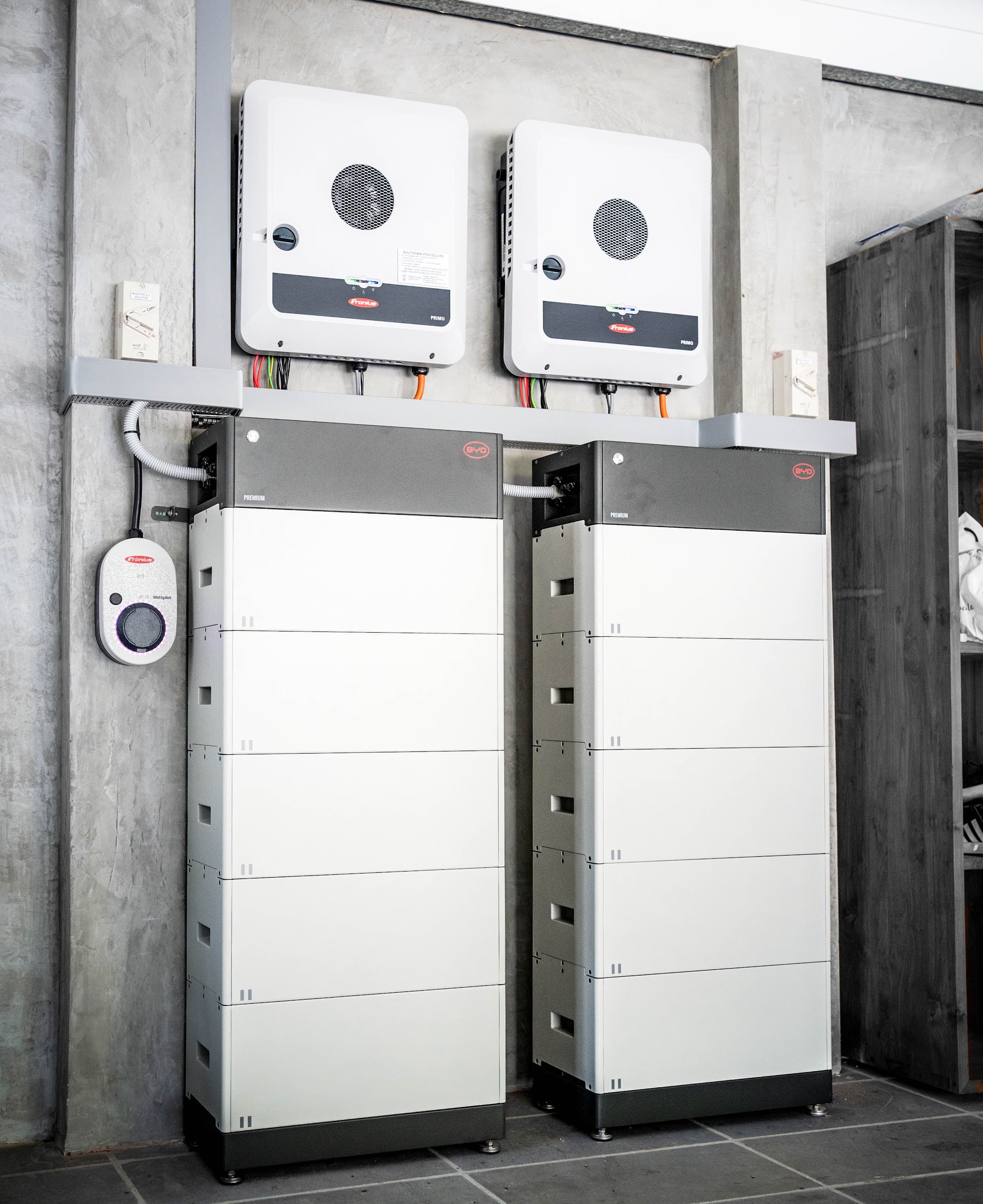
A lithium bank needs a charger and an inverter that follow its charge profile and talk to its management system. Many older inverters cannot, so the battery upgrade usually brings a Victron inverter charger and charge controller with it. The panels, the racking, the enclosure and the cabling often stay. Our upgrades and repairs page sets out the checklist and how to stage it.
Questions
Is lithium safe in a shed?
Lithium iron phosphate, the chemistry used in home and off grid storage, is the stable member of the lithium family and is managed by a battery management system that prevents the conditions that cause trouble. Installed to the Australian standard by a licensed electrician, with the clearances and enclosure the standard calls for, it is the safer battery to live with: no hydrogen, no acid, no watering.
Can I mix a new lithium bank with my old lead acid bank?
No. The two chemistries want different charge voltages and the system can only run one profile. The old bank comes out.
How much battery do I need?
The number of nights you want the house carried with no sun, times your daily use, divided by 0.9. One or two nights is normal, and each extra night is the biggest cost lever in the system. The sizing tool does the sum for your loads.
Sources
- The sizing method, printed on our sizing tool page
- PowerPlus Energy batteries, the modules we fit, with the warranty terms
- Replacing an old off grid system
Written by the Trentham Energy team.