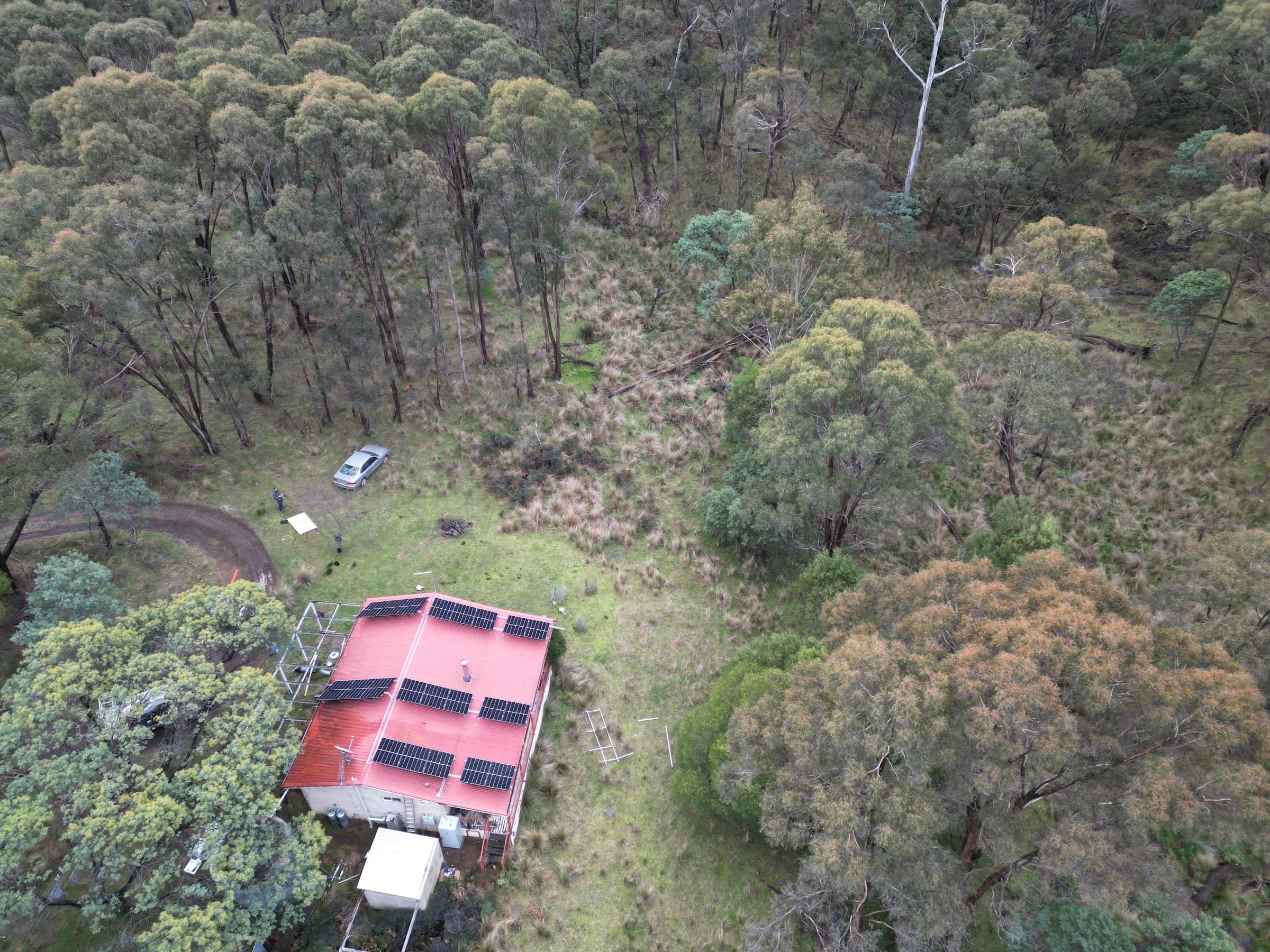
Check battery age, inverter support, generator hours, monitoring access and the Certificate of Electrical Safety, then get it inspected before settlement.
Before you buy a property with an off grid system, check five things: how old the batteries are and what type they are, whether the inverter's maker still supports it, how many hours are on the generator, whether the monitoring login can be handed to you, and whether the paperwork exists, especially the Certificate of Electrical Safety. Then have a licensed electrician who works on off grid systems inspect it before settlement. On an off grid block, that system is your whole electricity supply, and a tired one is an expensive surprise after you move in.
Why does the off grid system matter so much when you buy?
On an off grid property there is no grid to fall back on, so the system runs the water pump, the fridge, the lights and the heating controls. If it is undersized, worn out or orphaned by a maker that has gone, you have to fix it straight away, not when it suits you.
The batteries and the inverter are the parts that wear and cost the most to replace. The panels usually last the longest. The generator is somewhere in between, depending on how hard it has worked. Each part needs its own check, and the vendor usually knows more than the listing says.
What paperwork should come with an off grid system?
You want the Certificate of Electrical Safety (COES) for the original install and for any later work, the manuals for the inverter, batteries, charge controllers and generator, the battery warranty document, and any service records. A system diagram or layout from the installer is a bonus.
The COES is a legal document issued by a Registered Electrical Contractor or licensed electrician, and it is required under the Electricity Safety Act 1998. Energy Safe lists solar systems, battery energy storage systems and motor generator installations as prescribed work, which means an independent Licensed Electrical Inspector has to inspect them before they are turned on. So an off grid system should have at least one prescribed COES behind it.
Energy Safe has an online search that shows whether an electronic COES was lodged for the address, but it covers only electronic certificates from July 2019 and gives the number only. An owner or occupant can apply to Energy Safe for copies at no fee, so before settlement ask the vendor to do it. Electricians only have to keep a copy for three years, and if a certificate cannot be found, Energy Safe suggests having another Registered Electrical Contractor check and test the work and issue a COES for it. Energy Safe explains the whole process on its Certificates of Electrical Safety page.
Read the battery warranty to see whether it passes to a new owner and what conditions apply. If the original installer has closed, ask the vendor for the manufacturer's details too, because the warranty may still sit with the maker rather than the installer.
How old are the batteries, and what type are they?
Find out the install date and the chemistry first. Batteries wear out before anything else in an off grid system, and their age and condition decide most of what you might have to spend in the first few years.
- Flooded lead acid batteries need regular topping up with water and specific gravity readings. Ask for the maintenance log. If nobody has kept one, assume they have not been looked after.
- Sealed lead acid (gel or AGM) batteries need less upkeep, but there is less to see from the outside, so the age and the monitoring history count for more.
- Lithium batteries have a battery management system that records a lot of useful data. Get the brand, model and serial numbers, and read the warranty. Some lithium warranties set limits beyond a number of years, such as how much energy has gone through the battery, so the date alone may not tell the whole story.
Labels on the cells or the battery cabinet often show a manufacture date. Photograph them from a safe distance and do not open the enclosure.
Is the inverter make still supported?
Read the make and model off the label, then check three things: the maker is still trading, firmware and spare parts are still available, and a local electrician can service it. A good inverter from a maker that has gone can still work for years, but a fault can leave you with nothing.
Victron Energy and Selectronic are both still trading and still publishing documentation and updates for their gear. Selectronic still publishes firmware and SP LINK software for the SP PRO, and it tells owners there is normally no need to update the firmware unless their system integrator recommends it. We service Selectronic SP PRO, PowerPlus Energy and SkyBox systems as well as building on Victron, and our page on Selectronic and PowerPlus systems covers what we look for in those. If the inverter carries a brand you cannot find a current website for, treat that as something to price in.
How many hours are on the generator?
Read the hour meter and compare it with the service records. High hours are fine on a well serviced generator. What you are really looking for is how often it runs, because that tells you whether the solar and batteries are keeping up.
Very few hours can also be a warning. It may mean the generator has sat idle with stale fuel and has never been tested in a real winter. Ask the vendor to show you an automatic start from the inverter or controller, not a manual start at the generator. Our generators page explains how auto start backup should work.
One safety point: an auto start generator can start without warning. Do not open its enclosure or reach near the engine unless it has been locked out by someone who knows the system.
Can you get access to the monitoring?
Ask for it now, before settlement. The monitoring history is the best evidence you will get of how the system really performs, especially in June and July.
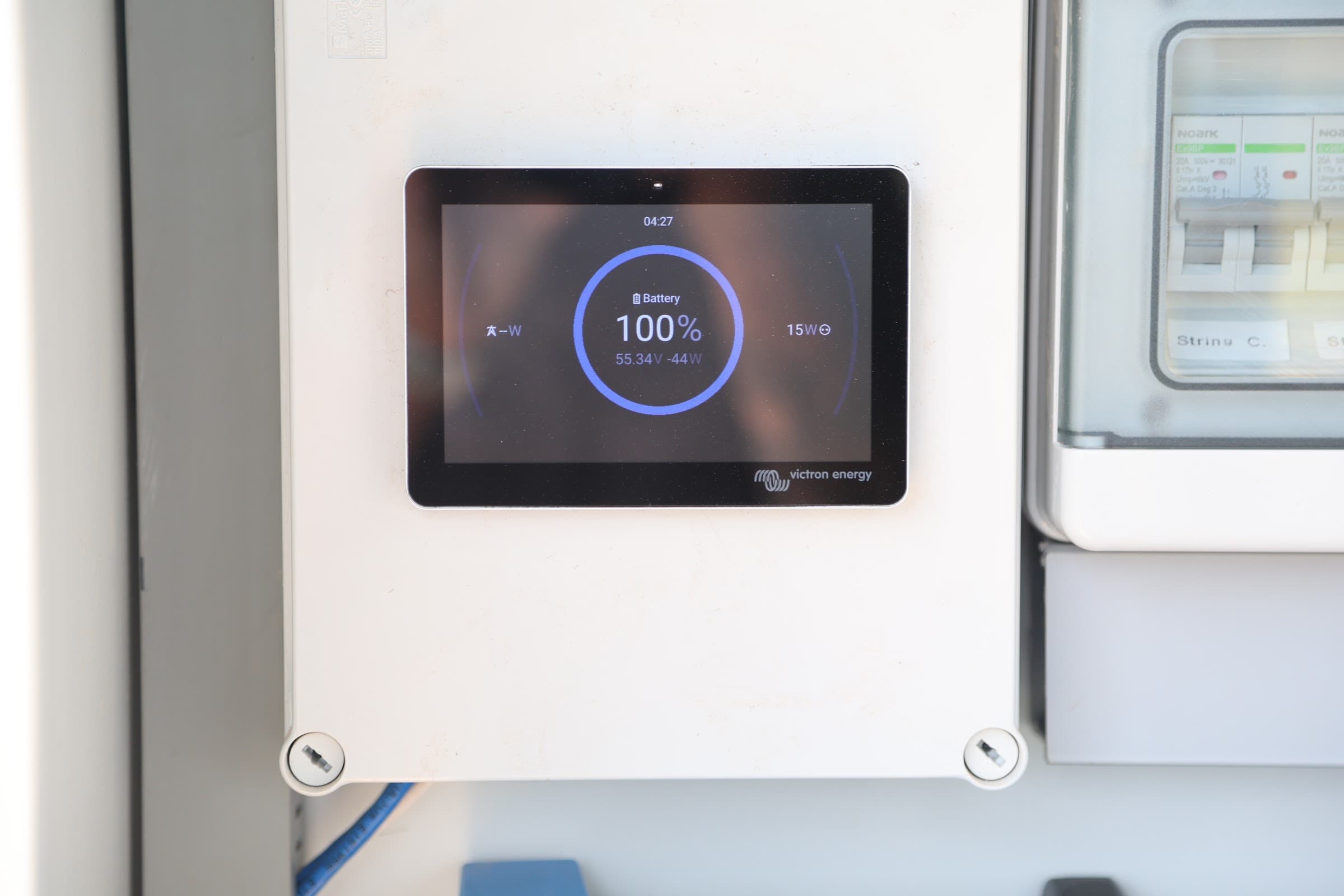
On a Victron system the monitoring sits in the VRM portal, and the installation stays registered to the vendor's account until it is handed over. Victron's manual explains that an account holder can add users and make a new user an admin by giving them full control. Ask the vendor to invite you now so you can look through the history, then hand over full control at settlement. If the administrator cannot be reached, Victron says a change of administrator goes through the dealer the equipment was bought from, with the VRM Portal ID and proof of ownership. That is much easier to sort out while the vendor is still answering the phone.
In the history, look at how low the battery state of charge goes in winter, how many hours the generator runs each month, and any alarms that keep coming back.
What signs of trouble can you spot on a walk through?
You can spot a lot without touching anything. Look for:
- A battery room or cabinet that smells of acid or rotten eggs, or batteries that look swollen, cracked or leaking
- White or green crust on terminals and cables, seen from a distance
- Warning lights or error codes on the inverter or charge controller display
- Batteries in a living area, or in a closed shed with no ventilation
- Unlabelled switchboards, extension leads feeding fixed loads, or wiring that looks home made
- Panels shaded by trees that have grown since the install, or cracked and heavily soiled panels
- Chewed cables or rodent droppings near the gear
- A vendor who says the generator "just runs a bit in winter" without knowing how much
As a buyer, you can safely read displays and hour meters, take photos and ask questions. Opening battery enclosures, switchboards or inverter covers, testing anything live, and handling fuel lines all need a licensed electrician or the right technician. Batteries can deliver very high fault currents even when the system looks switched off.
What should you ask the vendor?
- Who installed the system, and when? Has any of it been replaced or added since?
- Can you provide every Certificate of Electrical Safety, plus the manuals and warranty documents?
- What batteries are they, when were they installed, and is there a maintenance log?
- How many hours does the generator run in a typical winter month, and when was it last serviced?
- Can you add me to the monitoring before settlement and hand over admin rights at settlement?
- Has the system ever shut down, and what caused it?
- Who services it now, and can I speak to them?
Should you get an off grid inspection before settlement?
Yes, and ideally before you are locked in. Ask your conveyancer or solicitor how to make the purchase depend on a satisfactory inspection. A standard building inspection is not designed to test an off grid power system.
A proper inspection checks battery condition and usable capacity, reads the inverter and battery logs, tests the generator auto start, checks earthing and protection, and compares the system's size with how your household will actually use power. That last check matters. A system that suited a retired couple on weekends may not handle a family with a heat pump and an electric car. If problems turn up, our upgrades and repairs page covers what can usually be fixed and what needs replacing. We do off grid work anywhere in regional Victoria.
Mick McDonald
Technical Director, Trentham Energy
Questions about your own system? Call 1300 3458 00 or send us a message.
Sources