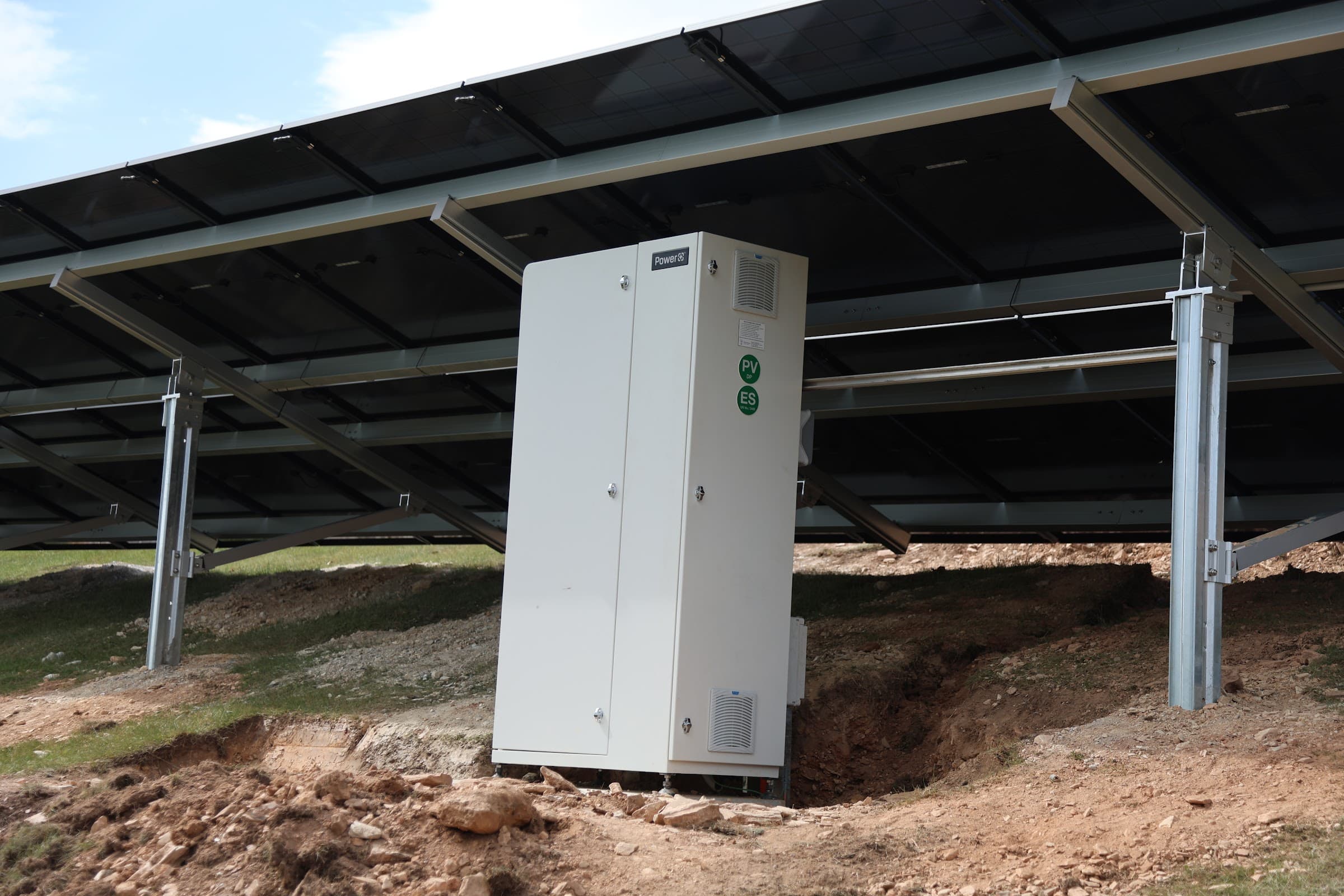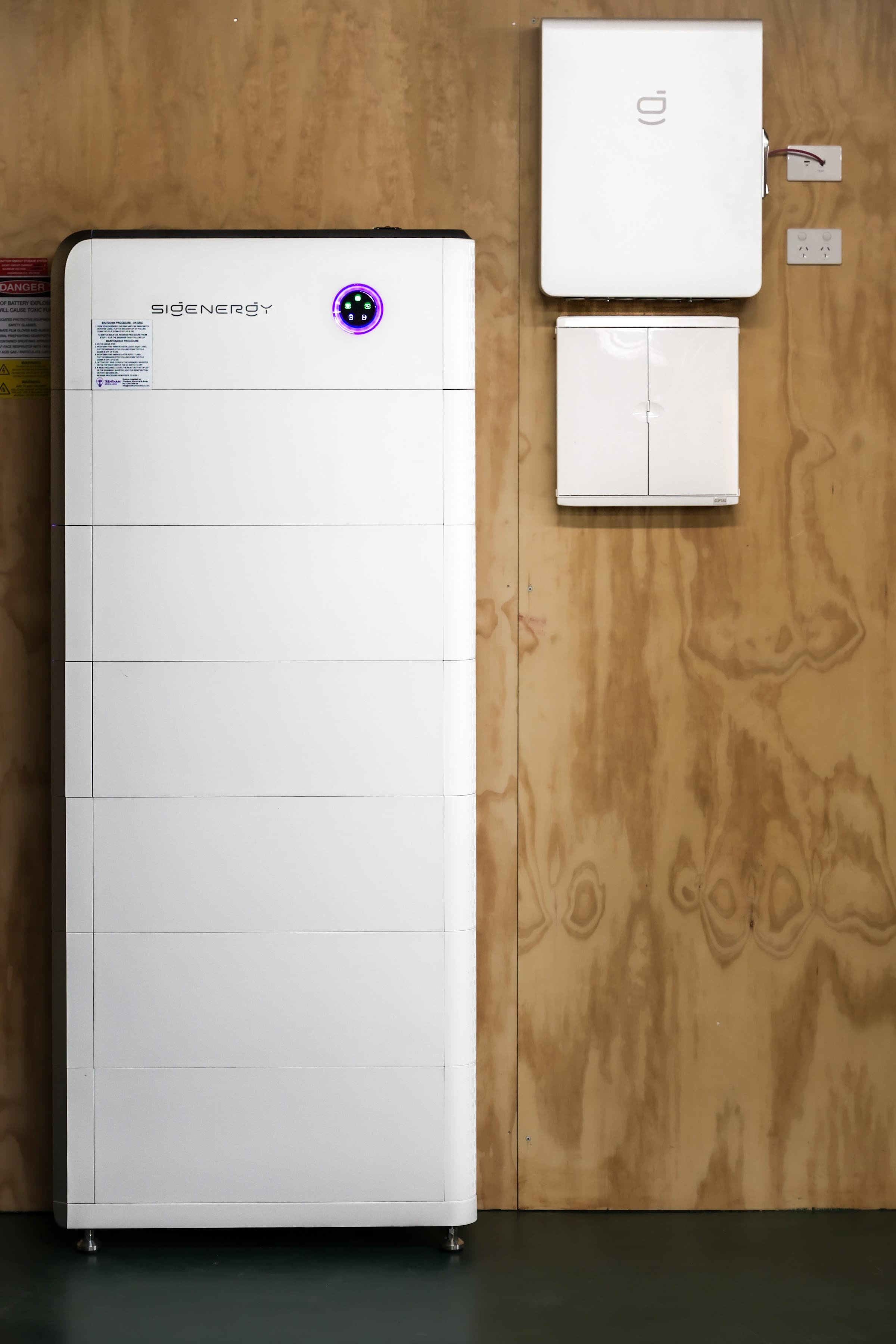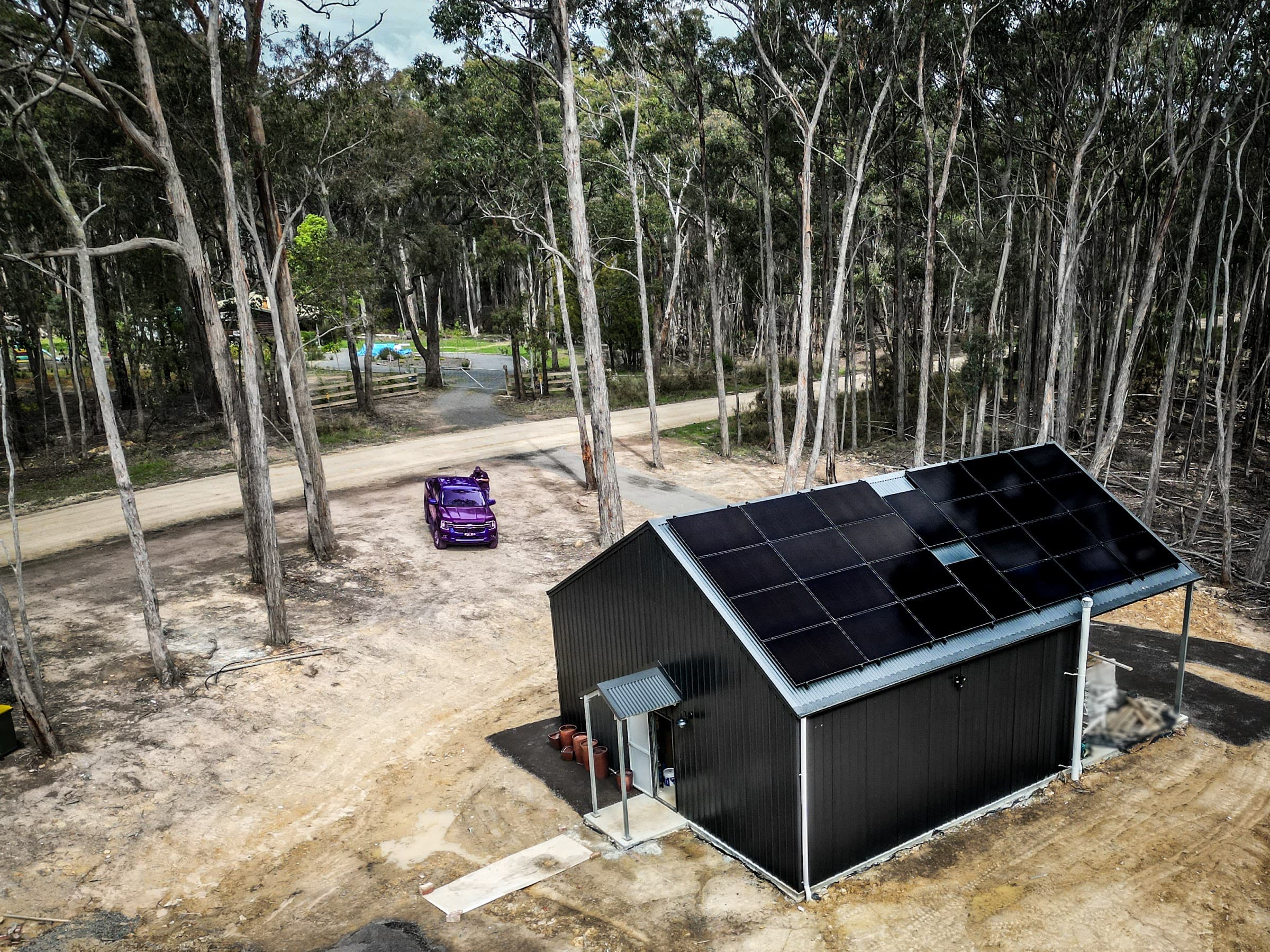
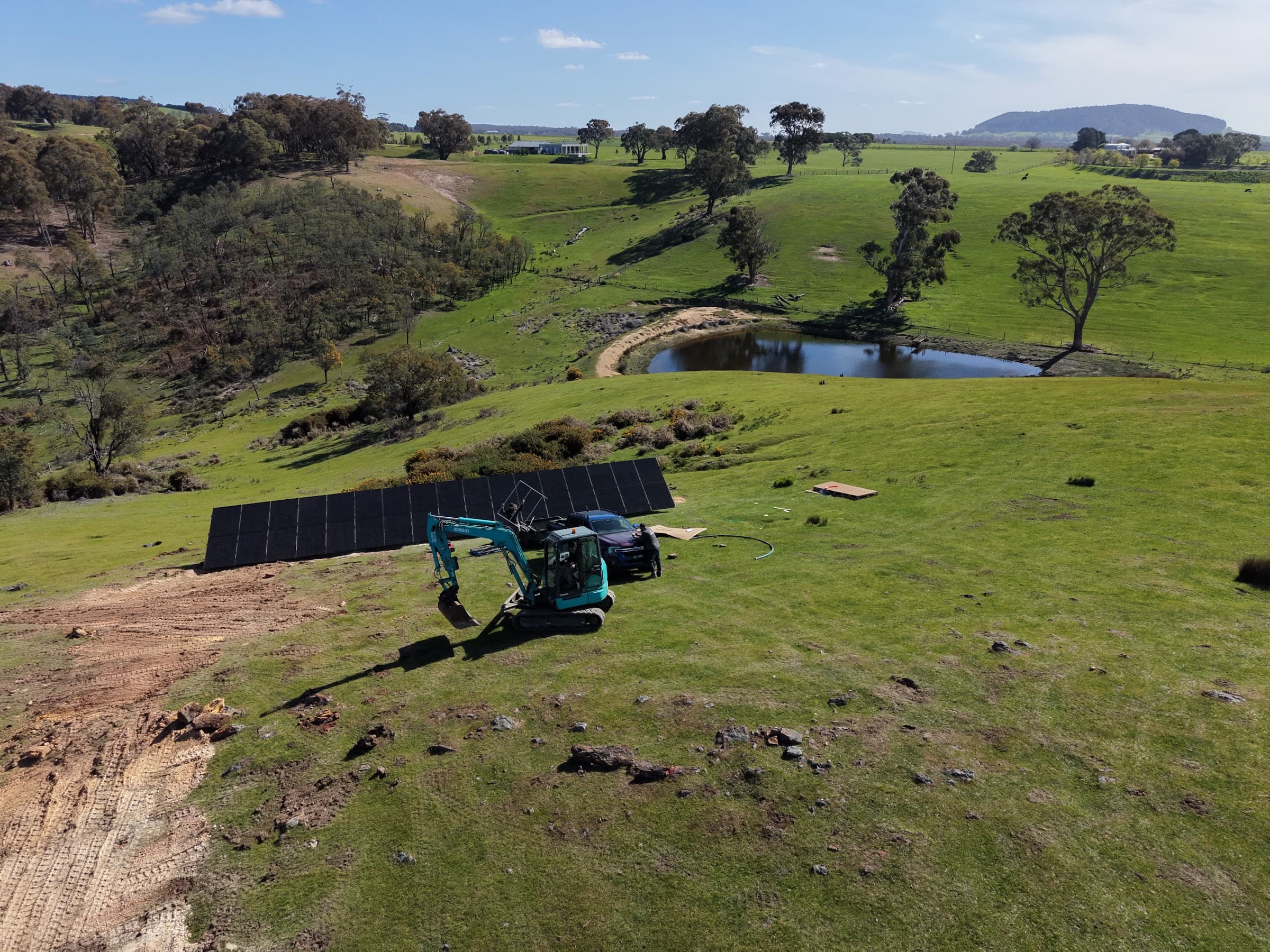
Battery and inverter size, the array and mounting, the generator, cable runs, switchboard work and access decide what off grid solar costs in Victoria.
The cost of an off grid solar system in Victoria depends mostly on how much power you need through the darkest week of winter. After that, it depends on how hard your site is to build on. The battery, the inverter, the solar array and its mounting, and the backup generator make up the equipment bill. Cable runs, switchboard work and access make up the labour. That is why two houses with similar power use can get very different quotes.
We don't give a single price for off grid systems in this article, because a number that isn't based on your site and your loads is only a guess. Our off grid cost guide is where we talk about dollars, and the free sizing tool needs no login. This article explains what moves the number up or down, and why.
What drives the price more than anything else?
Your winter energy use. An off grid system has to get you through short, cloudy days in June and July. Every kilowatt hour you use on those days makes the battery, the array and the generator bigger together.
That makes your choice of appliances a cost decision. Electric space heating, an electric oven used every night, a bore pump and a big spa heater are the loads that make winter systems large. You can shrink the system you need by heating with wood or a heat pump, running the pump and the washing in the middle of a sunny day, and choosing efficient fridges. Changing what you run usually saves more than changing brands.
How much does the battery add to the cost?
The battery is often the largest single piece of equipment. Its size depends on two things: how much you use overnight, and how many days you want to run without sun before the generator takes over. A bigger battery means fewer generator hours, but you pay for that capacity up front.
Chemistry, warranty terms and whether the battery communicates properly with the inverter also affect the price. We build on lithium batteries. They cost more than lead acid but handle deeper daily cycling.
Does the federal battery discount apply off grid?
Yes, for homes people live in. The Cheaper Home Batteries Program runs through the Small scale Renewable Energy Scheme. The Clean Energy Regulator says an off grid battery must be installed on a dwelling someone lives in, such as a remote farmhouse. Sheds and bore pumps are not eligible. The regulator last updated that page on 31 July 2026. These are the rules that change your quote:
- The discount comes as small scale technology certificates (STCs), based on the battery's usable capacity. The STC factor is 6.8 per kWh for installs from May to December 2026. It drops to 5.7 on 1 January 2027.
- Since 1 May 2026 the factor tapers. You get the full rate up to 14 kWh, 60% for each kWh from 14 to 28 kWh, and 15% from 28 to 50 kWh. Usable capacity beyond the first 50 kWh gets no discount.
- The battery must be on the Clean Energy Council approved list and comply with AS/NZS 5139:2019 and state electrical safety laws. It must be installed by a Solar Accreditation Australia (SAA) accredited installer with battery endorsement.
- Sites more than 1 km from the grid do not need a battery that can join a virtual power plant. Closer sites need one that can. The alternative is written evidence from the local network that connecting to the grid would cost more than $30,000, not counting the cost of extending it to a building. The page does not say whether that figure includes GST.
The taper matters for big off grid batteries. Each kWh above 28 kWh now gets only 15% of the full rate, so the last few modules of a very large battery cost close to full price. If you are near the power line, read our page on off grid versus a grid connection first.
Why does inverter size change the price?
The inverter decides how much you can run at once, not how much you can store. If it is too small, the power cuts out when the kettle, pump and washing machine run together. If it is too big, you pay for capacity you never use.
Victron's published figures for the MultiPlus-II 48/5000/70-50 show why we leave a margin. It is rated at 4,000 W continuous at 25°C, 3,700 W at 40°C, and a 9,000 W peak for starting motors (Victron technical specifications). So a hot battery shed in January cuts the output. Welders, compressors and three phase pumps can mean running units in parallel or one per phase. Each step adds hardware and installation time.
Roof or ground mount: what sets the cost of the array?
We size the array for winter sun, and in Central Victoria that means more panels than a grid connected house would need. The panels are only part of the cost. How they are mounted often matters as much.
- Roof mount is usually the simpler structure if the roof faces north, is in good condition and isn't shaded by trees. The catch is that you are stuck with the roof pitch, which is flatter than ideal for low winter sun.
- Ground mount needs footings, a frame and a trench back to the battery shed. In return you can tilt the panels steeply for winter, keep them out of shade and reach them easily for cleaning.
Panels on an off grid system can also earn STCs. The Clean Energy Regulator sets a deeming period of 5 years for systems installed in 2026, falling to 4 years in 2027. The panel discount shrinks each year until the scheme ends in 2030.
Do you need a generator, and what does it add?
For a home lived in all year in Central Victoria, yes. The generator is the backup for long cloudy spells, and it keeps the battery and array at a sensible size. The cost depends on its output, whether it starts automatically, its enclosure and where it sits.
The generator has to be big enough to run the house and charge the battery at the same time. The MultiPlus-II 48/5000 charger can push up to 70 A into a 48 V battery, and its programmable relay can be set to start and stop a generator. The quote also has to cover the auto start wiring, a weatherproof slab or enclosure, room for the exhaust and safe fuel storage. Our generators page covers the options.
How do cable runs, switchboard work and access change the quote?
These costs don't show up on a parts list, and they are where quotes for similar systems differ most.
- Cable runs. The further the array is from the battery shed, and the shed from the house, the thicker the copper cable has to be. Thicker cable limits voltage drop, the power lost along a long run. Trenching through rock, crossing driveways or running conduit up a slope adds days.
- Switchboard work. Old boards with ceramic fuses and no safety switches often need replacing before an inverter can be connected. Sheds, pumps and second dwellings may need their own smaller switchboards.
- Access. Steep blocks, a long 4WD track, a battery cabinet that needs a crane or forklift, and the drive from Trentham all add time for our crew.
You can safely do a few things yourself. Take photos of your switchboard with the cover closed. Pace out the distances between the house, the shed and the sunny spot for panels. Note the details on the nameplate of any generator you already own. Opening a switchboard, touching battery terminals, wiring a generator inlet or handling fuel near electrical gear is work for a licensed electrician. Batteries store a lot of energy even when the system is switched off.
How do you get a figure for your own place?
Read the cost guide to see where a site like yours fits. Then enter your own appliances and habits in the off grid sizing tool. It is free, needs no login, and is the quickest way to see how your winter use shapes the system.
Mick McDonald
Technical Director, Trentham Energy
Questions about your own system? Call 1300 3458 00 or send us a message.
Sources
- Solar batteries (Cheaper Home Batteries Program eligibility, off grid rules and STC factors), Clean Energy Regulator
- Battery rebates are changing 1 May 2026, Clean Energy Regulator
- Calculate small scale technology certificate entitlements (deeming periods and STC factors), Clean Energy Regulator
- MultiPlus-II 230V technical specifications, Victron Energy