
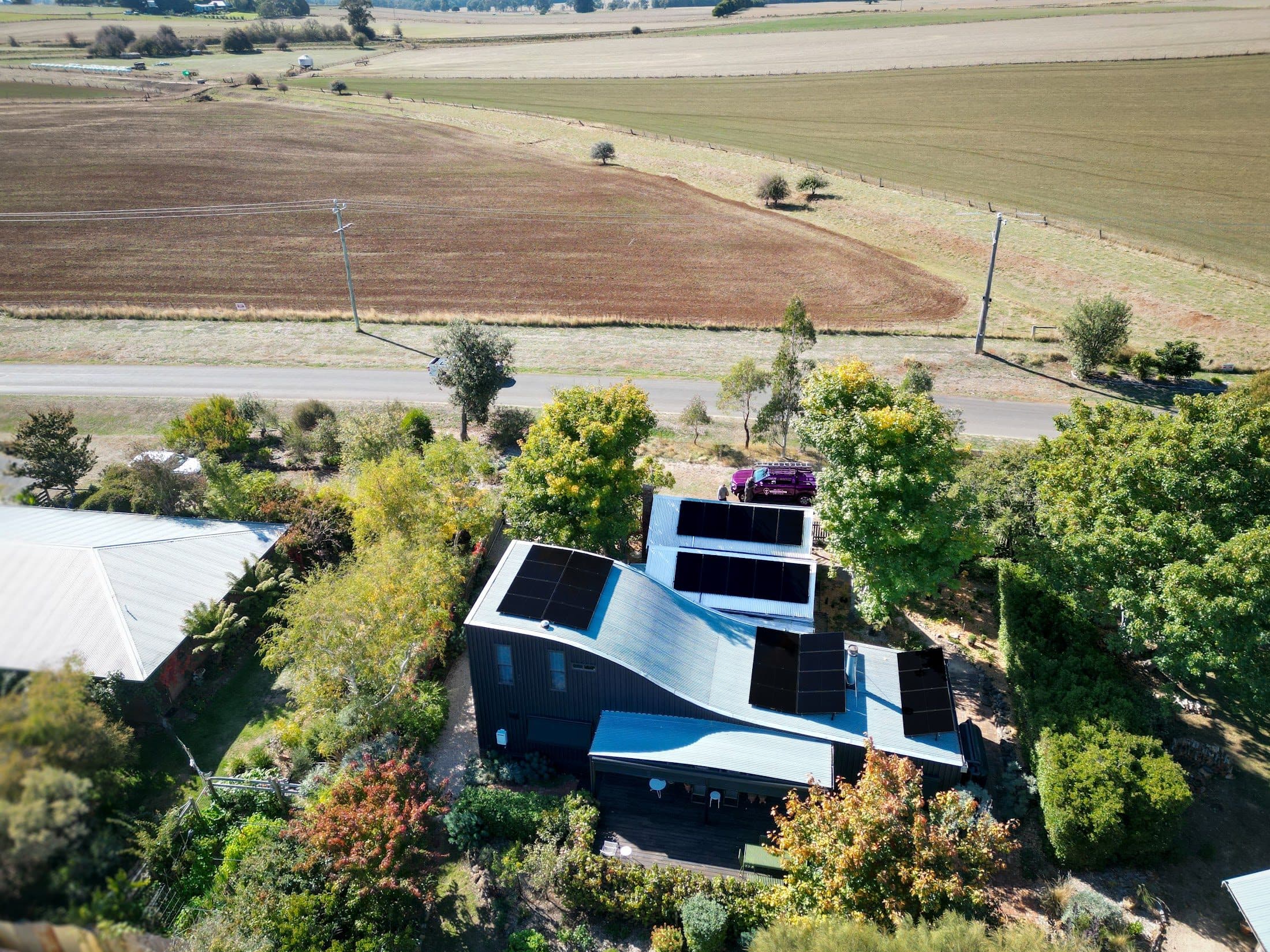
AIKO solar panels
Panels with nothing on the front.
AIKO moved every wire on the cell to the back. More of the panel catches sunlight, it loses less on hot days, and from the street the roof reads as one clean black surface.
At a glance
The numbers behind the panel.
25.0%
module efficiency, Neostar 3P54 500 W
−0.26%
output lost per °C of heat, against about −0.29% on typical good panels
88.85%
output guaranteed after 30 years
25 years
product warranty on the Neostar range
Figures from AIKO's Australian datasheets for the Neostar 3S54 and 3P54.
Visual appeal
The panel people comment on.
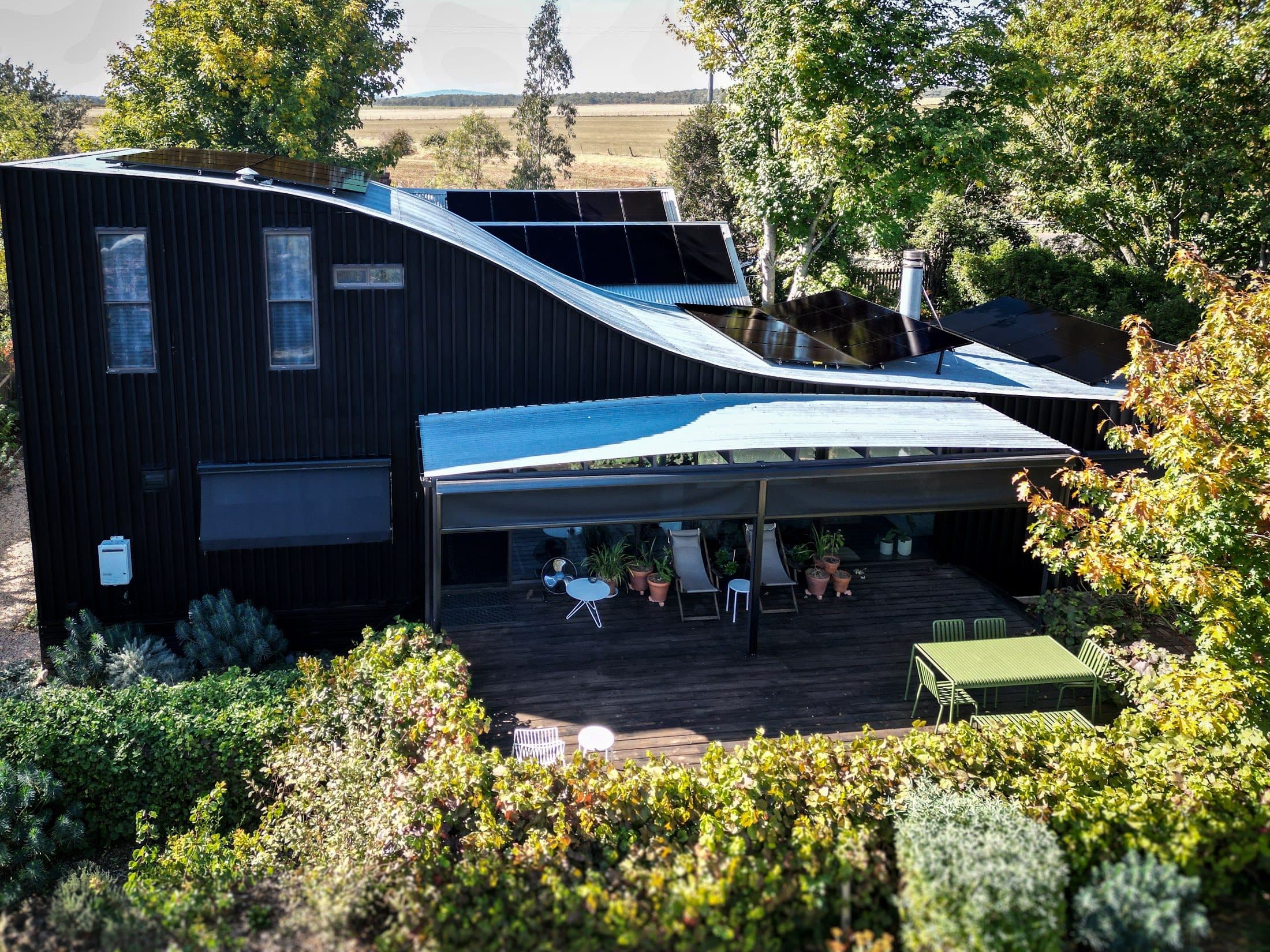
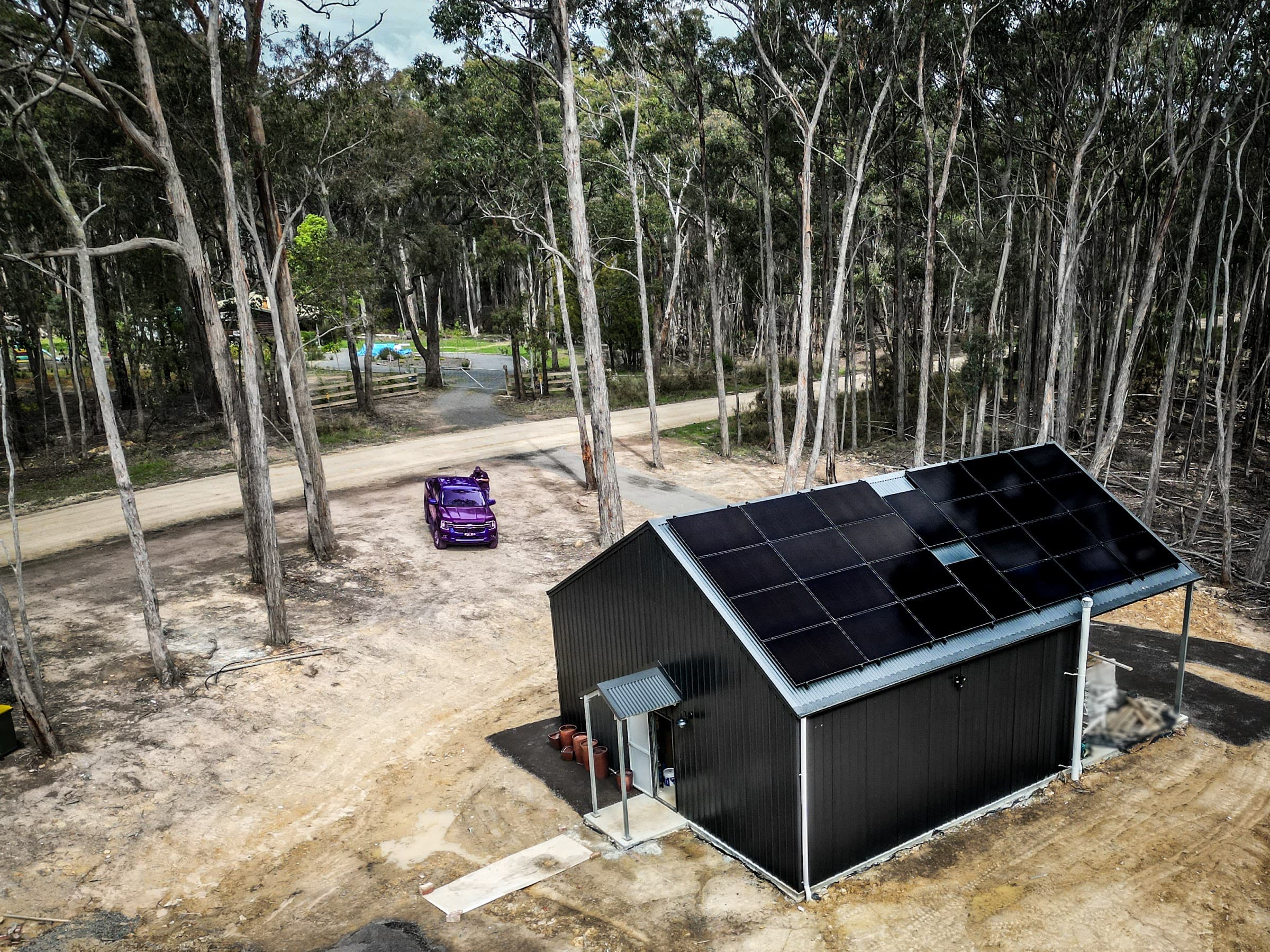
A normal panel has rows of thin silver lines across every cell, and white gaps between the cells. AIKO's All Black panels have black cells, a black backsheet and a black anodised frame, with no lines on the front at all.
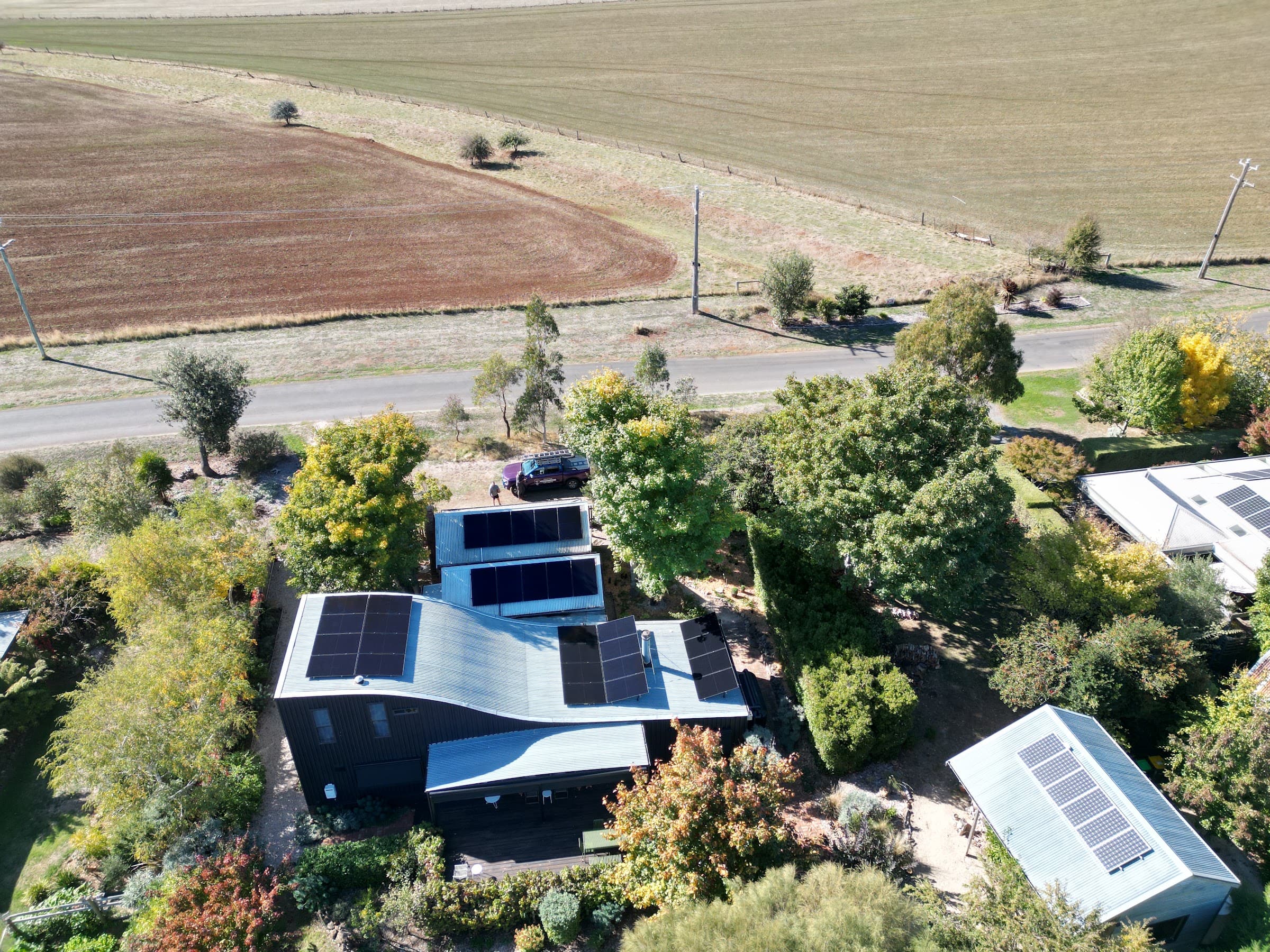
Up close and from the street, the array looks like one dark sheet of glass. It suits a dark roof, a heritage home or new architecture, where a busy grid of silver lines would spoil the look.
- No busbars or fingers on the sunny side
- Black frame and black backsheet on the All Black (S) models
- An even matte finish with no visible wiring
- The same size as a standard panel, so the layout stays tidy
The technology
How back contact works.
Every solar cell is a thin slice of silicon. Sunlight knocks electrons loose inside it, and metal contacts collect them as electricity. The whole story of back contact is about where you put that metal.
On almost every panel sold today, PERC and TOPCon included, one set of contacts runs across the front of the cell as a grid of thin silver lines. They have to be there to collect the current, but they sit right in the path of the light. Make them thinner and they block less light but carry current worse. Make them thicker and they carry current well but shade more of the cell. Every front contact panel is a compromise between the two.
A back contact cell gets rid of the compromise by moving both sets of contacts, positive and negative, to the back.
- 1
Light lands on a clear front
The front of an ABC cell carries only a textured surface, a passivation layer and an anti reflective coating. There are no lines to block the sun, so the whole face of the cell is working.
- 2
Charge travels to the back
Most sunlight is absorbed just under the surface. The freed charge then has to cross the whole thickness of the wafer to reach the contacts. That only works in very pure silicon, which is why AIKO builds on n type wafers, where charge lives long enough to make the trip.
- 3
Positive and negative sit side by side
The back of the cell is laid out in alternating p type and n type strips, like the fingers of two hands laced together. Each set has its own metal comb. Because these sit behind the cell, they can be wide and thick without costing any light, so less power is lost as heat in the wiring.
- 4
Copper instead of silver
AIKO plates the rear contacts in copper instead of printing silver paste. Copper conducts better and does not need high temperature firing. Under it, tunnel oxide and polysilicon layers stop charge being lost at the surface before it reaches the contacts.
There is a second benefit. With no ribbon crossing the front, the cells can sit closer together, so more of the panel is working cell and less is gap.
Back contact is not new. It has been the premium end of solar for about 40 years, best known from SunPower. What AIKO did was make it at mass market scale. In February 2026 AIKO and Maxeon, SunPower's successor, settled their patent dispute with a licence covering everywhere outside the United States, so supply here is not in question.
Performance
Where you see the extra output.
More watts from the same roof
Up to 500 W from a panel the size of a standard 54 cell module. On a tight roof that can mean an extra panel's worth of output without an extra panel.
Hot days
Every panel loses output as it heats up. AIKO loses 0.26% per degree against about 0.29% on a typical good panel. On a hot January roof that adds up to more power when you are running the air conditioner.
Small shadows
When a single cell is shaded, an ABC cell keeps passing current instead of switching off a third of the panel. An independent roof test in Brisbane saw about 50 W lost under a small shadow, against about 150 W on a conventional panel.
Slow ageing
No more than 1% loss in the first year and 0.35% a year after that, guaranteed to 88.85% at year 30. A typical good panel warrants about 87.4%.
On shade, plainly: the same independent test found little or no gain once a whole row of cells was shaded. AIKO helps with a flue, a vent or a fallen leaf. It does not replace a good roof layout, or optimisers on a heavily shaded roof.
Backed up
Independent results, not just claims.
Kiwa PVEL
Top Performer 2025 and 2026
Top Performer in all seven reliability tests in 2026, including hail and UV. Tested on AIKO's large commercial panel.
BloombergNEF
Tier 1 manufacturer
Listed as Tier 1 for the second quarter of 2026.
TÜV SÜD
25.15% module record
A certified world record for module efficiency, set in 2024.
SolarQuotes
Installers' Choice 2025 and 2026
Voted by Australian installers two years running. AIKO has had a Melbourne office since its Australian launch in March 2024.
The panels we fit
AIKO Neostar for homes.
| Model | Power | Efficiency | Look | Size and weight |
|---|---|---|---|---|
| Neostar 3S54 | 465 to 495 W | up to 24.8% | All Black | 1762 x 1134 x 30 mm, 20.6 kg |
| Neostar 3P54 | 475 to 500 W | up to 25.0% | Black frame | 1762 x 1134 x 30 mm, 20.6 kg |
| Neostar 2S54 | 440 to 470 W | up to 23.6% | All Black | 1757 x 1134 x 30 mm, 20.6 kg |
All models: n type ABC half cells, 3.2 mm tempered glass, 3 bypass diodes, rated for 5400 Pa snow load and 40 mm hail. 25 year product warranty and 30 year performance warranty.
Questions
What people ask us about AIKO.
Are AIKO panels worth the extra?
They cost a little more per watt than good value panels. They make the most sense on a roof with limited space, a home where the look matters, or for anyone who wants the longest performance warranty. We can show you both options side by side in your quote.
Will they work with my inverter or battery?
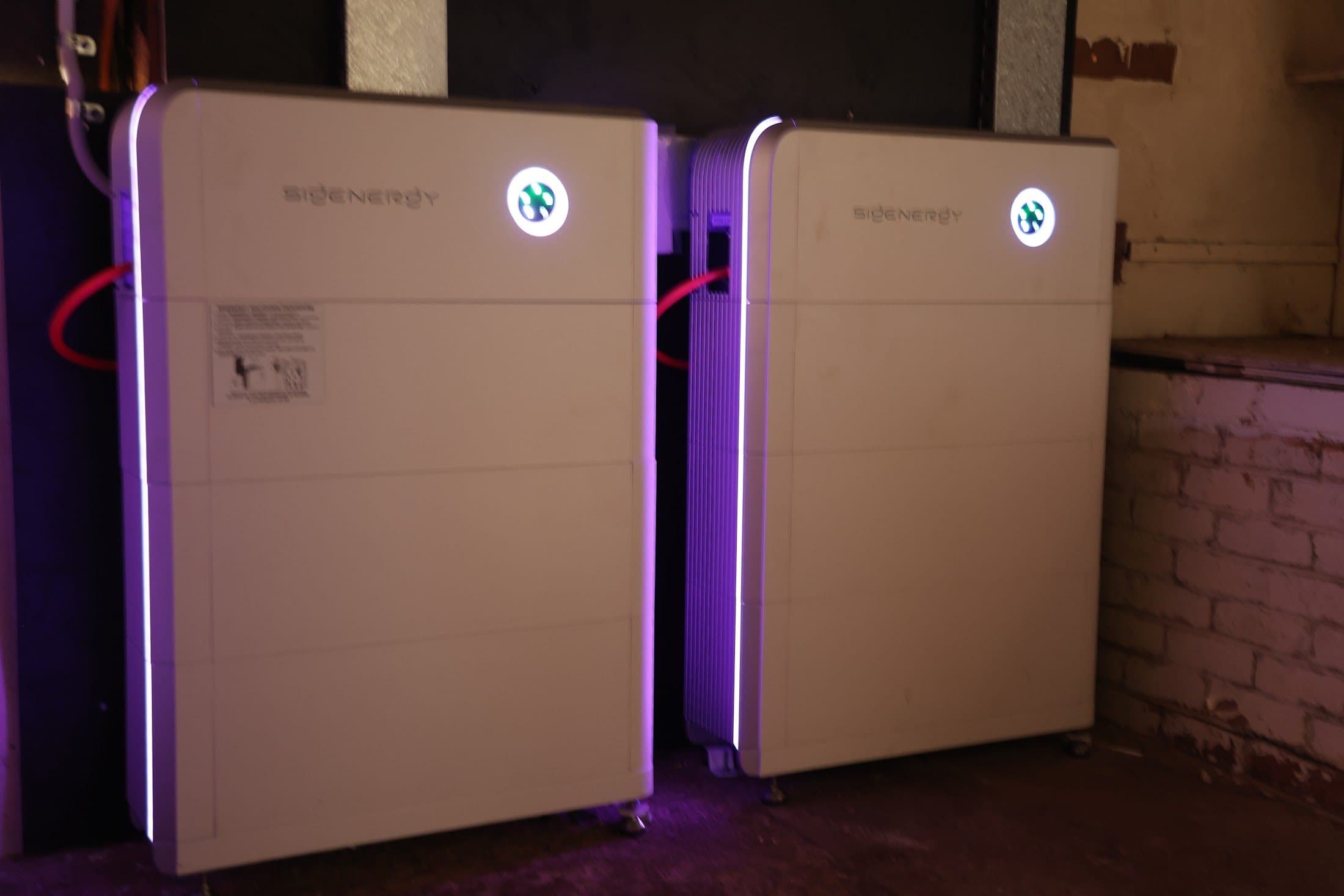
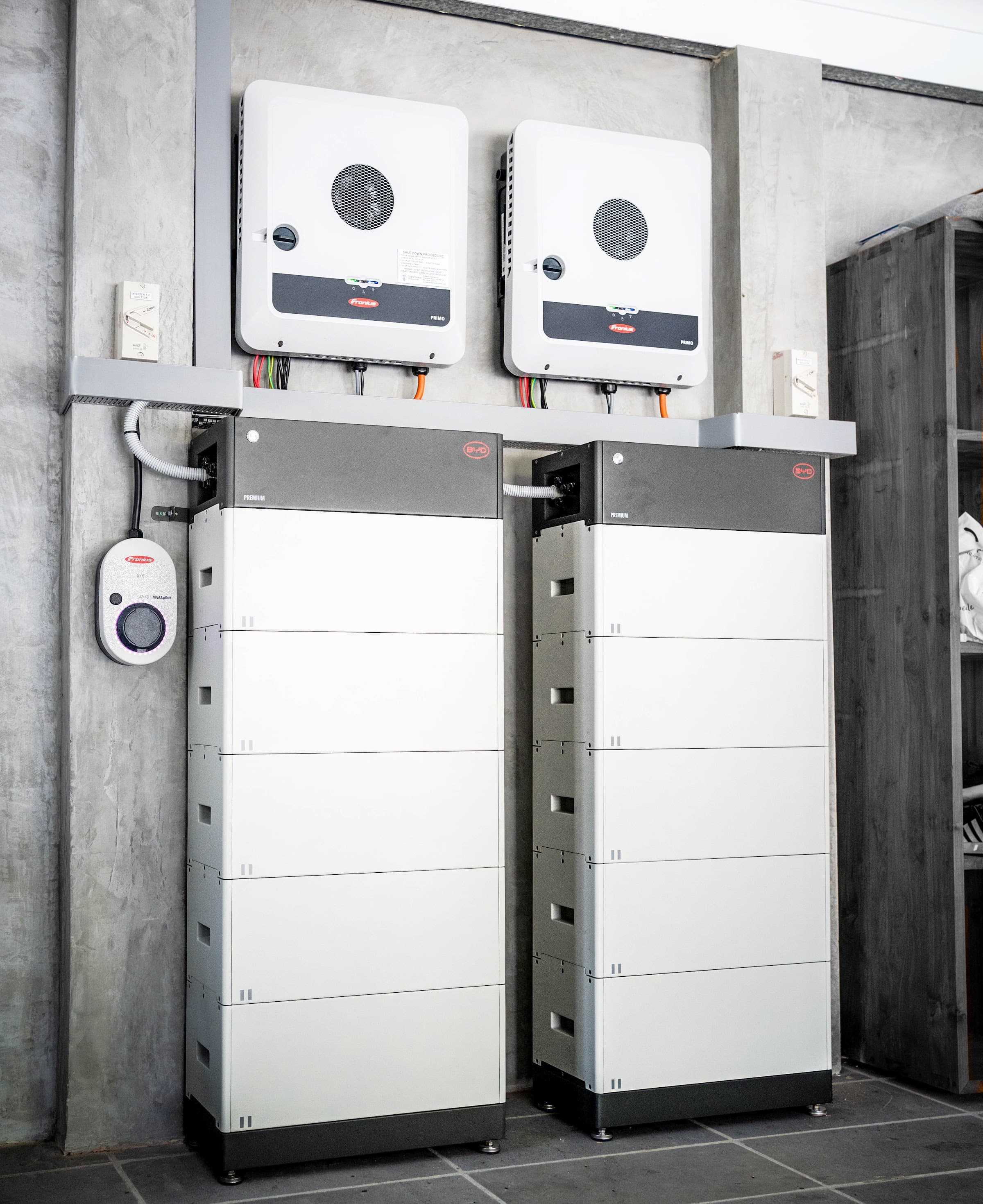
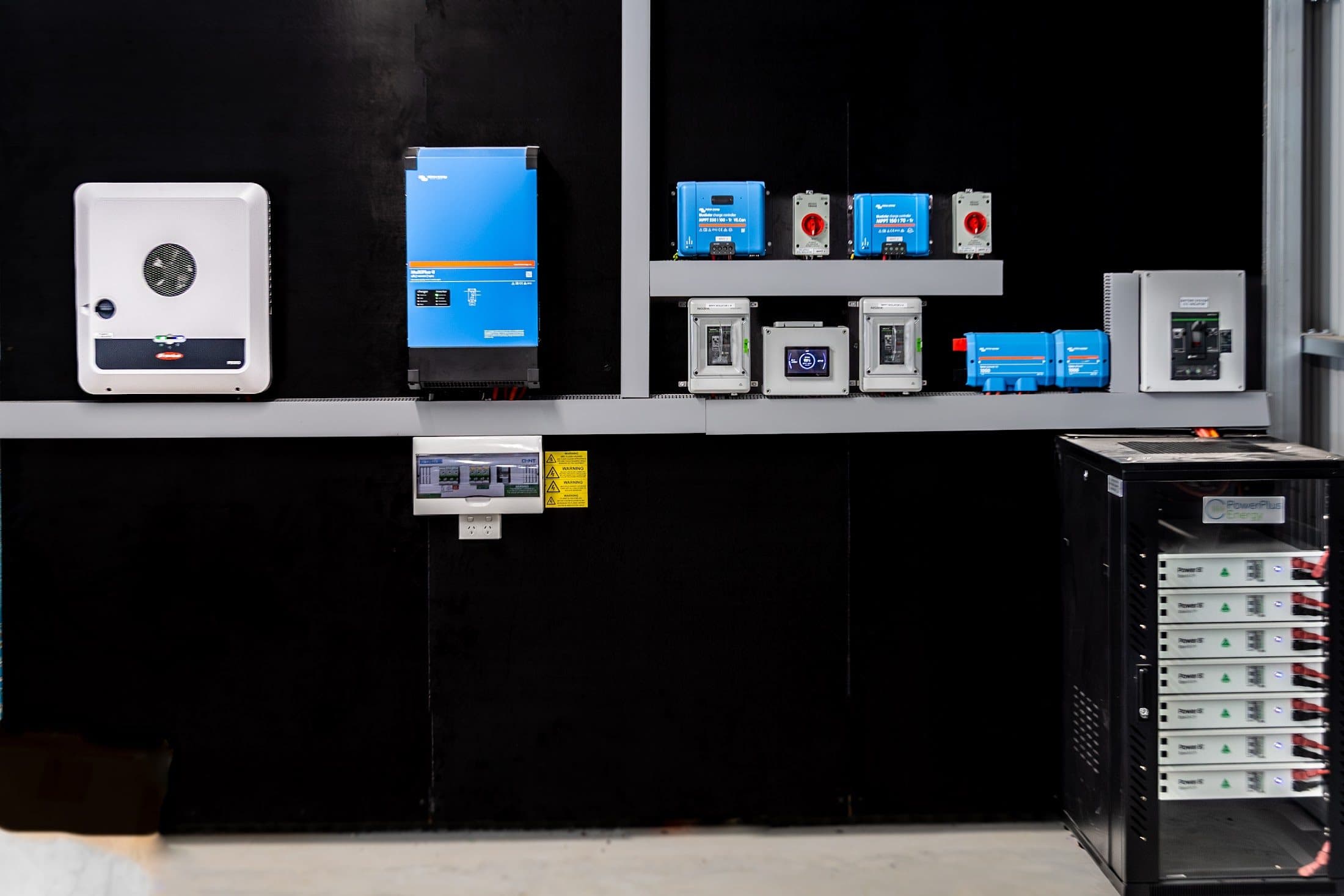
Yes. Electrically they are a standard panel, and they pair with Sigenergy, Fronius, GoodWe and the rest of the gear we install.
Do they qualify for the solar rebate?
Yes. The Neostar range is on the Clean Energy Council's approved list, so it qualifies for the federal small scale rebate.
Are they shade proof?
No panel is. AIKO handles a small shadow much better than a standard panel, but a roof with heavy shade still needs a careful layout or optimisers. We check the shading on your roof before we recommend anything.
Also from us
The rest of the gear we fit.
See what AIKO would make on your roof.
Send us your address and a recent power bill. We'll lay the panels out on your roof and show you the output.