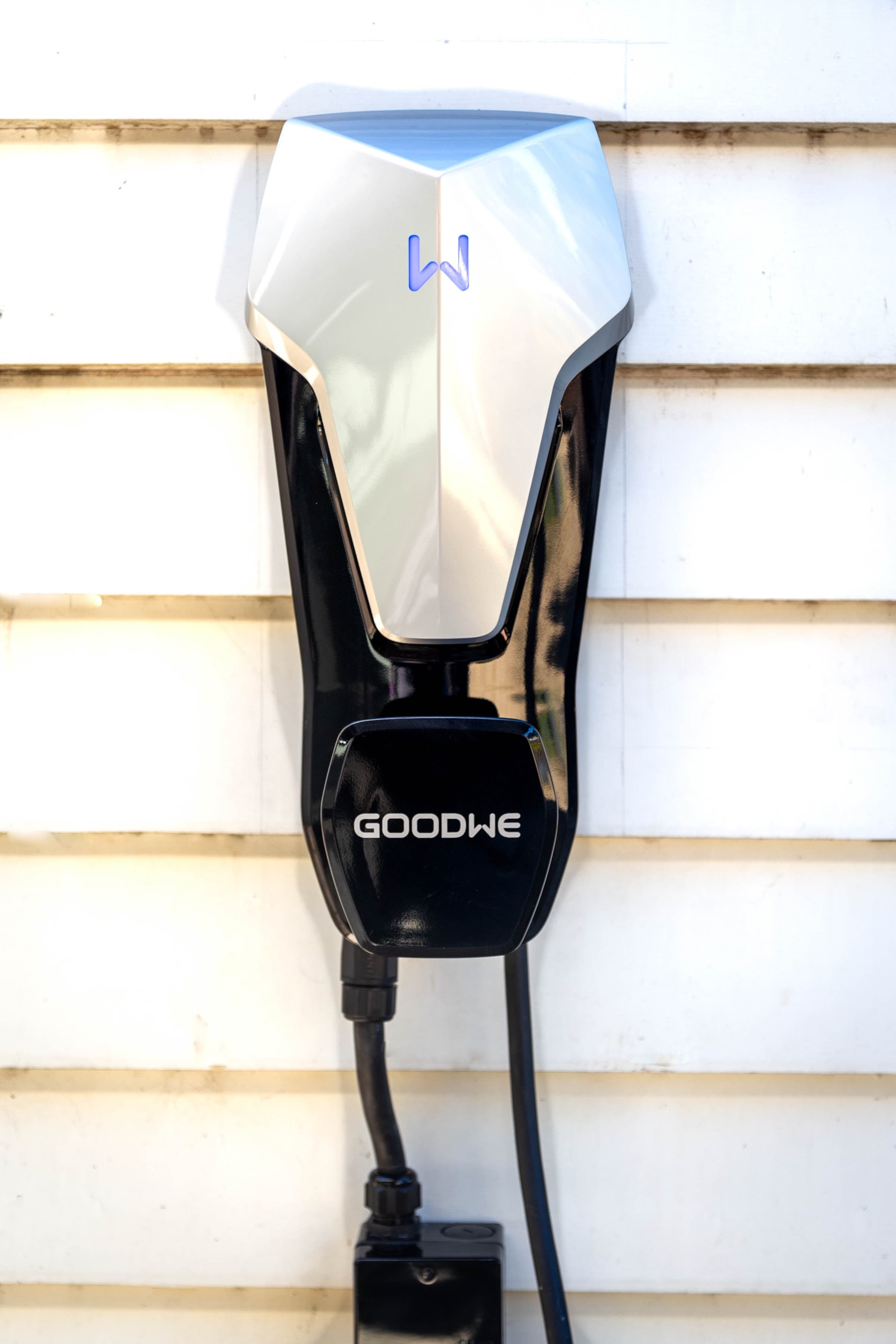
For most homes a 7 kW single phase charger is enough. 11 kW only helps a three phase home with a car that takes it, and almost no car takes 22 kW.
For most homes a 7 kW single phase charger is the right choice: it refills an average day's driving in an hour or two overnight. An 11 kW three phase charger only helps if you have three phase power and your car's on board charger accepts 11 kW, which many do. A 22 kW charger almost never helps, because very few cars sold in Australia accept more than 11 kW from an AC charger.
What the numbers on the box mean
The three AC sizes are set by how many phases you have and how many amps each one carries.
- 7 kW single phase: 230 volts at 32 amps is 7,360 watts, usually rounded to 7 or 7.4 kW. This works on any home with a switchboard and supply that can carry it.
- 11 kW three phase: 16 amps on each of three phases.
- 22 kW three phase: 32 amps on each of three phases.
GoodWe's HCA series shows the pattern: the GW7K-HCA is 7,000 W single phase at 32 A, the GW11K-HCA is 11,000 W three phase at 16 A, and the GW22K-HCA is 22,000 W three phase at 32 A. The box looks the same; the supply behind it is what changes.
The car decides, not the wall box
An EV's battery only takes DC. On an AC charger, the power goes through a smaller charger inside the car, and that on board charger sets the speed. Our EV charging page explains this in more detail and lists common cars.
As a guide for cars on sale in 2026:
- Tesla Model 3 and Model Y: up to 11 kW on three phase
- Most BYD models: about 7 kW, single phase, with the Sealion 7 an exception that accepts 11 kW on three phase
- Most MG models: about 7 kW
- 22 kW AC cars: very rare in Australia
There is a trap in the other direction too. A car with a single phase on board charger plugged into an 11 kW three phase charger uses only one of the three phases, at 16 amps, so it charges at about 3.7 kW. That is half what the same car gets from a cheaper 7 kW single phase charger.
How long a charge takes
Taking a 60 kWh car from 10 to 80%, which puts 42 kWh into the battery, and allowing about 10% for charging losses:
- 7 kW single phase: about 6.5 hours
- 11 kW three phase: about 4 hours
- 22 kW three phase: about 2 hours, but only if the car accepts 22 kW
Most days you are not filling from 10%. A car using 16 kWh per 100 km on a 50 km day needs about 8.7 kWh from the wall, which a 7 kW charger puts back in a little over an hour. The extra speed of three phase matters on the days you come home nearly flat and need to leave again soon.
When three phase is worth it
Three phase earns its place in a few situations.
- You already have three phase and an 11 kW car. The charger fills the car close to twice as fast as single phase.
- You charge in a short cheap window. Powercor's Victorian Default Offer from 1 July 2026 has an 11 am to 4 pm solar soak window at 17.26 cents per kWh including GST. In those five hours a 7 kW charger can deliver about 37 kWh and an 11 kW charger about 55 kWh, if the car accepts it.
- Two EVs, or long daily distances. Two cars sharing one evening, or a car covering several hundred kilometres a day, can use the extra capacity.
Three phase is not worth it just for a charger. If your home is single phase now, moving to three phase means a connection application to Powercor or AusNet, a new service and switchboard work. Our article on moving from single phase to three phase in rural Victoria covers what that involves. For one car doing normal daily distances, a 7 kW single phase charger does the job.
Charging from your own solar changes the sums
If the car will charge mostly from your panels, the minimum matters more than the maximum. AC charging starts at 6 amps. On one phase that is about 1.4 kW of spare solar; on three phases it is about 4.1 kW, which a modest roof rarely has spare on a winter morning.
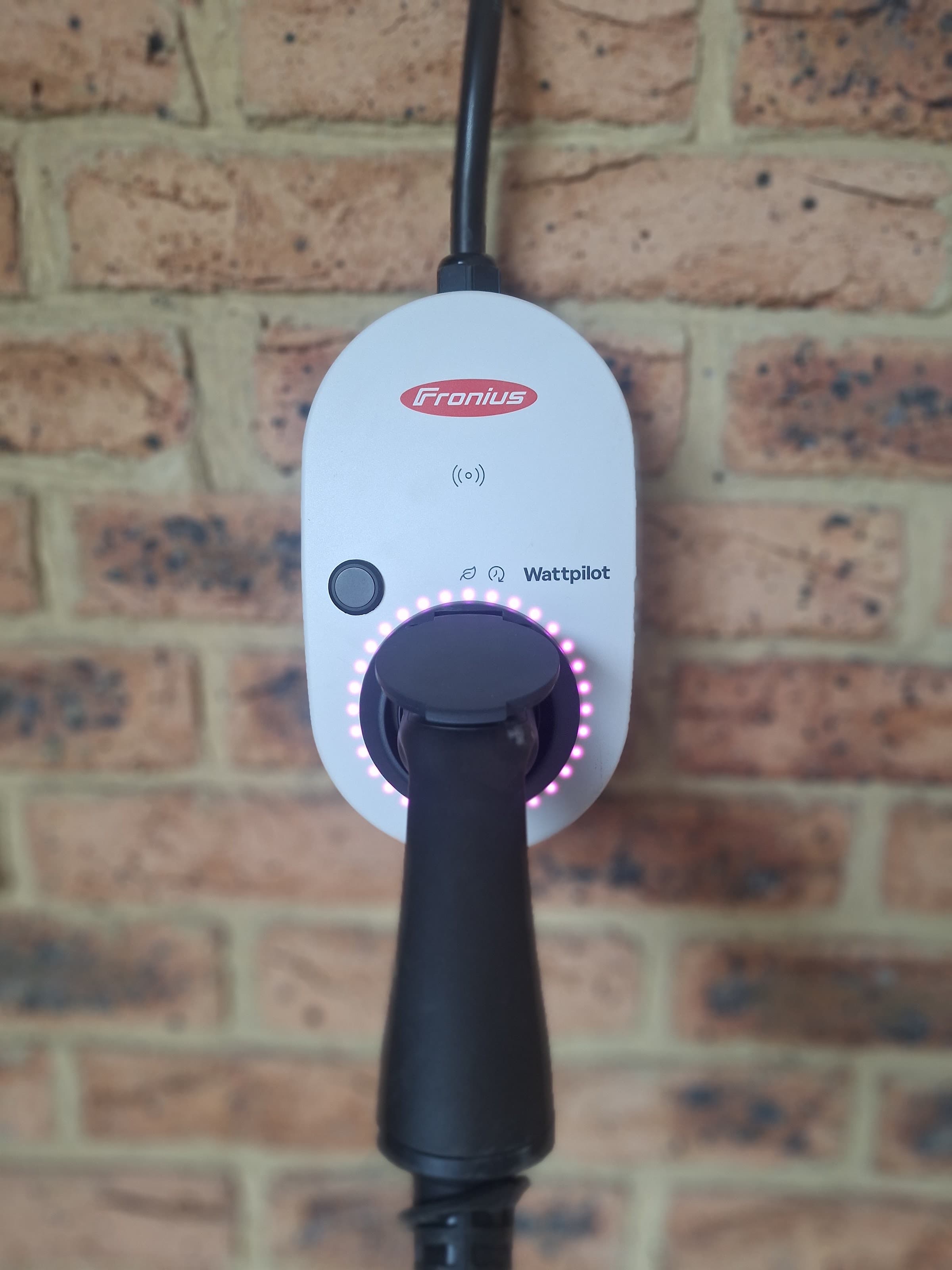
That is why phase switching matters. The Fronius Wattpilot in Eco mode starts on one phase at 1.38 kW of surplus, adjusts in 230 watt steps up to 4.14 kW, and only then switches to three phase charging. The Sigen EV AC charger also switches between one and three phase to follow spare solar. On a three phase home, a charger that can switch gives you both: slow solar charging on a grey day and full speed when there is plenty.
The fastest home option of all is not AC. Sigenergy's DC module in a SigenStor stack charges at up to 25 kW straight to the car's battery, around the on board charger. The Sigenergy page has the details.
Our short answer
- Single phase home: a 7 kW single phase charger.
- Three phase home with an 11 kW car: an 11 kW charger, ideally one that can switch to one phase for solar charging.
- 22 kW: only for a business fleet or one of the few cars that accept it.
Tell us your car, your supply and your address, or send us a message, and we will recommend a charger and show you what it costs to run.
Questions
Is a 22 kW charger faster than an 11 kW one?
Only if the car accepts 22 kW from AC, and very few cars in Australia do. Most cars that take three phase are limited to 11 kW, so a 22 kW charger charges them at exactly the same speed as an 11 kW one.
Will a single phase car charge on a three phase charger?
Yes, but slowly. It uses one of the three phases, so on an 11 kW charger it gets about 3.7 kW, roughly half what it would get from a 7 kW single phase charger.
Can I put a three phase charger on a single phase house?
No. A three phase charger needs a three phase supply. On a single phase house the right charger is a 7 kW single phase unit, unless you are already planning a supply upgrade for other reasons.
How long does a 7 kW charger take to charge an EV?
About 6.5 hours to take a 60 kWh battery from 10 to 80%, and about an hour and a quarter to put back a typical 50 km day. Bigger batteries take proportionally longer.
Sources
- Gridly, single phase vs three phase EV charging in Australia (updated 13 October 2026)
- GoodWe Australia, HCA series EV charger
- Fronius Australia, charging electric cars with PV surplus
- Victron Energy, EV Charging Station NS manual, description and features
- EV Database, energy consumption of full electric vehicles (read October 2026)
- Essential Services Commission, Victorian Default Offer 2026 to 27
Written by the Trentham Energy team.