Off grid system design in order: loads, winter sun, array and tilt, battery, inverter surge, generator, cabling and standards. Plus a free design tool.
Off grid solar design is a chain of decisions made in a fixed order: what the house uses each day, what the sun gives you in the worst month, how big and how steep the array is, how many days the battery carries you, what the inverter must start, how big the generator is, and then the cabling and the standards that make it safe. Get the first two right and the rest follows. Get them wrong and no amount of gear fixes it. Below is the order we work in, with the numbers that drive each step.
What comes first in off grid system design?
The load list. Every off grid design starts with a list of what the property runs, how many watts each thing draws, and for how many hours a day, which gives you kilowatt hours a day. Do it by season, because a house in a Central Victorian winter runs heating, more lights and a clothes dryer, and that is the day you are designing for.
Two numbers come out of the load list:
- Daily energy in kWh, which sizes the array and the battery
- Peak and surge demand in kW, which sizes the inverter
Motors matter here more than their running watts suggest. A pressure pump, bore pump, fridge or compressor draws several times its running load for a moment as it starts. Note every one, and which of them could start at the same time.
The Australian design standard for stand alone power systems, AS/NZS 4509.2, treats the assessment of electricity demand as a design step in its own right, alongside the resource assessment and component sizing that follow from it.
How much sun do you get in winter in Central Victoria?
Far less than in summer, and the worst month is the one that sizes the array. The European Commission's PVGIS model, run for Trentham at a 15 degree north facing roof pitch, puts an average June day at 1.97 kWh per kilowatt of panels against 5.46 in January.
PVGIS is free and worth running for your own site. Whatever tool you use, take the monthly figures, not the annual total. An annual average hides the problem: the same PVGIS run averages about 3.8 kWh per kilowatt a day across the year, so a system sized on the year makes barely half of what you need on an average June day. We go through the monthly figures in detail in what panels make in a Central Victorian winter.
How do you size the array and choose the tilt?
Divide the winter daily load by June's output per kilowatt and by a whole of system efficiency, then add a margin. The efficiency covers inverter, cable, battery and dust losses; our tool uses 82 percent and then puts 25 percent on top, because panels are cheap compared with battery.
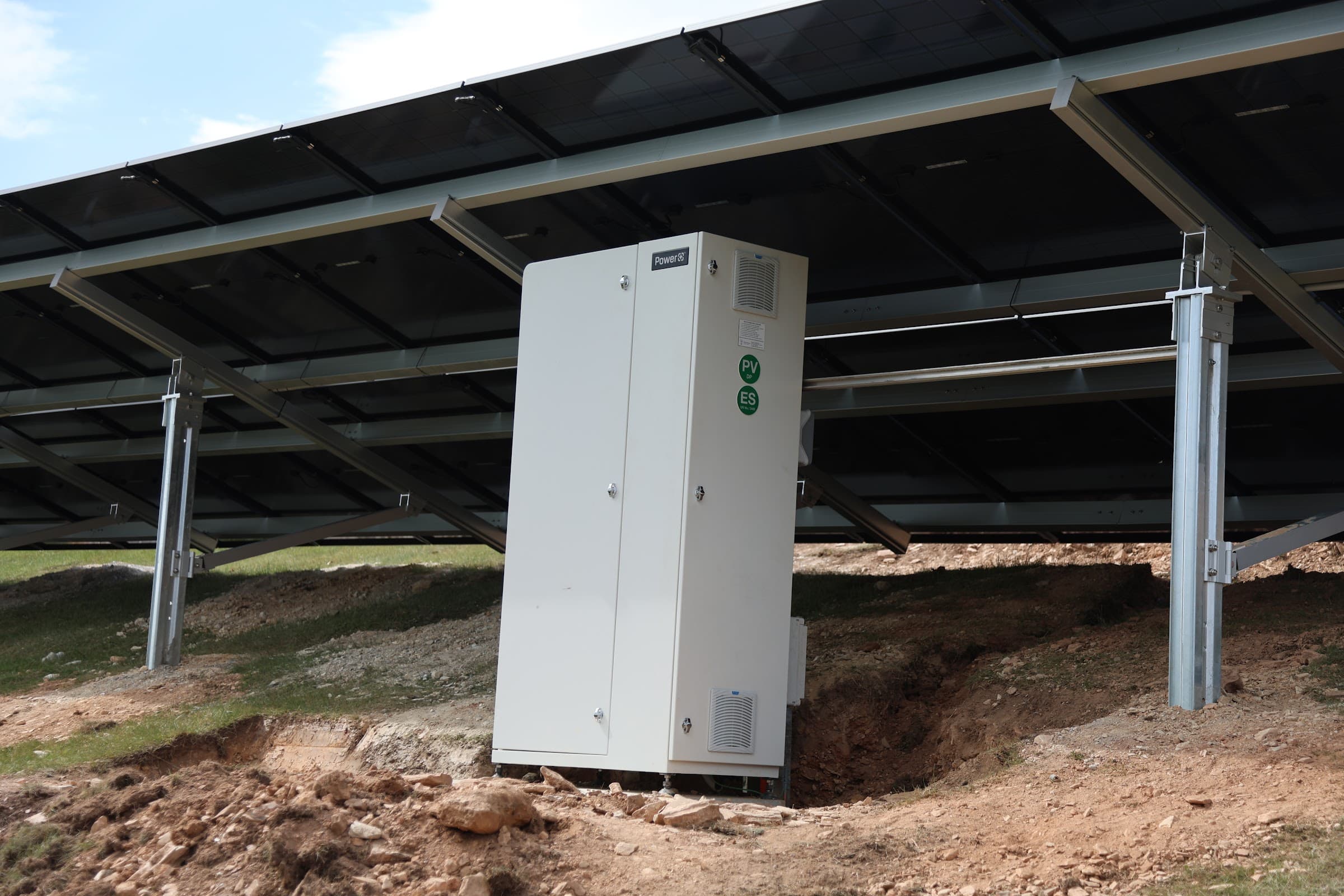
Tilt is the cheapest lever in the whole design. The same PVGIS run at 60 degrees gives 2.82 kWh per kilowatt on an average June day, about 43 percent more than at 15 degrees, while the year's total falls only about 5 percent. A ground mount can be stood up steep for winter; a roof cannot. Where a property has the room, a ground array facing true north at a steep angle is often the best winter design decision you can make.
Shade matters more in winter than at any other time, because the sun is low and long shadows from trees, sheds and hills land on panels that are clear in December. Check the site at midday in June, or model it.
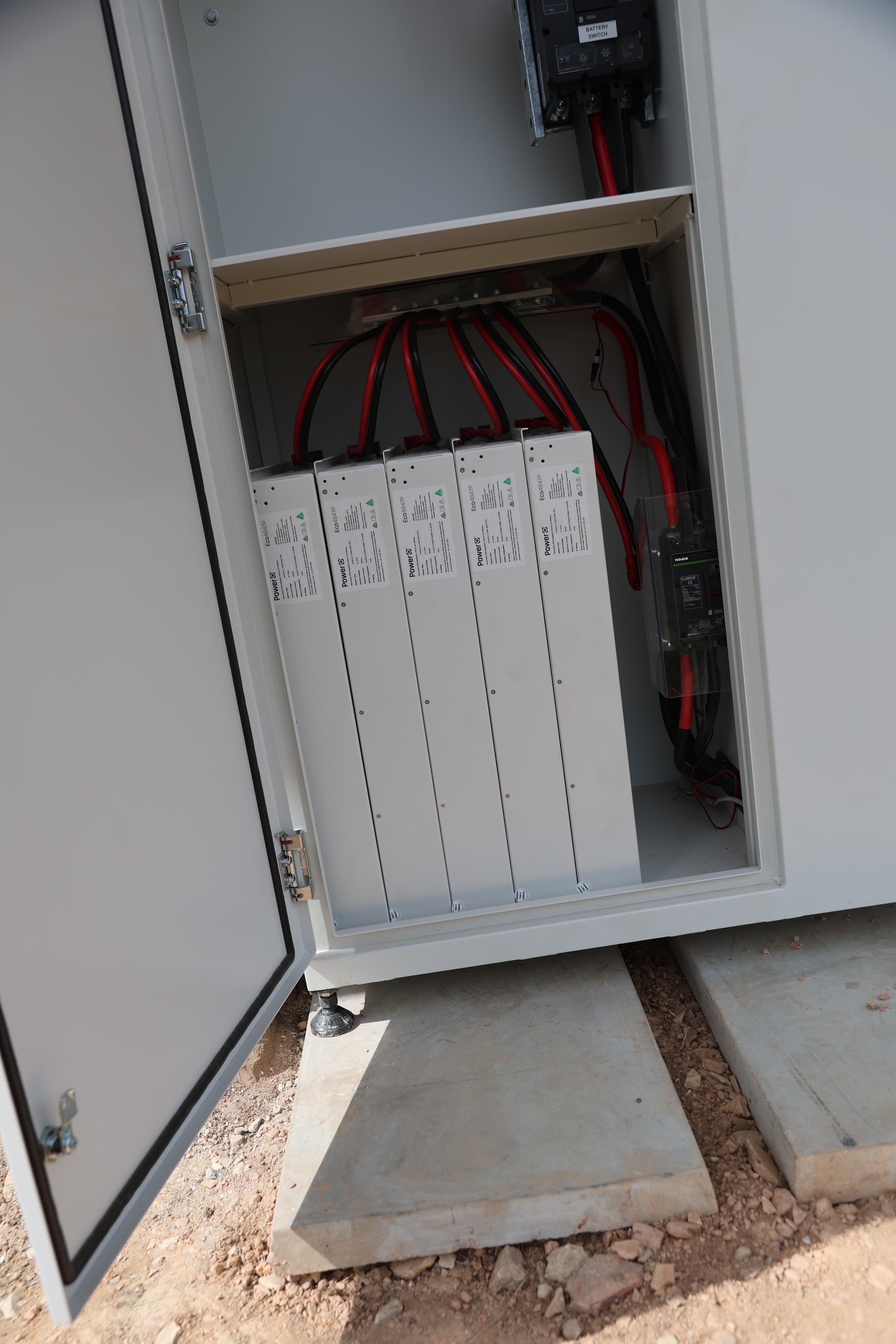
How much battery does an off grid design need?
Enough usable storage to carry the house through the nights of autonomy you choose, plus a margin. The 2010 edition of AS/NZS 4509.2 gives typical figures of about two days with an auto start generator and four to five days with no generator at all.
For lithium, usable storage is the nameplate times the depth of discharge you design to. Our tool uses 90 percent. A 15 kWh a day house that wants two days of autonomy needs about 30 kWh usable, roughly 33 kWh of nameplate. Our article on how much battery an off grid house needs works through small, family and large homes.
What size inverter does an off grid system need?
One whose continuous rating covers the house's realistic peak, and whose surge covers the biggest motor starting while everything else runs. Victron's datasheet gives the MultiPlus-II 48/5000 a continuous 4,000 W at 25°C and a 9,000 W peak, and the continuous rating falls as the room warms: 3,700 W at 40°C.
That temperature line is a design point, not a footnote. An inverter in a hot shed in January is a smaller inverter. Three phase motors, such as a deep bore pump or workshop machinery, push the design to three inverters set up for three phase.
How do you size the generator?
To the inverter charger's charging rate plus the loads that run while it is on, not to the whole house. A generator far bigger than the charger can use burns more fuel per kWh and spends its life lightly loaded. Our article on what size generator an off grid house needs gives Victron's minimum sizes and the reasons for them. Our tool sizes the generator at 1.25 times the inverter.
Plan for auto start. A generator that relies on someone remembering it will one day let the battery go flat.
What about cabling, voltage drop and the standards?
At 48 volts, a few kilowatts is a lot of current, so battery and inverter cables are thick and short, and long DC runs from a ground array lose energy as heat. Cable size, the length of every run and where the cabinet sits are all part of the design, which is why AS/NZS 4509.2 includes a method for working out cable size.
The standards that apply in Victoria, as listed by Energy Safe Victoria (page reviewed 23 June 2026):
- AS/NZS 4509.1:2009, safety and installation of stand alone power systems
- AS/NZS 4509.2:2010, stand alone system design, reconfirmed in 2016
- AS/NZS 5139:2019, safety of battery systems, which governs where a battery can go, clearances and restricted locations. Amendment 1 was published on 19 December 2025, and changes clearance and barrier rules
- AS/NZS 3000:2018, the Wiring Rules
Design work on paper is something anyone can do. Everything from the battery terminals to the switchboard, the generator connection and the array wiring is work for a licensed electrician, and batteries can deliver dangerous current even when the house is dark.
Is there an off grid solar design tool or calculator?
Yes. Our free off grid sizing tool runs the steps above. You tick the appliances the property runs, or type a daily kWh figure if you know it, add any three phase gear, pick the region and which way the panels can face, choose the days of autonomy and whether you want a generator. It then gives you the solar array, battery nameplate and usable storage, inverter and generator sizes, with a month by month chart of what the array makes against your load and a picture of the battery through a day.
It is honest about its limits. It does not see your shading, cable runs or roof pitch, and it does not price anything. Professional design software adds shading models and detailed cable calculations; a calculator gives you the size to start a conversation from. Our longer piece on how to size an off grid solar system covers the method with a worked example.
Mick McDonald
Technical Director, Trentham Energy
Questions about your own system? Call 1300 3458 00 or send us a message.
Sources
- PVGIS 5.3 monthly output for Trentham, 15 degrees north facing, European Commission JRC
- PVGIS 5.3 monthly output for Trentham, 60 degrees north facing, European Commission JRC
- AS/NZS 4509.2:2010 Stand alone power systems, Part 2: System design, Building CodeHub NZ
- Battery energy storage systems, Energy Safe Victoria
- Changes to the battery standard, NSW Government
- MultiPlus-II inverter charger datasheet, Victron Energy