Powercor lists rural 22 kV overhead line at about $0.2 million a km. A battery that tops up a limited supply at peak times often does the job instead.
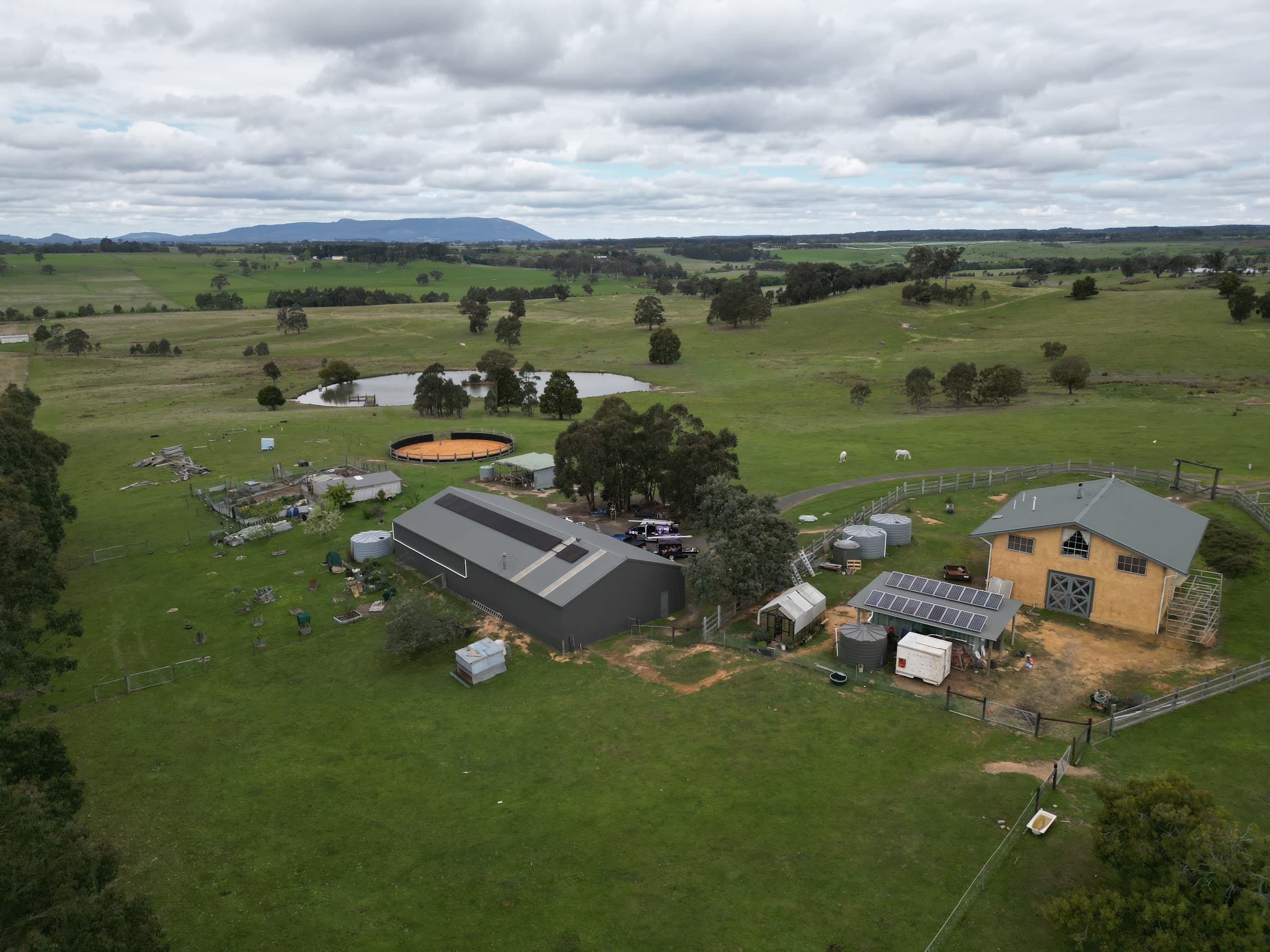
If your farm or rural business keeps tripping its supply, the first quote is usually for more network: a bigger transformer, a new line, or a three phase extension. On a long rural run that can mean hundreds of thousands of dollars. A battery inverter that adds stored energy on top of the grid at peak times, recharged by solar, raises what the site can run without touching the network, because farm peaks are usually short. It does not suit every case, and the way to tell is to measure how high and how long your peaks are.
What network capacity costs in the country
Powercor publishes indicative costs for typical connection assets on its embedded generation connection page. For its rural and regional network it lists:
- 22 kV overhead extension: about $0.2 million per km
- 22 kV underground extension: about $0.9 million per km
- 66 kV overhead extension: about $0.3 million per km
- 66 kV underground extension: about $1.2 million per km
Powercor says these are for embedded generation connections, that costs vary with size, location and connection voltage, and that they do not include the cost of removing a network constraint. They are not a quote for a load connection, but they show the scale: a farm a couple of kilometres from a line with spare capacity is looking at line costs in the hundreds of thousands before a new transformer or anything else.
Who pays is set by the distributor's connection policy, which the Australian Energy Regulator approved for Powercor for 2026 to 2031 in April 2026. A connection policy sets out when a customer pays a connection charge, how it is calculated, and a threshold below which a retail customer is not charged for augmentation other than an extension. If you fund an extension, Powercor's pioneer scheme can give you a partial reimbursement when other customers connect to the same assets within seven years of the original investment.
Why farm loads suit a battery
Most rural supply problems are about peak power, not total energy. The supply copes all day, then trips when the welder, the grain auger, the shed air compressor and the house oven all run at once, or when a big motor starts.
That shape is what a battery inverter handles well. Victron's MultiPlus-II, the inverter charger we use for off grid systems, has two features made for it:
- PowerControl caps what the unit draws from the grid or a generator, so the incoming supply is never overloaded
- PowerAssist boosts the AC supply with battery power during peak demand; when the source is limited, it reduces battery charging first and then adds battery power on top
The MultiPlus-II runs from 3,000 to 15,000 VA per unit and Victron says it supports parallel and three phase configurations, so units can be stacked for a larger site. Which inverter suits a given site depends on the phase, the loads and whether it stays grid connected.
A worked example
Inputs, all assumed for illustration:
- a single phase supply limited to 63 amps, about 14.5 kW at 230 volts
- a workshop and shed peak of 25 kW that lasts 20 minutes, a few times a day
- the rest of the day the site uses well under 14.5 kW
The shortfall is 10.5 kW for a third of an hour, which is 3.5 kWh of battery each time. The battery itself can be modest; what matters is an inverter rated to deliver 10.5 kW continuously plus the motor starting surge, and enough solar to put the energy back between peaks.
Compare that with the alternative. If the fix is a line extension, the Powercor rates above put 2 km of 22 kV overhead at around $0.4 million before the transformer.
When a battery is not the answer
Be honest about the limits.
- Long, heavy loads. If the extra demand runs for hours, such as irrigation pumping all night or a large coolroom running flat out all summer, the battery has to be very big, and solar has to refill it. That is a case for more supply, or for moving the load into the solar window.
- Three phase motors on a single phase supply. A battery does not create a phase you do not have. Our article on single phase to three phase upgrades covers the options.
- Export limits. Adding solar to a constrained line may come with an export limit. The connection policy allows Powercor to specify a static zero export limit in some connection offers, so check before you size the array for export.
Going further: off the line altogether
Sometimes the honest comparison is not battery versus upgrade but grid versus no grid. Where a property is at the end of a long rural feeder that needs replacing, Powercor itself runs a standalone power system program for eligible customers, at no extra cost compared with a normal connection. Eligibility includes being on a rural feeder approaching the end of its working life and the cost of the connection exceeding a standalone system. Our standalone power systems page explains it, and grid connection versus off grid compares the two for a new connection.
How we would approach it
- Get interval data from the meter, or log the main board for a few weeks, so the peaks show up with their height and length.
- List the big loads and when they run.
- Ask Powercor what an upgrade would involve, so you have both options in front of you.
- Size the inverter for the peak power, the battery for the peak energy, and the solar to refill it.
Questions
Can a battery increase my supply capacity?
It cannot change what the network will deliver, but it can add its own power on top, so the site can run more than the supply limit for as long as the battery lasts. Victron's PowerAssist does exactly that by boosting a limited grid or generator supply with battery power.
Who pays for a network upgrade on a farm?
It depends on the distributor's connection policy. Powercor's was approved by the AER for 2026 to 2031 and sets out when customers pay connection charges, how they are worked out, and the pioneer scheme that can partly reimburse a customer who funded an extension when others connect to it later.
Is solar alone enough to fix a supply that keeps tripping?
Rarely. Solar output follows the sun, not your loads, and a peak at dawn, at dusk or on a cloudy day gets little help from the panels. A battery is what makes the power available at the moment of the peak.
Send us a recent bill, your address and a list of the big machines, and we will come back with a right sized design, or start at our contact page.
Sources
- Powercor, embedded generation connection process and indicative connection costs
- AER, Powercor distribution determination 2026 to 31, attachment 16, connection policy (April 2026)
- Victron Energy, MultiPlus-II inverter charger
- Powercor, stand alone power systems
Written by the Trentham Energy team.