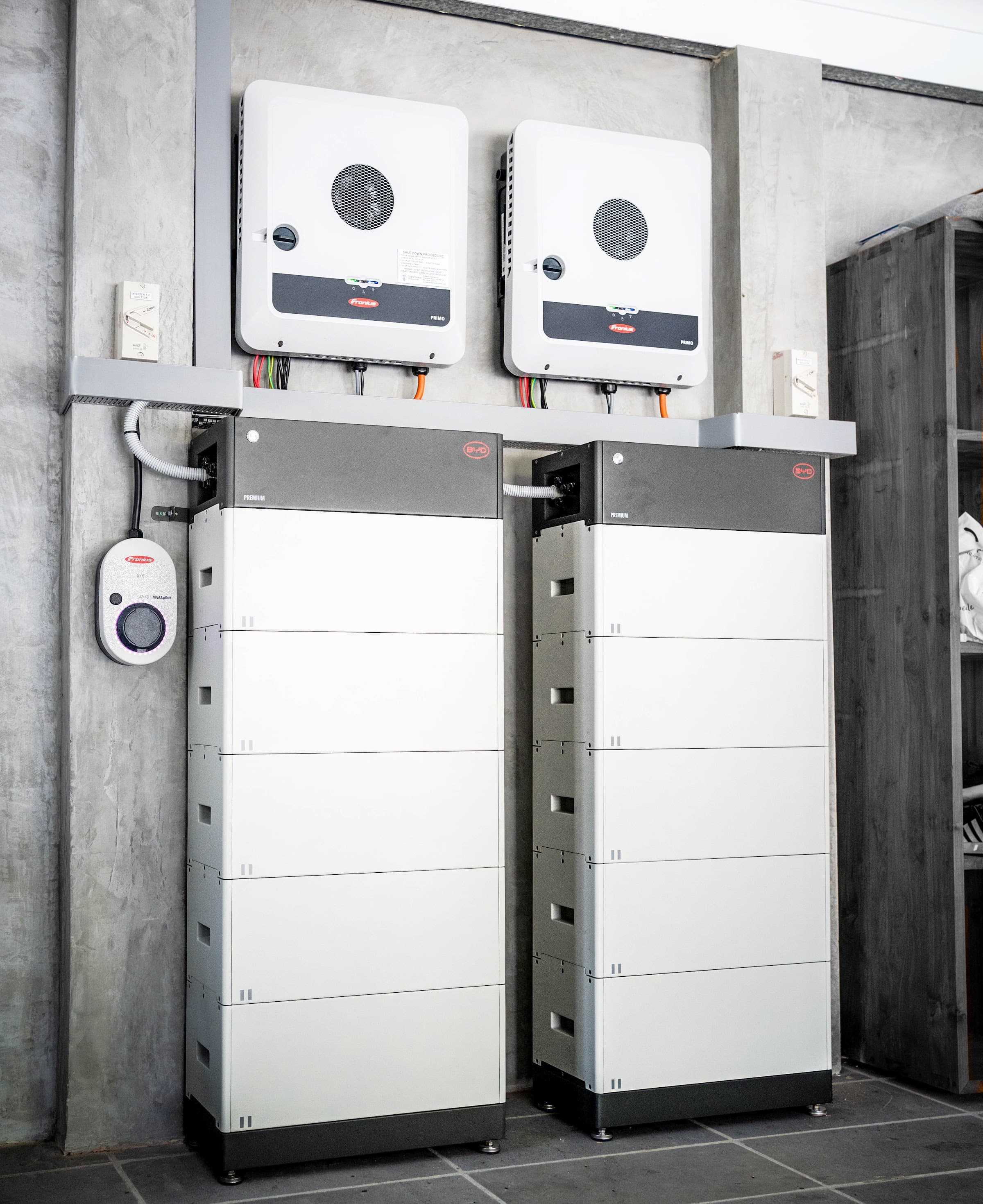
Storms in 2021 and 2024 left Central Victorians in the dark for days. What a home battery backs up, how long it lasts, and where a generator fits.
A home battery with a backup circuit keeps the lights, fridge, water pump and internet running when the grid goes down, and with solar it can recharge each day and carry the house through a long outage. How long it lasts depends on how much it stores and what you leave switched on: divide the usable kWh by the average load. What it cannot do is power everything forever, and not every battery switches over instantly, so the design matters as much as the size.
Why storm season matters here
Two recent storms show what a long outage looks like in this part of Victoria.
- June 2021. A low pressure system brought strong winds and heavy rain overnight on 9 June. About 200,000 customers lost power that night and about 300,000 by the next day. Hepburn, Moorabool and the Macedon Ranges were among the most affected areas, and some communities were without power for many days and weeks, according to the Australian Institute for Disaster Resilience.
- 13 February 2024. A storm destroyed homes, damaged transmission infrastructure and brought down poles and wires across the state. The Australian and Victorian Governments said 500,000 Victorians were without power at the peak and 90% were reconnected within 48 hours. Households still without power after seven days became eligible for a Prolonged Power Outage Payment of $1,920 a week for up to three weeks.
The pattern is the same each time: most people are back within two days, and the last few percent, usually on long rural lines through the bush, wait much longer. If your property is at the end of a long rural line, plan on being in that last group.
What the distributor pays you for an outage
Victoria's guaranteed service level payments, set by the Essential Services Commission for outages from 1 July 2021, are credited to your bill automatically. For unplanned outages in a calendar year they are $130 for more than 18 hours, $190 for more than 30 hours and $380 for more than 60 hours, and $90 for more than 12 hours on a major event day. They are a gesture, not a fix: none of them keeps a fridge cold.
What a battery backs up
A grid connected battery only runs the house in a blackout if the system is built for backup. There are two common shapes.
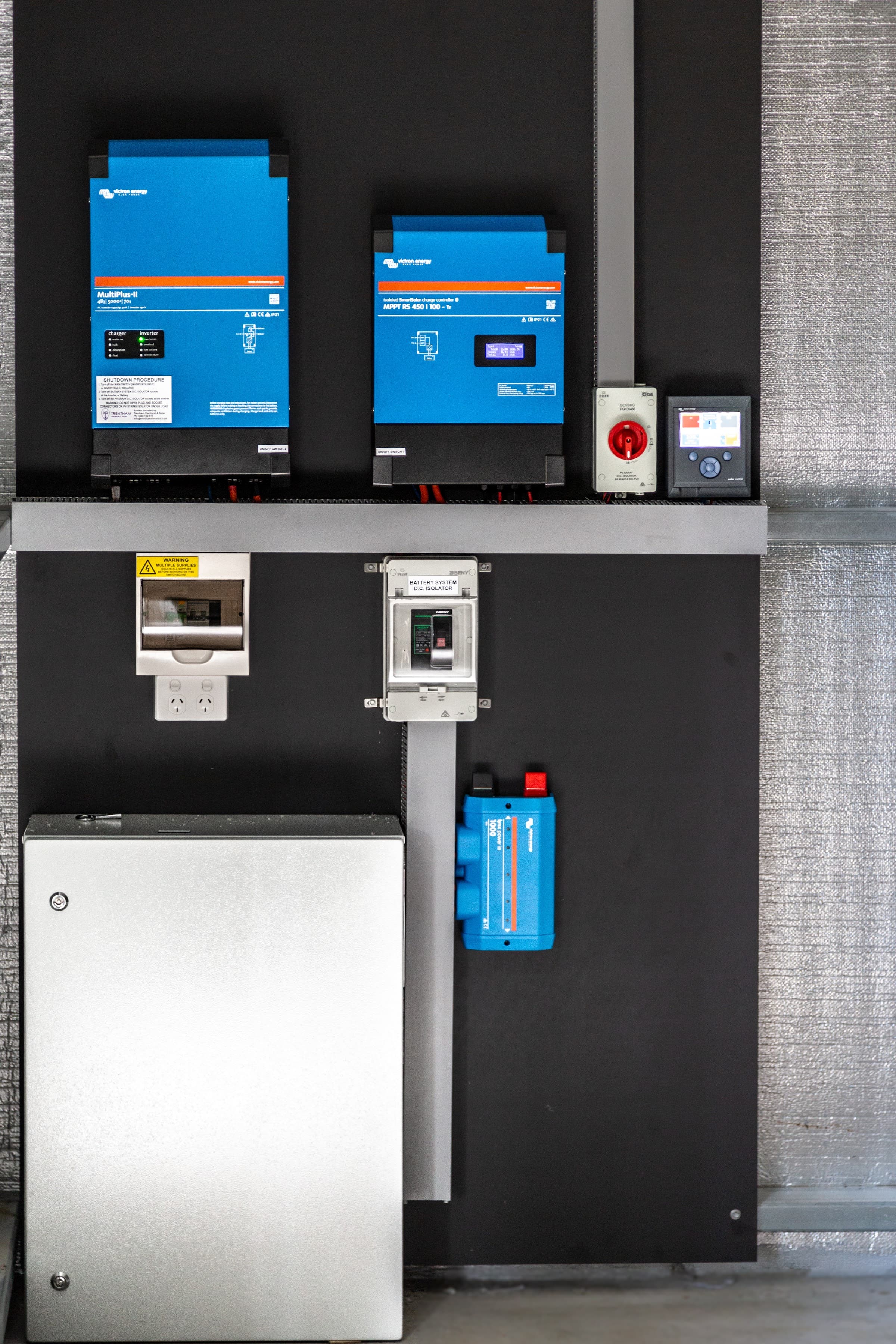
- Essential circuits. The battery feeds a backup sub board with the circuits you choose: lights, fridge, freezer, the water pump, the internet and a few power points. It stretches the battery furthest.
- Whole home backup. Everything stays on, limited by the inverter's output. It is simpler to live with, but an oven, a kettle and a heat pump all running at once can overload it.
How fast it switches matters too. Sigenergy's Gateway Home datasheet lists a 0 ms disruption time for the backup switch when used with the SigenStor inverter and battery, so the house does not notice the grid drop. The Fronius Primo GEN24 Plus's basic PV Point backup supplies one 3,000 VA outlet circuit and takes up to 20 seconds to switch over, so clocks reset and the internet restarts. Full Backup on the GEN24 needs a battery and an external switching device. Neither is wrong, but you should know which one you are buying. Our Fronius Reserva guide covers the Fronius side in detail.
How long a battery lasts
The arithmetic is simple: usable battery kWh divided by the average load in kW gives the hours.
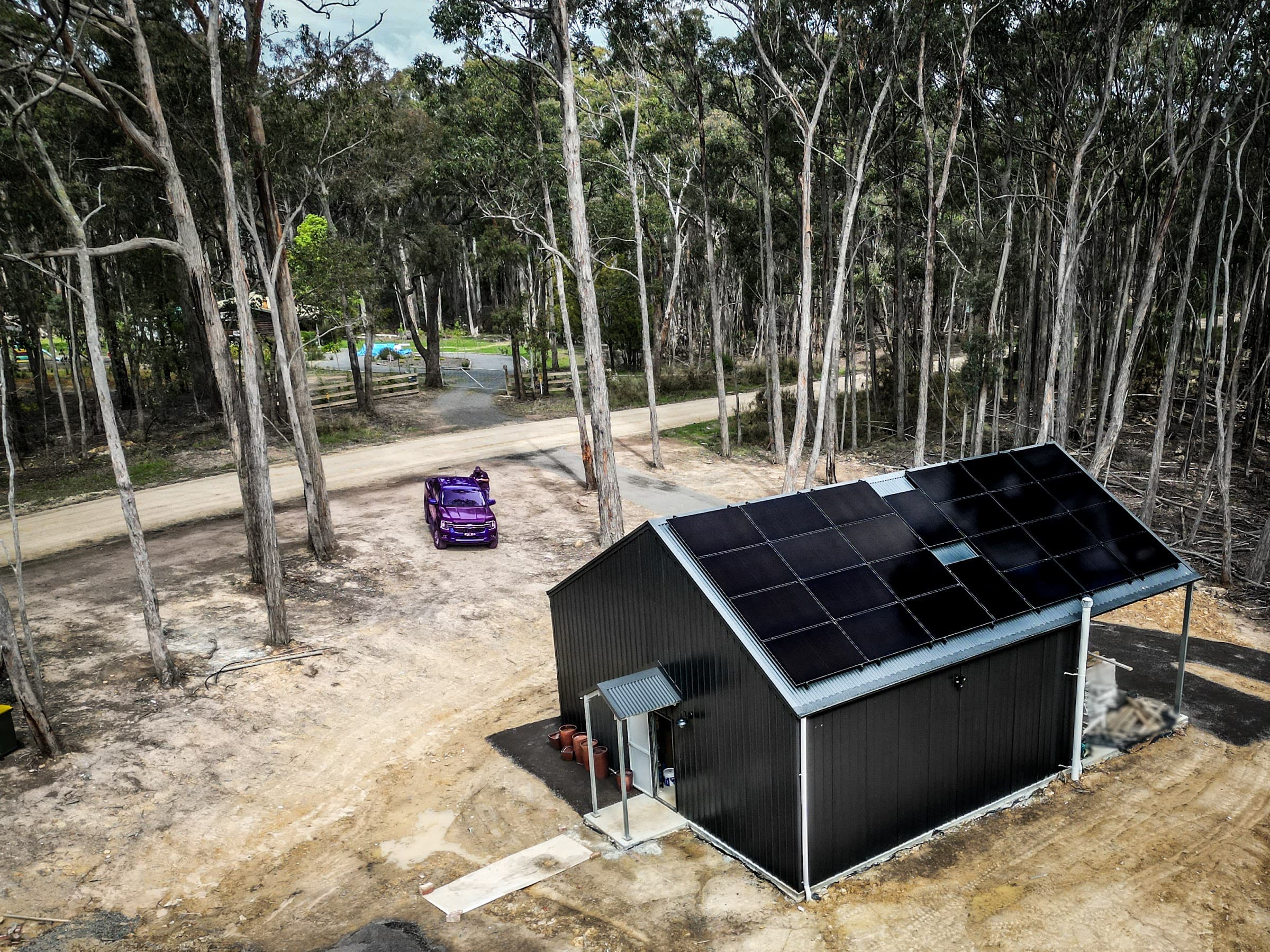
Take the 10 kW Sigenergy system with 32 kWh of battery we installed in the Macedon Ranges, written up in our Sigenergy 32 kWh project.
- At an average essential load of 0.5 kW (fridge, freezer, lights, internet and the odd pump start), 32 kWh carries the house for about 64 hours with no sun at all, if the whole 32 kWh is available when the power goes.
- At an average of 1.5 kW with more of the house running, it lasts about 21 hours.
- With sun on the panels, the battery refills during the day. Even in June, a north facing array near Trentham makes about 2.6 kWh a day per kW of panels on an average day, according to the European Commission's PVGIS model, so a 10 kW array adds roughly 26 kWh on an average June day.
Your own figures will differ, so start with your loads. A 13 kWh battery at the same 0.5 kW load lasts about 26 hours; a farm with stock water and a coolroom running needs more.
Where a generator fits
Storms here usually come with grey skies, and a week of cloud in winter can beat any battery. A generator is the long outage insurance.
- Connected to the battery system. The Sigen Gateway is listed as ready for a generator, so the generator charges the battery and the battery runs the house, and the generator can run in a block to refill the battery rather than all day and night.
- A plain changeover inlet. A generator plugged into a properly installed inlet and changeover switch runs selected circuits directly. Never backfeed a power point with a lead; it puts line crews at risk.
For off grid homes the generator is part of the design from day one, and our generators page explains how it is sized and started.
Things people miss
- Bushfire days. On days of extreme fire danger, rural lines can be switched off on purpose; our article on SWER lines and the bushfire case explains why.
- Keep a reserve. Set the battery to hold back a share of its charge, more in storm season, so a blackout at 7 am does not find it empty after the night.
- The pump and the phone. On rural blocks, the water pump and the mobile or internet connection are usually the circuits that matter most. Put them on the backup board.
- Life support equipment. A battery is not a substitute for your distributor's life support arrangements.
If you want to know what your house would need, send us a recent bill and your address and we will come back with a right sized backup design.
Questions
Will my solar keep working in a blackout?
Only if the system has a battery and a backup function. A standard solar inverter shuts down when the grid fails, by design, so it cannot feed power into lines being repaired.
How long will a home battery run my house in a blackout?
Divide the usable kWh by your average load in kW. A 32 kWh battery runs a 0.5 kW essential load for about 64 hours without any sun, and solar recharges it each day the sun is out.
Does a battery switch over instantly when the power goes out?
Some do. Sigenergy's Gateway lists a 0 ms disruption time with its own inverter and battery. The Fronius GEN24's PV Point backup takes up to 20 seconds. Ask what your system's switchover time is before you buy.
Do I still need a generator if I have a battery?
For short outages, no. For a long outage in cloudy winter weather, a generator that charges the battery is the cheapest insurance, especially on a farm.
Sources
- Australian Institute for Disaster Resilience, storm and low pressure system, south east Australia, 7 to 11 June 2021
- Australian and Victorian Governments, working together for Victorians after extreme storms (16 February 2024, PDF)
- Essential Services Commission, guaranteed service level payments for energy outages
- Sigenergy, Sigen Energy Gateway datasheet (March 2025, PDF hosted by MMEM)
- Fronius Australia, Primo GEN24 8.0 Plus technical data
- European Commission JRC, PVGIS calculation for Trentham, 1 kW at 37 degrees facing north
Written by the Trentham Energy team.