
Victoria has no minimum feed in tariff for 2026 to 27. Retailers set their own, often a few cents or less, so using your solar is worth far more.
There is no minimum feed in tariff in Victoria for 2026 to 27. The Essential Services Commission stopped setting one from 1 July 2025 after a change to the Electricity Industry Act 2000, so each retailer now sets its own rate, which cannot be below zero. Some advertise up to 8 cents per kWh for a first block of daily exports, while Powercor's default price to buy power is 28.22 cents flat and 41.67 cents in the evening peak. A kWh you use yourself is worth several times a kWh you export.
What happened to the minimum feed in tariff
For years the Essential Services Commission set a floor price that retailers had to pay for solar exports. Its last decision, made on 27 February 2025 for 2025 to 26, would have set a flat minimum of 0.04 cents per kWh, and time varying minimums ranging from 6.57 cents in the evening peak down to 0.00 cents during daytime hours.
That decision never took effect. After the Act was amended, the commission says it no longer sets minimum feed in tariffs. From 1 July 2025 retailers may set their own, but they cannot charge you for exports: the rate cannot go below $0.00 per kWh.
What your exports are worth in 2026
With no floor, the rate depends entirely on your retailer and your plan. Energy Matters, writing in July 2026, found:
- some retailers advertising up to 8 cents per kWh for the first block of daily exports
- many of the higher rates applying only to the first 10 kWh exported each day
- a few plans offering competitive flat rates for households that export a lot
- plans with a higher feed in rate sometimes carrying higher usage or supply charges
The last point is the one that catches people. A plan with a good feed in tariff and dear usage rates can cost more over a year than a plan that pays nothing for exports, especially for a household that buys a lot of power in the evening.
Why exports are worth so little
The commission's own explanation for its 2025 decision was supply and demand: Victorian solar customers make so much electricity in the middle of the day that power at that time is worth very little on the wholesale market. That is why its time varying minimums fell to zero in the daytime and stayed at 6.57 cents in the evening peak. An export at 1 pm in October lands on a market already full of solar.
Free daytime power changes the sums
Victoria's Midday Power Saver started on 1 October 2026. On an eligible plan, electricity used between 11 am and 2 pm every day, weekends included, is free.
- Who can get it: households with a smart meter whose retailer has at least 1,000 customers. You opt in through your retailer, solar is not required, and renters can join.
- How long: the first year of the offer runs to 30 June 2027.
- The catch: rates outside the free window can be a little higher, and Energy Matters reports a fair use cap on how much you can use free. The government warns that customers who cannot shift their usage could end up paying more.
- The government's estimate: savings of around $149 to $428 a year for households that shift usage into the window.
The federal equivalent, Solar Sharer, started on 1 July 2026 in New South Wales, south east Queensland and South Australia, not Victoria.
For a solar household, a free window and a feed in tariff pull the same way: both say the middle of the day is the time to use power, not to sell it. Our article on charging your home battery for free this winter shows how a battery uses the free window when the sun is weak.
Self use is worth far more than export
Here is the arithmetic, with the inputs. On Powercor's Victorian Default Offer from 1 July 2026, including GST, power costs 41.67 cents per kWh in the 4 pm to 9 pm peak on the time of use tariff. The best advertised export rate Energy Matters found was 8 cents.
- Every kWh moved from export at 8 cents to your own evening use is worth 33.67 cents more.
- Five kWh a day moved that way is worth about $614 a year (5 × 33.67 cents × 365 days), less what a battery loses in charging and discharging.
- If your export rate is zero, each kWh you use yourself in the peak is worth the full 41.67 cents.
That is why the order of priority is the same on almost every roof:
- run the hot water, the dishwasher, the pool pump and the EV in the middle of the day
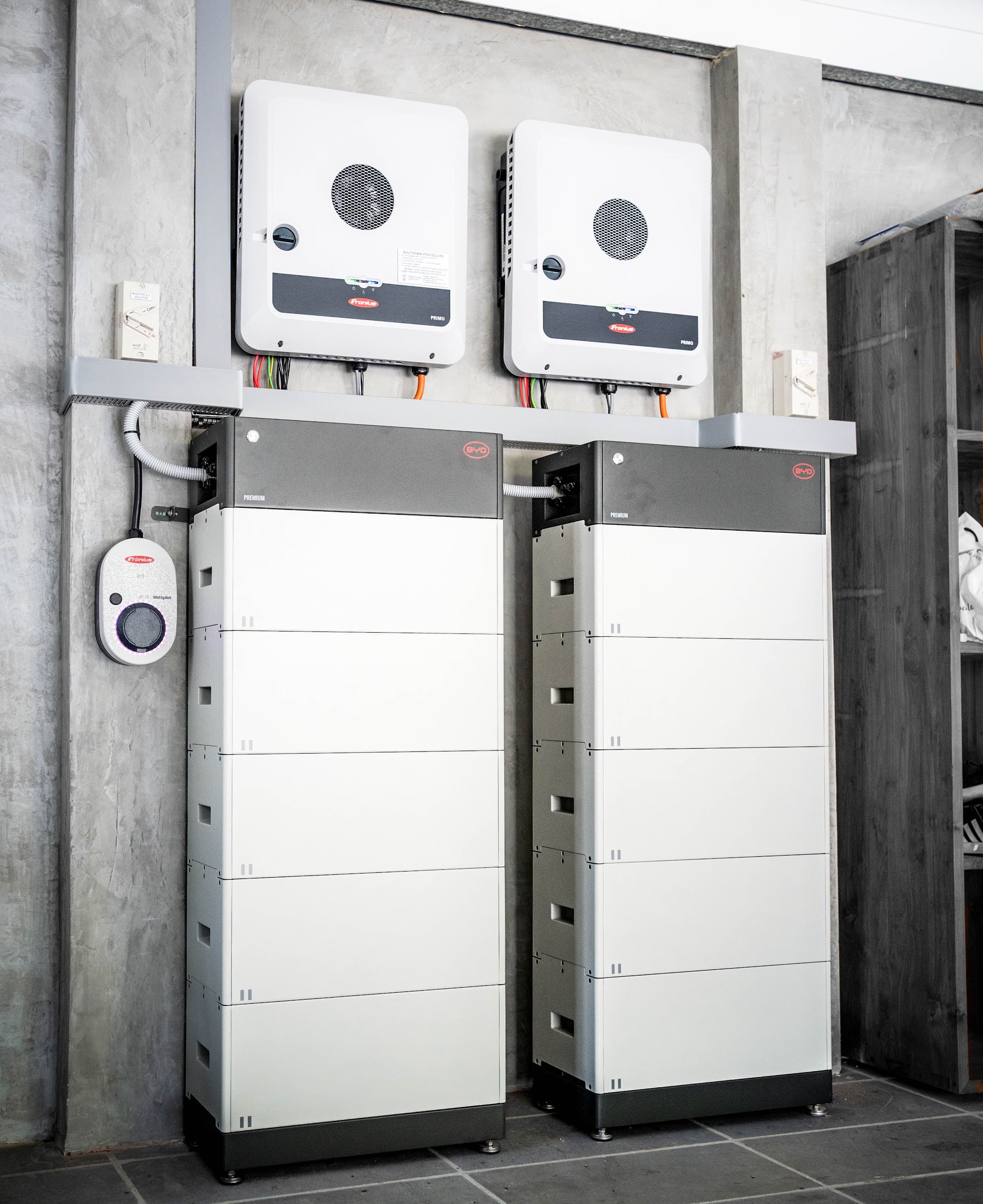
- store the rest in a battery for the evening
- export only what is left
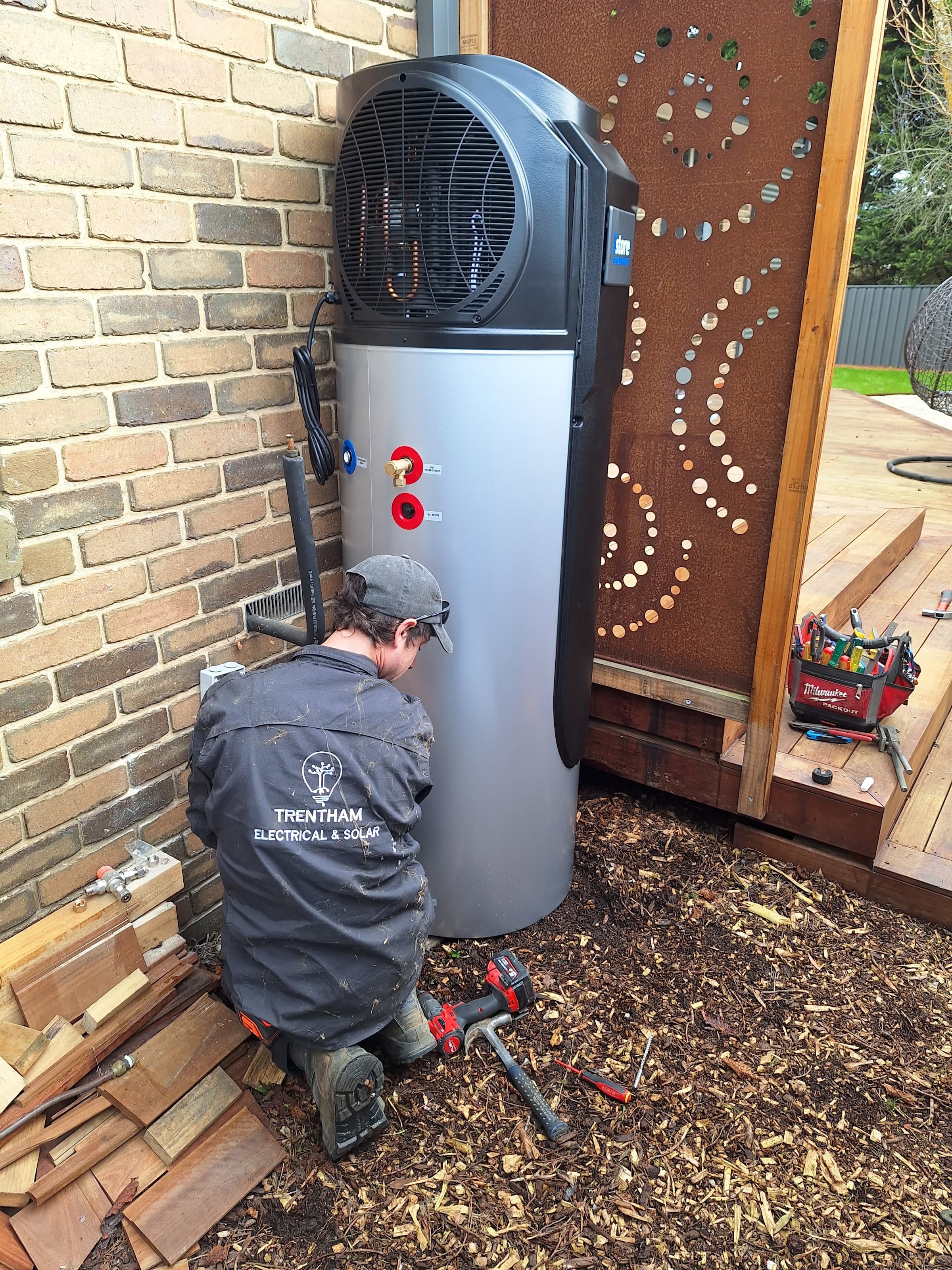
A heat pump on a midday timer is one of the cheapest ways to soak up exports, covered in our heat pump hot water article, and an EV on a solar only charging mode is another, covered in charging an EV from solar.
Pick the plan on your own numbers
The right plan depends on when you use power, how much you export, and whether you have a battery or an EV. Our free energy plan finder ranks every Victorian plan on the government's Energy Made Easy feed against your actual bill or meter data, including feed in tariffs, free daytime windows and their caps. We get nothing from any retailer.
If you are thinking about a battery to keep more of your solar, send us a recent bill and your address and we will come back with a right sized design.
Questions
What is the minimum feed in tariff in Victoria for 2026 to 27?
There isn't one. The Essential Services Commission stopped setting minimum feed in tariffs from 1 July 2025. Retailers set their own rates, which cannot be below zero.
How much do Victorian retailers pay for solar exports in 2026?
It varies by retailer and plan. Energy Matters found some advertising up to 8 cents per kWh in July 2026, often only on the first 10 kWh exported each day. Many plans pay less, and some pay nothing.
Is it still worth getting solar if feed in tariffs are so low?
Solar is worth most for the power you use yourself, which avoids buying at 28.22 cents flat or 41.67 cents in the peak on Powercor's 2026 to 27 default rates. Exports are a small extra on top.
What is the Midday Power Saver?
A Victorian plan option from 1 October 2026 that makes electricity used between 11 am and 2 pm free, for households with a smart meter whose retailer has at least 1,000 customers. Rates outside the window can be higher, so check it against your own usage.
Sources
- Essential Services Commission, minimum feed in tariff review 2025 to 26
- Essential Services Commission, final decision paper, minimum feed in tariffs from 1 July 2025 (PDF)
- Energy Matters, Victoria solar feed in tariff 2026 to 27: what's changed (10 July 2026)
- Essential Services Commission, Victorian Default Offer 2026 to 27
- RACV, the Victorian Midday Power Saver (16 September 2026)
- Energy Matters, Victoria's free power: who actually benefits? (8 June 2026)
Written by the Trentham Energy team.