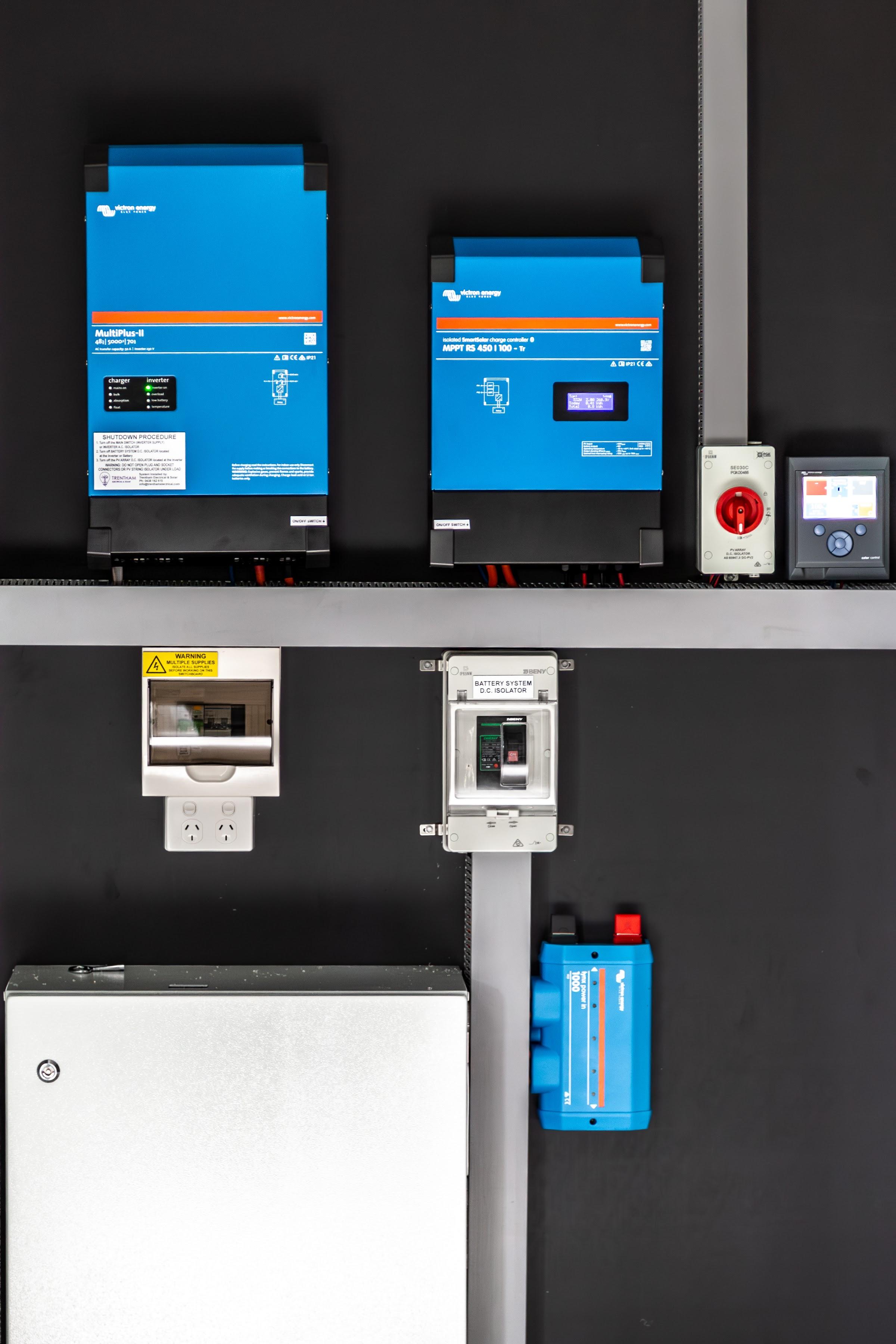
No. Wiring an off grid kit into a Victorian house is licensed electrical work, and the system needs an inspected Certificate of Electrical Safety.
No. In Victoria, connecting an off grid solar kit to a house is electrical installation work, and only a licensed electrician working for a Registered Electrical Contractor may do it for you. Solar systems, batteries, generators and off grid power systems above 500 VA are prescribed work. That means an independent Licensed Electrical Inspector has to check the job before the system can be switched on, and a Certificate of Electrical Safety has to be issued. You can buy a kit legally, but you cannot legally wire it into your house yourself.
Can I legally install an off grid solar kit on my own house?
Not the electrical part. Energy Safe Victoria (ESV), the state regulator, says unqualified electrical work is illegal as well as dangerous, even for small jobs like changing a power point. Its Don't do it yourself page says there is no grey area.
Solar Victoria's summary of the rules lists PV systems, stand alone power systems and associated wiring above extra low voltage as electrical installation work that only licensed electrical workers may do. An off grid house system sits squarely in that list. The inverter puts out 230 V AC, the same as the grid, which is well above extra low voltage no matter how small the kit looks in the box.
ESV notes that two Victorians were killed in early 2016, both doing DIY electrical work on farms.
What may an owner do without a licence?
Very little on the electrical side. Extra low voltage, or ELV, means no more than 50 V AC or 120 V ripple free DC. Solar Victoria's summary of the rules says a person without a licence may only locate, mount or fix in place individual items of ELV equipment. They cannot make or terminate the electrical connections to that equipment, and they cannot install the cables that connect it to a supply above ELV.
That catches more kits than people expect:
- A 48 V lithium battery is under the 120 V DC line, but the inverter it feeds makes 230 V AC.
- Put three modern house sized panels in series for a charge controller and the open circuit voltage can go past 120 V DC, more so on a cold morning.
- Even below 120 V, a lithium bank can deliver a very high fault current. A dropped spanner across the terminals can start a fire.
As an owner you can safely do the non electrical work your electrician agrees to, such as building a frame or a weatherproof shed for the gear. Once a system is in, you can read the screen or app, look at the panels from the ground, and notice smells, heat or unusual noises. Opening any enclosure, touching battery terminals, working in the switchboard or wiring a generator is a job for a licensed electrician.
What is a Certificate of Electrical Safety, and why does it matter?
A Certificate of Electrical Safety, or COES, is the legal document a Registered Electrical Contractor or licensed electrician issues to record the electrical work they did. It is required under the Electricity Safety Act 1998.
ESV's guide to certificates for the community (checked 26 November 2026) sets out how it works:
- Solar systems, battery energy storage systems and motor generator installations need a prescribed certificate. That means an independent Licensed Electrical Inspector has to inspect the work.
- Prescribed work cannot be turned on, or left on, until it has been inspected.
- The inspection should be completed within 8 business days of the work being finished.
- People who are not registered or licensed cannot buy or lodge certificates with ESV.
ESV's list of prescribed work also names remote area power supplies above 500 VA that are not grid connected. Any house sized off grid system is well over that.
The point about lodging certificates is the one DIY buyers miss. You cannot certify your own work. If you have wired a system yourself, an electrician has to take responsibility for it first, which in practice usually means redoing the connections, and it still needs its inspection.
Will my insurance cover a DIY system?
Do not assume it will. We cannot tell you what your policy says, so read it and ask your insurer in writing before anything is connected. If a fire is traced to unlicensed wiring, expect hard questions about the claim. A COES is the record that a licensed electrician did the work, and without one you have nothing to show them.
Which standards apply to an off grid house?
Two Australian and New Zealand standards matter most for a battery based house, and a kit's instruction sheet is no substitute for either.
AS/NZS 3000:2018, the Wiring Rules, is the general standard every electrician works to, covering earthing, protection and isolation on the 230 V side of an off grid house.
AS/NZS 5139:2019 covers the safety of battery systems used with inverters and other power conversion equipment. ESV notes that the Electricity Safety (General) Regulations 2019 require a battery energy storage system to be installed in accordance with it. It sets where a battery can go and its clearances from exits and windows. ESV's battery guidance for installers on clearances, barriers and RCD protection shows how much detail goes into a compliant install.
What does a typical kit leave out?
Usually four things: proper earthing, isolation and protection, a way to charge from a generator, and enough solar for winter.
Earthing
Off grid, your inverter is the power source, so the system needs its own earthing arrangement and a correct neutral to earth link. Panel frames and metal enclosures need to be bonded. If this is done wrong, a fault can leave metal parts live with nothing tripping.
Isolation and protection
A compliant system has isolators for the array and the battery, and fuses or breakers rated for the battery's fault current. It also has RCD protection on the circuits the inverter feeds, and clear labels so anyone, including a firefighter, can shut it down.
Generator input
An off grid house in Central Victoria needs a backup for a run of grey winter days. We use an inverter charger with an AC input and an auto start generator, so the generator starts itself when the battery runs low. Many kits have no way to charge from a generator, and installing a generator is itself prescribed work that needs inspection. Our generators page explains how we set them up.
Winter sizing
Kits are sold on peak watts and summer output, but June sun is far weaker than December sun. A kit sized on a yearly average will leave you flat in the months you need it most.
When is a DIY kit fine?
A kit is reasonable when it stays a self contained, plug together ELV system and never connects to building wiring. Good examples:
- A 12 V setup for a caravan or camper that plugs together with the maker's own leads, connectors and fuse.
- A small 12 V kit running a few LED lights in a shed, with factory connectors and nothing joined to a power circuit.
- A portable power station with its own built in battery, inverter and outlets, used as an appliance.
You have crossed the line when cables need cutting and terminating, when anything connects to a switchboard, or when the voltage goes above ELV. Because an unlicensed person cannot terminate connections even to ELV gear, plug together has to mean exactly that. Never plug a kit or generator into a power point to feed a building. If your shed or caravan has 230 V wiring, that wiring is an electrician's job too.
If you have already bought a kit for the house, do not wire it. Ask an electrician which parts suit a compliant design and which belong in the shed.
Where to start
Our off grid hub shows how a properly designed system goes together. For a sense of size before you talk to anyone, our free off grid sizing tool needs no login and works from your own usage.
Mick McDonald
Technical Director, Trentham Energy
Questions about your own system? Call 1300 3458 00 or send us a message.
Sources
- Electrical DDIY: Don't do it yourself, Energy Safe Victoria
- Certificates of Electrical Safety for the community, Energy Safe Victoria
- Prescribed and non-prescribed electrical work, Energy Safe Victoria
- Battery Energy Storage System installation locations and clearance requirements, Energy Safe Victoria
- Battery Energy Storage Systems, Energy Safe Victoria
- Regulators and peak bodies, Solar Victoria