Running power to a shed from the house or with its own connection: cable size, distance, trenching, the certificate, and when an off grid shed makes sense.
The cost to connect power to a shed comes down to three things: how far the shed is from the house switchboard, what you will run in it, and what lies between the two. Most sheds are fed by a submain from the house, so the cost is the cable, the trench, a small switchboard in the shed and the electrician's time. A shed a long way from the house, or one needing its own supply, can be cheaper to feed with a separate network connection or to run off grid. Whichever way you go, a licensed electrician does the electrical work and gives you a Certificate of Electrical Safety.
Should power to a shed come from the house or its own connection?
For most sheds, from the house. A submain from the main switchboard to a distribution board in the shed uses the supply you already pay for, adds no second meter, and is usually the cheapest way to run power to a shed within a reasonable distance of the house.
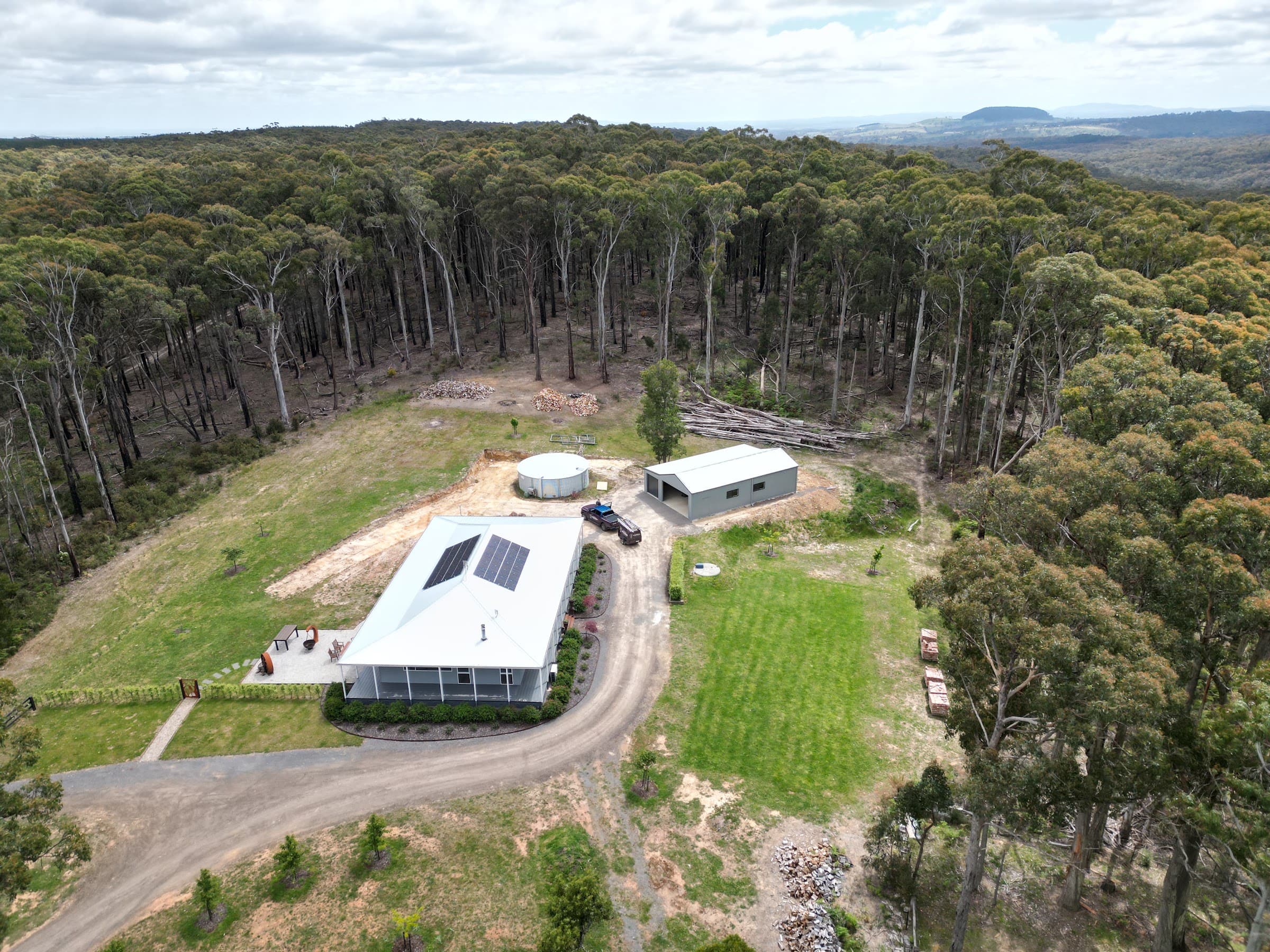
A separate network connection makes sense when the shed is far from the house but close to the street or an existing line, or when the shed needs more than the house supply can spare. A second connection is its own new supply application with the network, its own meter and its own retail account with a daily supply charge. For scale, Powercor's indicative guide, at April 2024 prices including GST, puts a 230 volt cable and pit off an existing overhead low voltage line at $6,543 for up to 10 metres and $17,772 for up to 50 metres. That is Powercor's side only, before your electrician's work from the pit to the shed board. Our Powercor connection cost page has the rest of the guide.
How much does it cost to run power to a shed from the house?
It depends on distance, cable size and the ground, and no regulator publishes a typical figure. These are the things that move the price:
- Distance. The longer the run, the more cable, conduit and trench, and the bigger the cable has to be.
- Load. A few lights and power points need far less than a welder, an air compressor, a hoist or an EV charger.
- The house switchboard. An old board with no room or no modern protection may need work before it can feed anything.
- The ground. Rock, tree roots, a driveway or a concrete path to cross can cost more than the cable.
- The shed board. A shed fed by a submain gets its own distribution board with protection for the circuits inside.
The cheapest quote is often the one where the trench is easy to dig and the cable is sized once, properly, for what the shed will be in five years rather than what it is today.
What size cable do you need for power to a shed from the house?
The electrician sizes it on two tests: the cable must carry the current safely, and it must not lose too much voltage over the run. The Wiring Rules, AS/NZS 3000, limit the voltage drop from the point of supply to the furthest outlet, and the cable sizing tables in AS/NZS 3008.1.1 do the sums. On a long run, voltage drop usually decides the size, not current, which is why a shed 100 metres away needs a much heavier cable than one beside the house for the same load.
Two more limits matter on a rural property. The house supply itself has a ceiling: Powercor's guide says a typical connection is allocated a maximum of 10 kW, or 40 amps total, so a big workshop load shares that with the house. And motor starts are the hard part for any supply. Our article on powering a shed or workshop off grid explains why welders and compressors are sized on their surge, and most of that applies on the grid too.
How deep do you trench when running power to a shed?
As deep as AS/NZS 3000 requires for the type of cable and conduit used, with a marker tape laid above it, and your electrician will tell you the exact depth, route and conduit before anyone digs. The required depth changes with the wiring system, so don't guess one from a forum.
Two rules apply to anyone digging. Energy Safe Victoria says to contact Before You Dig Australia before digging deeper than 300 millimetres on public or private land, and to contact your distributor before digging 900 millimetres or deeper within 1,500 millimetres of a pole. On a farm, also think about water pipes, old cables nobody mapped, and where machinery drives across the line.
What can an owner do, and what must a licensed electrician do?
Energy Safe Victoria's position is plain: electrical work isn't a DIY job, unqualified electrical work is illegal, and you should always hire a licensed electrician. That covers laying and connecting the cable, the work at both boards, the testing and the certificate.
Digging the trench is not electrical work, and many owners with a tractor or an excavator do it to save cost. If you want to, agree it with your electrician first:
- They set the depth, route and width, and the conduit size.
- You dig it after Before You Dig has been checked, and leave it open.
- They lay or inspect the conduit, cable and marker tape before anything is backfilled, because they sign off on the whole job.
Never dig near an existing cable you are unsure of, and never connect, extend or "temporarily" plug a shed into the house with an extension lead buried in the ground.
What paperwork comes with power to a shed?
A Certificate of Electrical Safety. Energy Safe says a certificate must be issued whenever electrical work is completed, by the electrician who did the work, and you should receive your copy. Some work is prescribed, including consumer mains, which means a licensed electrical inspector has to inspect it before it is connected to supply. A separate network connection to a shed needs new consumer mains, so expect that inspection. Whether a submain from the house is prescribed depends on the installation, and your electrician will know.
Keep the certificate with your property papers. It is your record that the work was done properly if you sell or insure.
When does an off grid shed make sense?
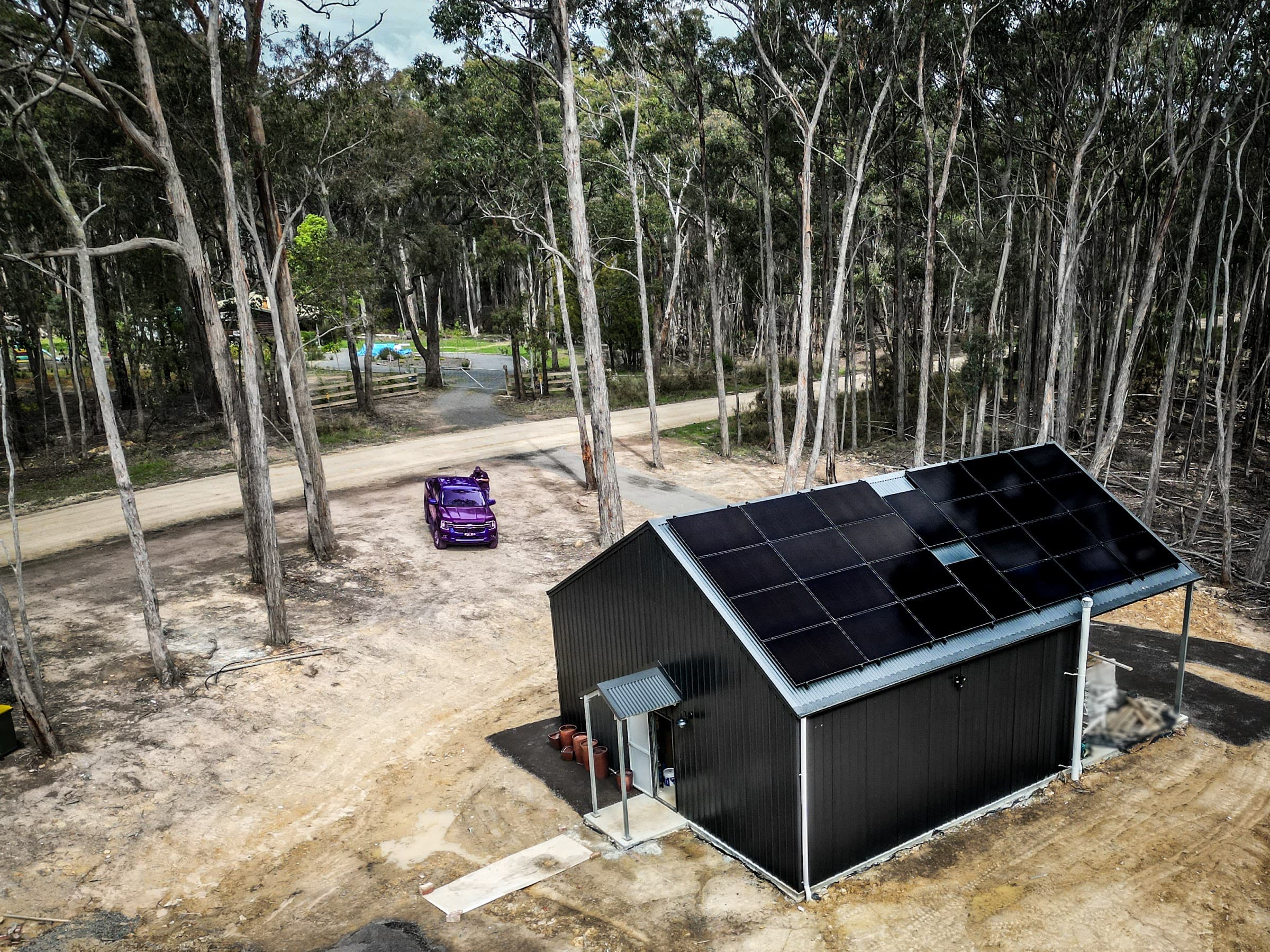
When the shed is far from the house, the trench would cross rock or a creek, or a second connection would cost more than the shed is worth. A small solar and battery system on the shed itself avoids the trench and the meter. It suits lights, power tools, a fridge and charging. It struggles with heavy welding and large compressors unless it is sized for their surge.
One catch as at November 2026: the Clean Energy Regulator's Cheaper Home Batteries program covers off grid batteries only on a dwelling that is lived in, and it lists sheds as excluded. Our shed and workshop article covers sizing an off grid shed, and our sizing tool gives a starting system for your loads.
Mick McDonald
Technical Director, Trentham Energy
Questions about your own system? Call 1300 3458 00 or send us a message.
Sources
- Electrical work isn't a DIY job, Energy Safe Victoria
- Prescribed and non prescribed work, Energy Safe Victoria
- Powerlines and poles FAQ, Energy Safe Victoria
- Customer's Selection Guide: Indicative Powerline Construction Costs, Powercor
- Arrange a new electricity supply, Powercor
- Cheaper Home Batteries, Clean Energy Regulator