
Case study · Hepburn Shire
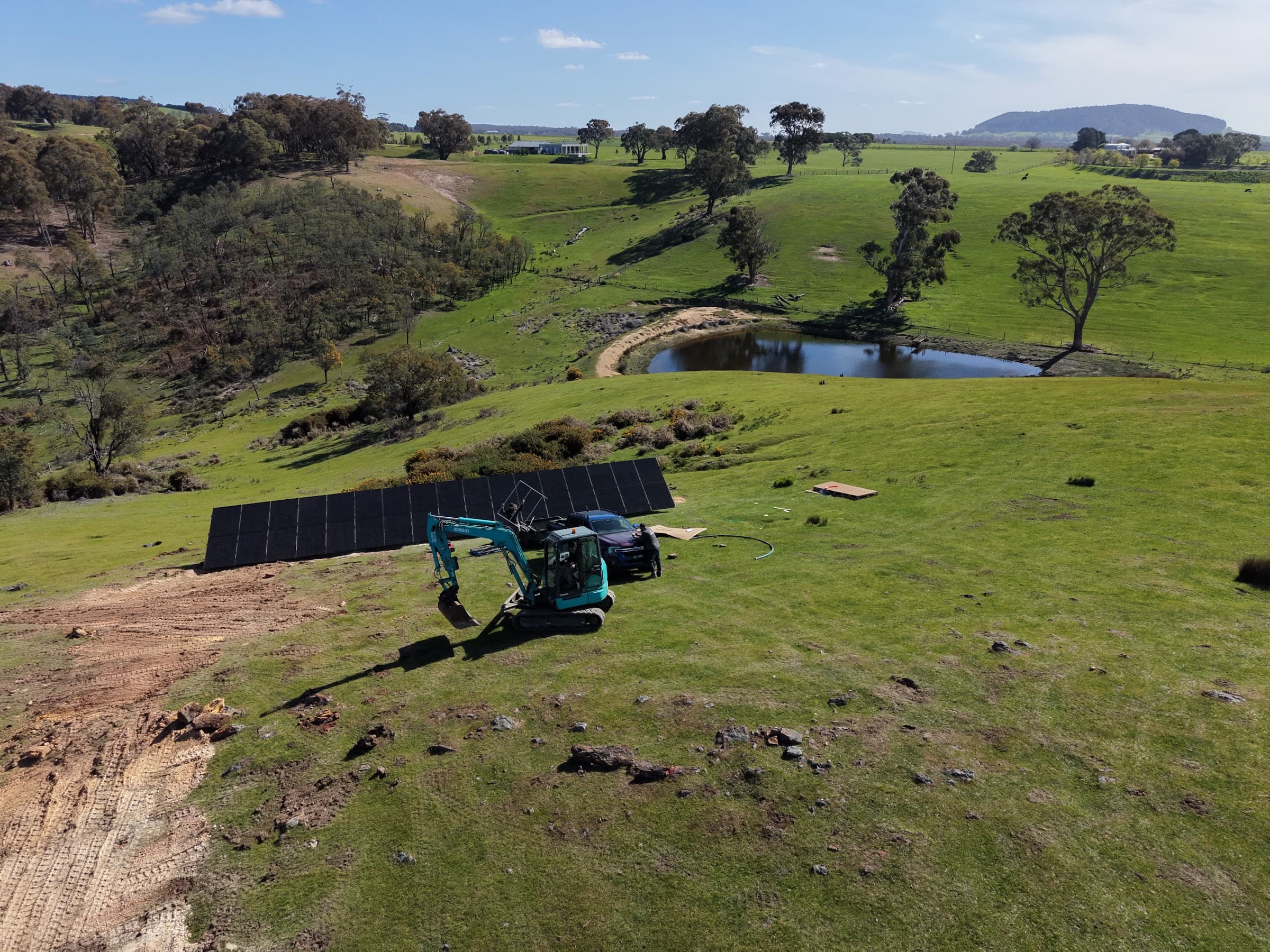
Off grid solar system at Porcupine Ridge: a ground mounted array with the power station underneath.
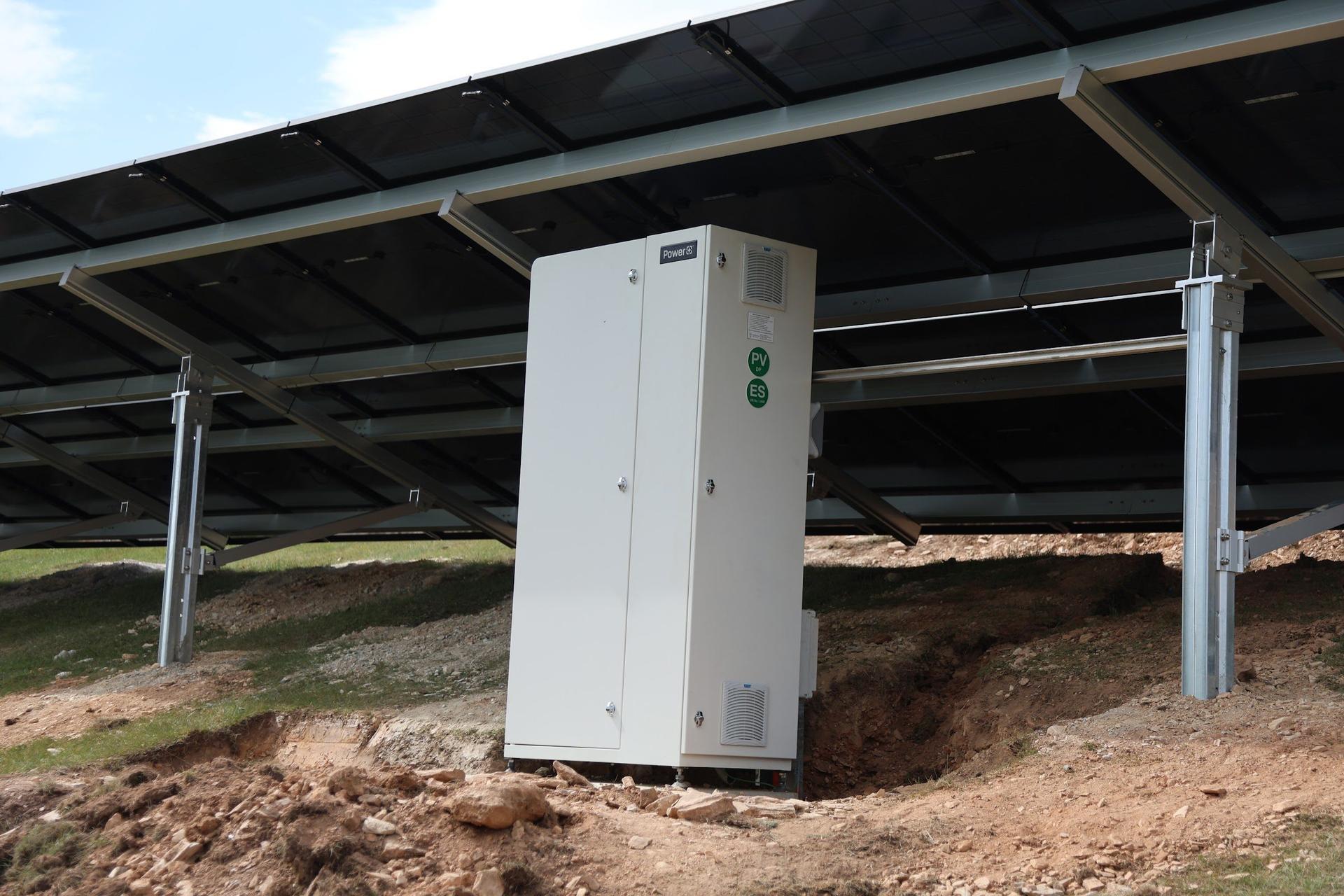
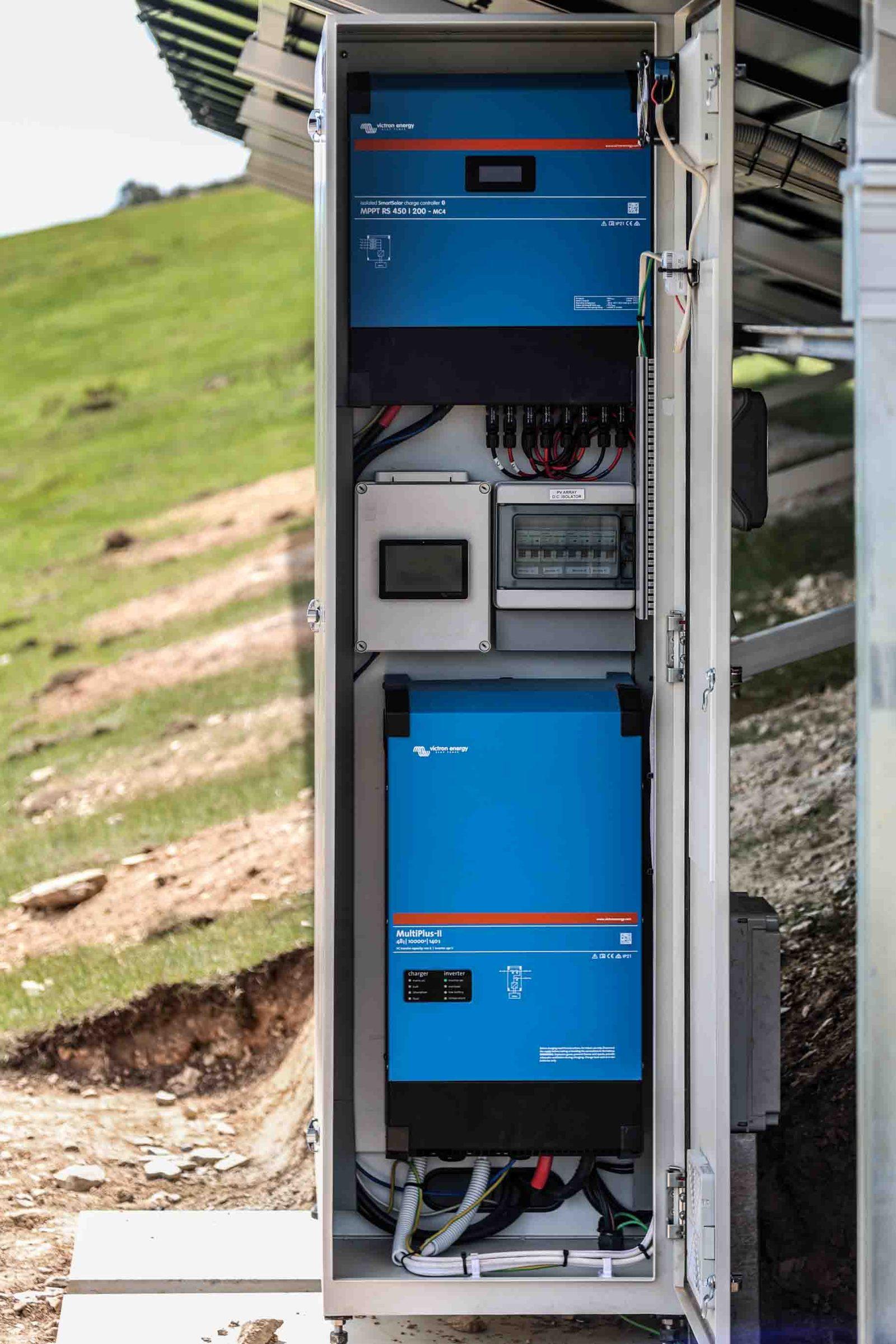
An all electric home at Porcupine Ridge runs with no grid connection on a 34 panel ground mounted solar array, a Victron MultiPlus-II inverter charger and PowerPlus lithium batteries, all in one weatherproof cabinet under the array.
- Home
- All electric
- hot water, heating and cooking all on solar
- Grid connection
- None
- a stand alone power system
- Solar
- 16 kW
- 34 panels of 470 W on one ground frame
- Battery
- 23.5 kWh
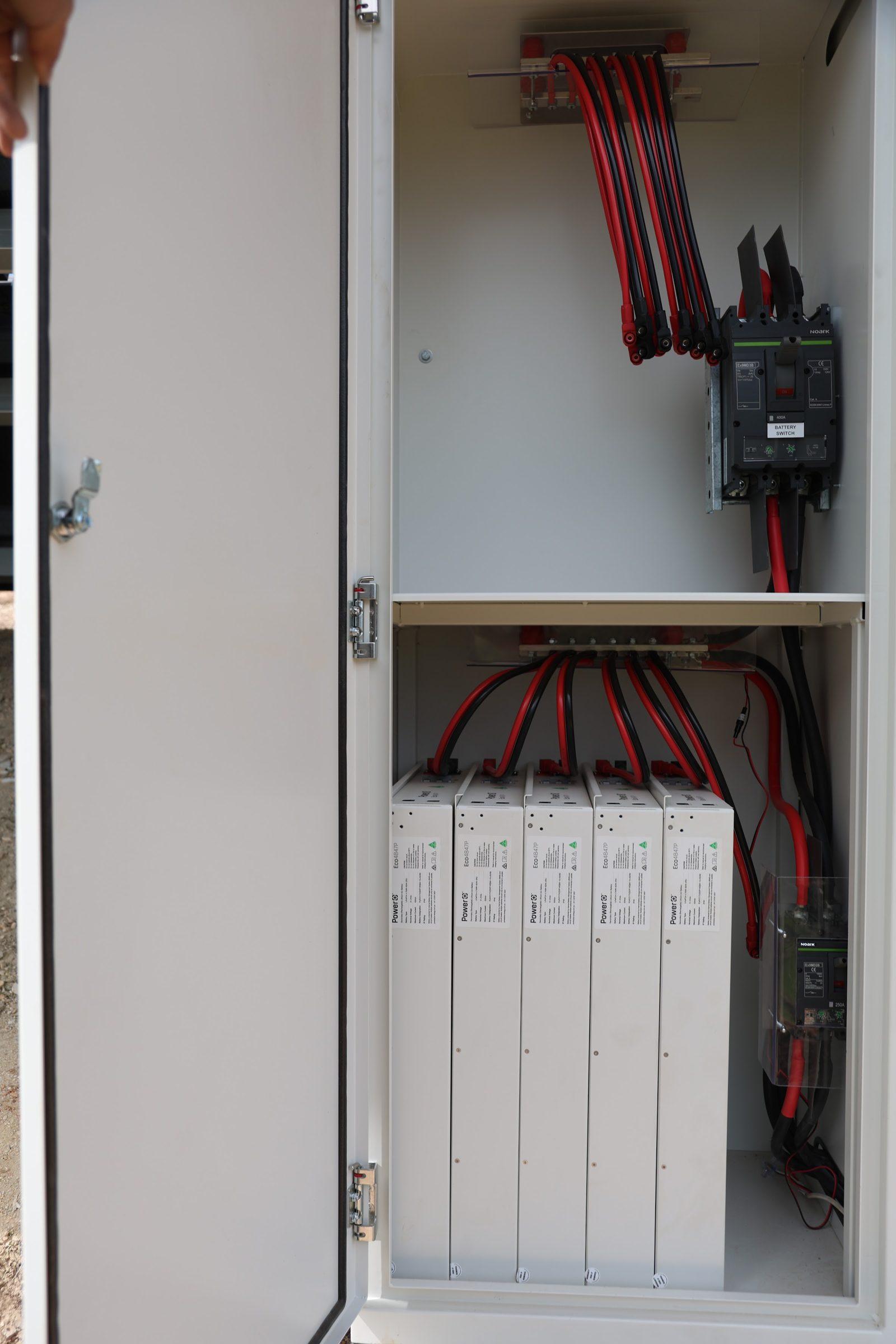
- five PowerPlus Energy Eco4847P modules, in a cabinet wired to take more
- Inverter
- 10 kVA
- Victron MultiPlus-II 48/10000 inverter charger
- Solar charging
- Victron MPPT RS
- SmartSolar MPPT RS 450/200 charge controller
- Monitoring
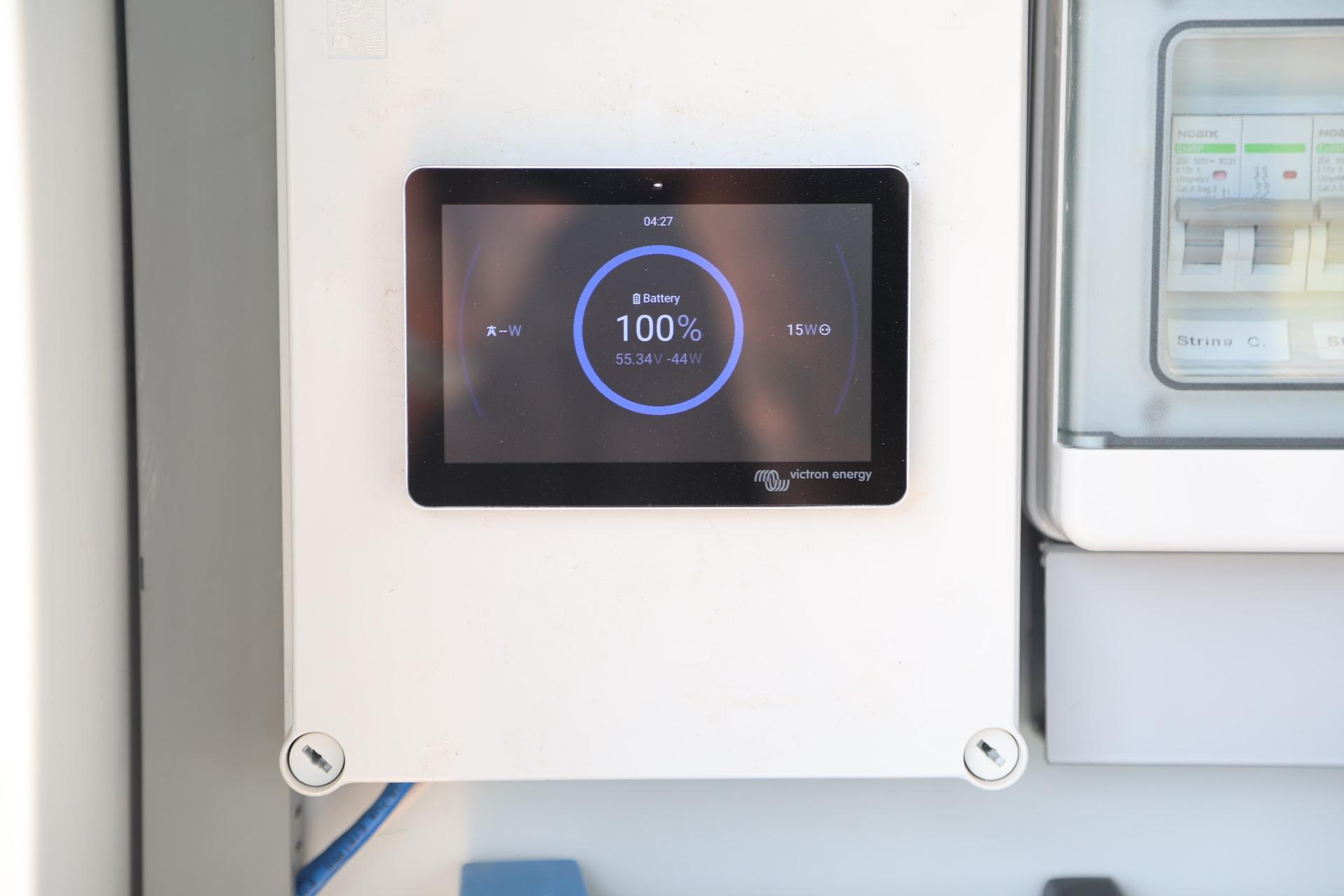
- Victron GX
- touch display in the cabinet and online, watched from Trentham
- Where it lives
- Under the array
- inverter, charge controller and battery in one cabinet
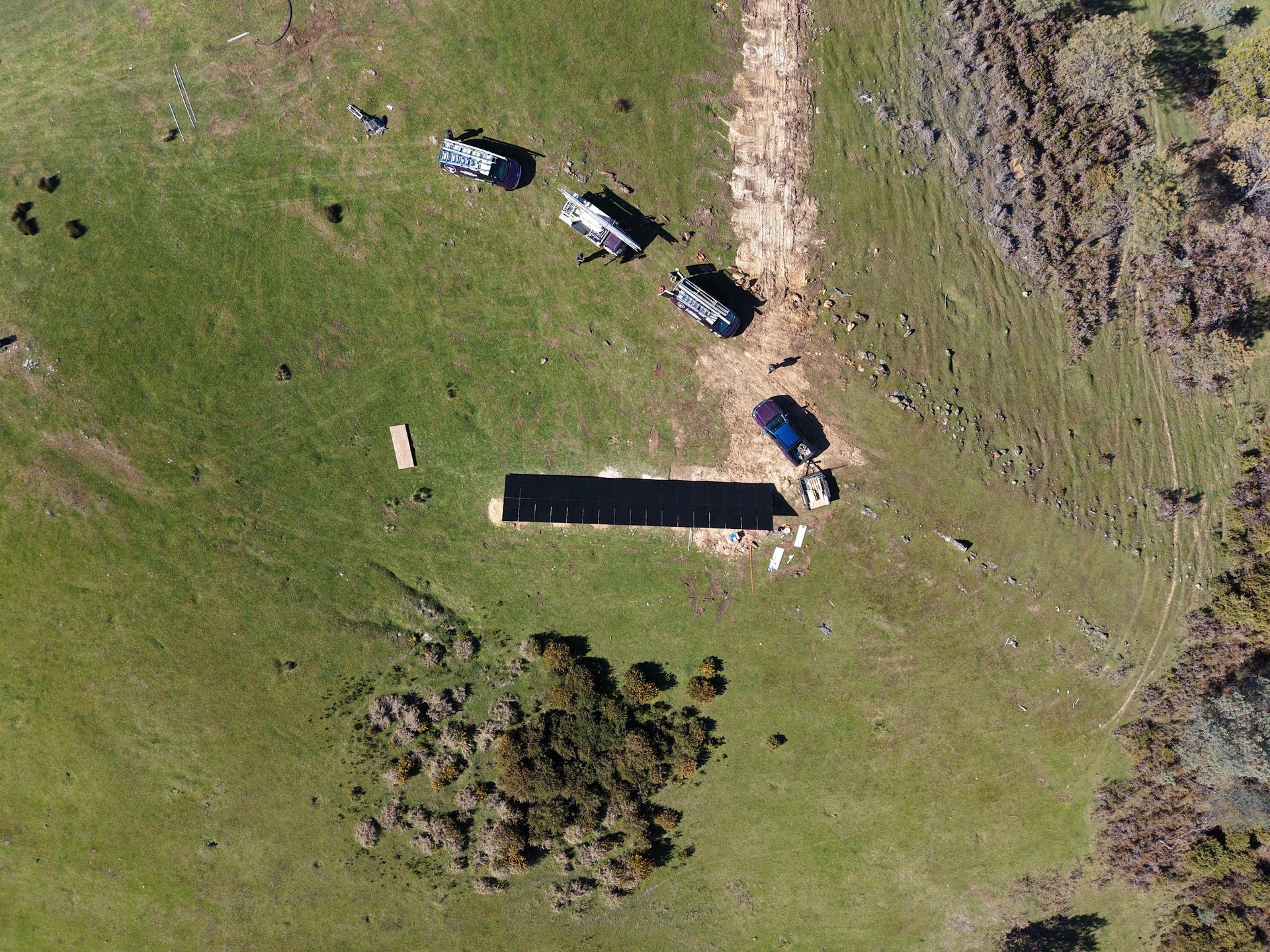
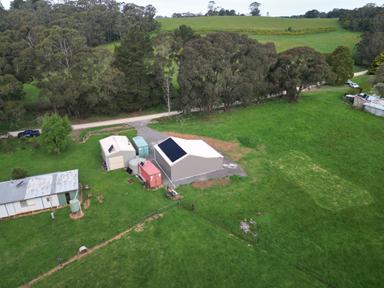
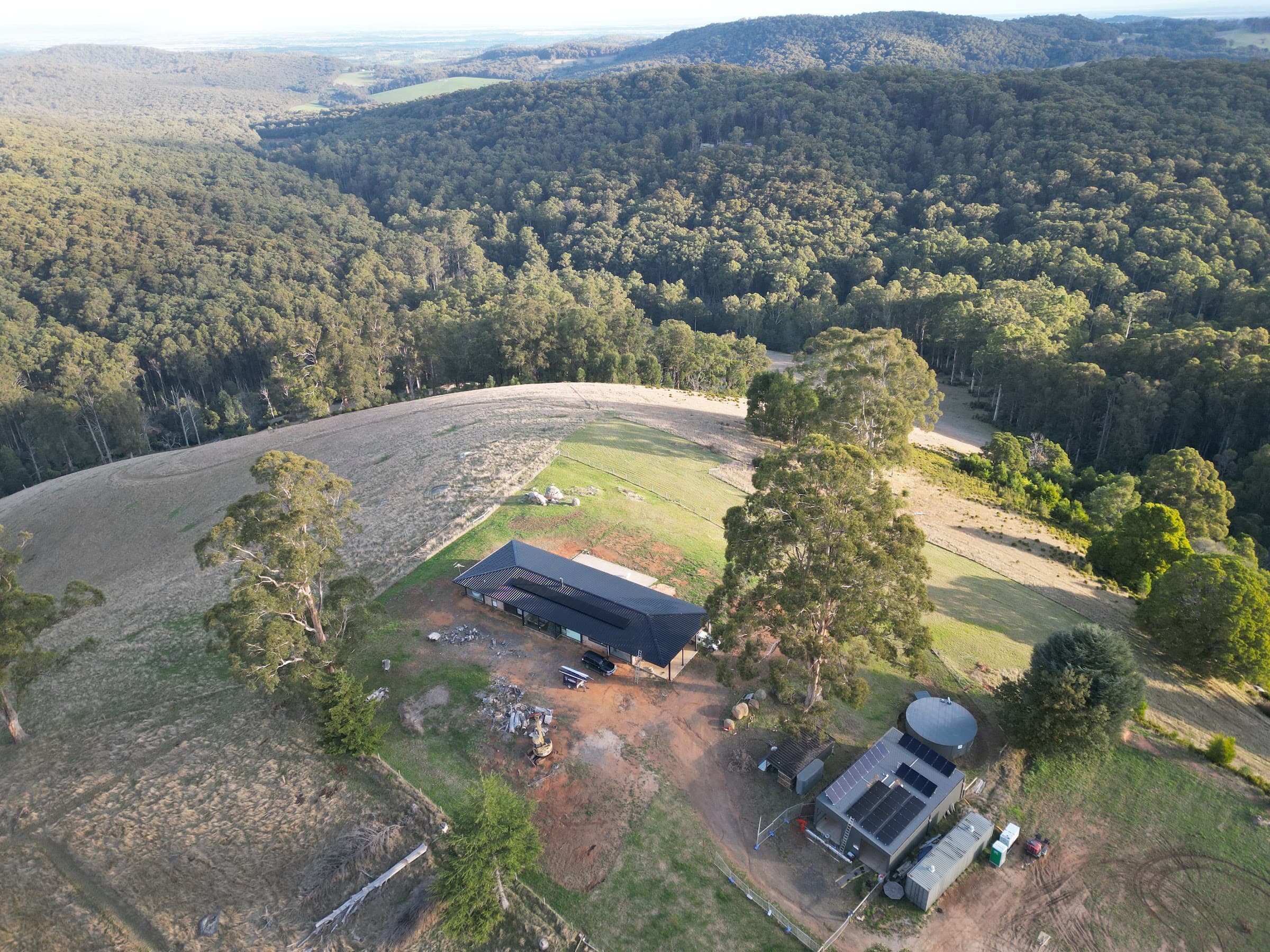
Installed October 2025. The panel count is taken from our own aerial photos and the equipment is as shown in the photos below.
An all electric home, with the solar out in the paddock.
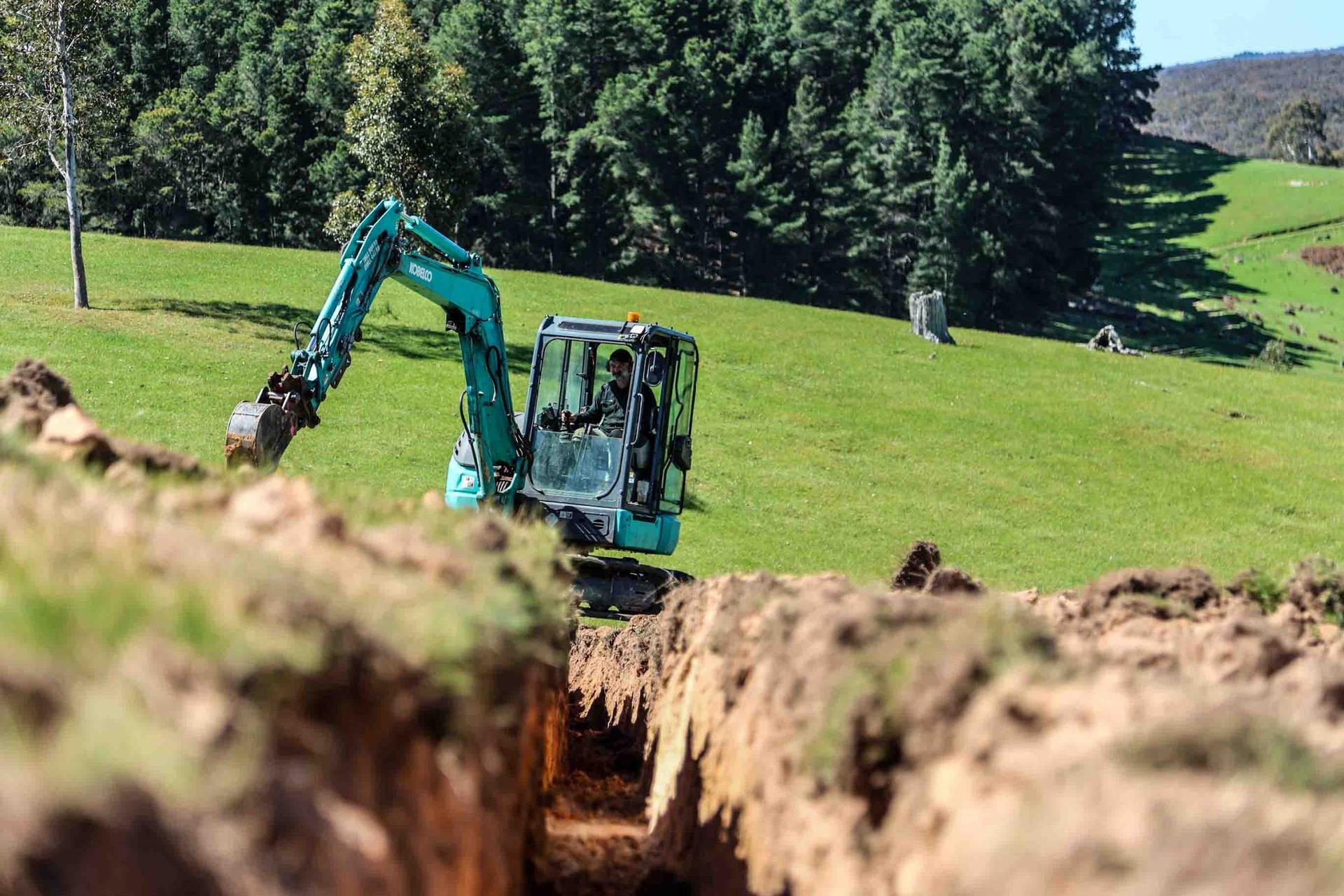
This property at Porcupine Ridge, in Hepburn Shire, is an all electric home with no grid connection. The solar is not on the house at all. It sits on a ground frame on the hillside, and a trench carries the power back.
What is in this off grid solar system.
Thirty four panels in two rows on a steel ground frame. At 470 watts a panel that is 16 kW of solar.
The whole power station is in one white cabinet standing under the array: a Victron SmartSolar MPPT RS 450/200 charge controller, a Victron MultiPlus-II 48/10000 inverter charger, the isolators and the GX Touch display, with five PowerPlus Energy Eco4847P lithium modules in the next bay. That is 23.5 kWh of storage, and the cabinet is wired to take more modules.
Why a ground mounted off grid array.
A ground frame lets the direction and the tilt be chosen for winter sun, where a roof gives you whatever the builder built. The panels are easy to reach and to clean, and there is room to add more.
Putting the cabinet under the array keeps the solar cabling short and keeps the equipment out of the house. Only the 230 volt supply runs back to the home.
On site
From the install.
Tell us about the property.
Where it is, what is on it, and what you need to run. We will tell you honestly whether standalone power stacks up and what it would take.