
Case study · Hepburn Shire
Off grid solar system at Cranneys Lane, Trentham: power for the shed now, ready for the house later.
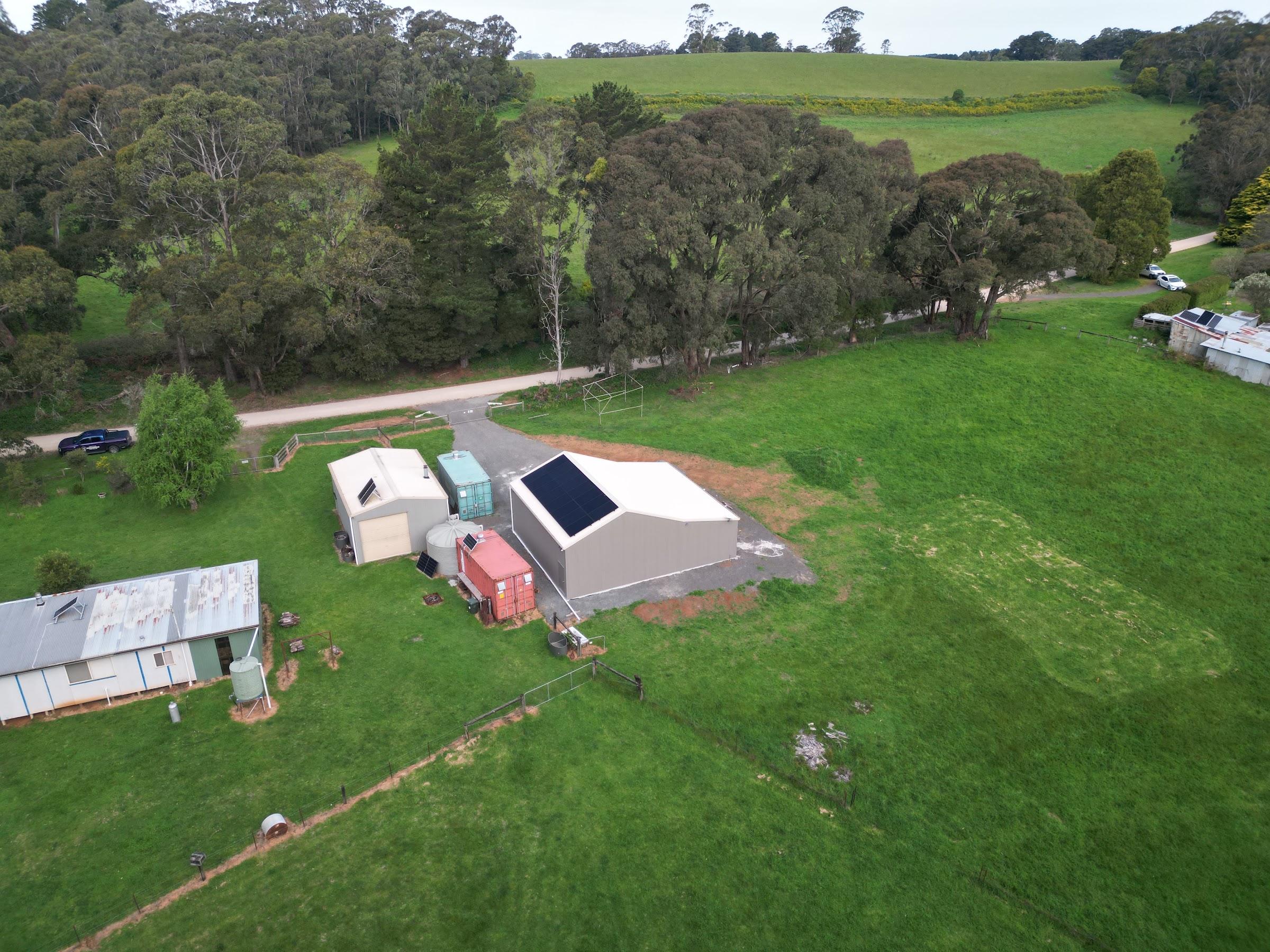
An off grid solar system at Cranneys Lane, Trentham, built in the shed before the house: 16 solar panels, a Victron MultiPlus-II inverter charger and PowerPlus lithium batteries, set up so the home can be added to it.
- Runs today
- The shed
- power on the block before the house is built
- Grid connection
- None
- a stand alone power system
- Solar
- 7.5 kW
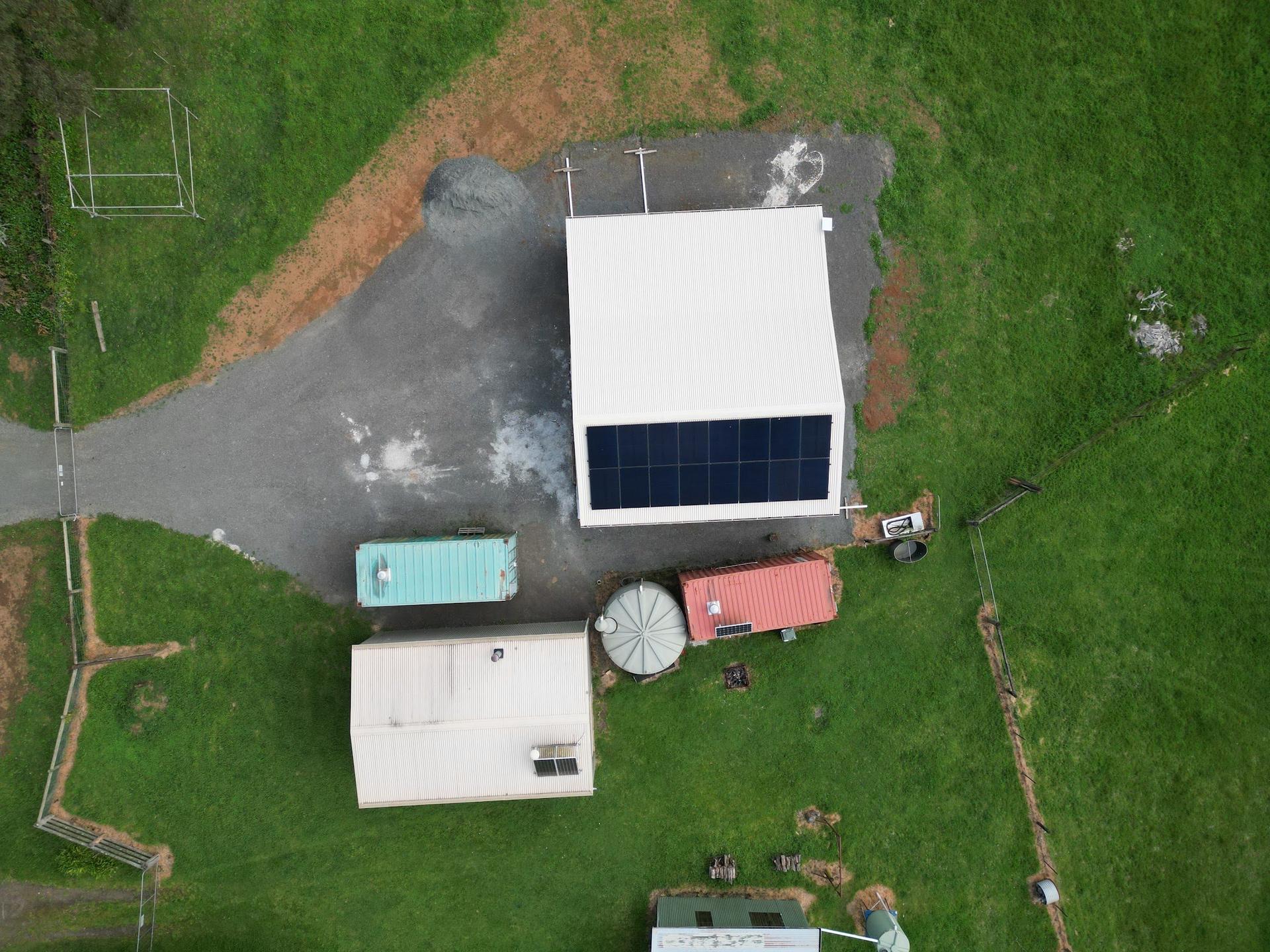
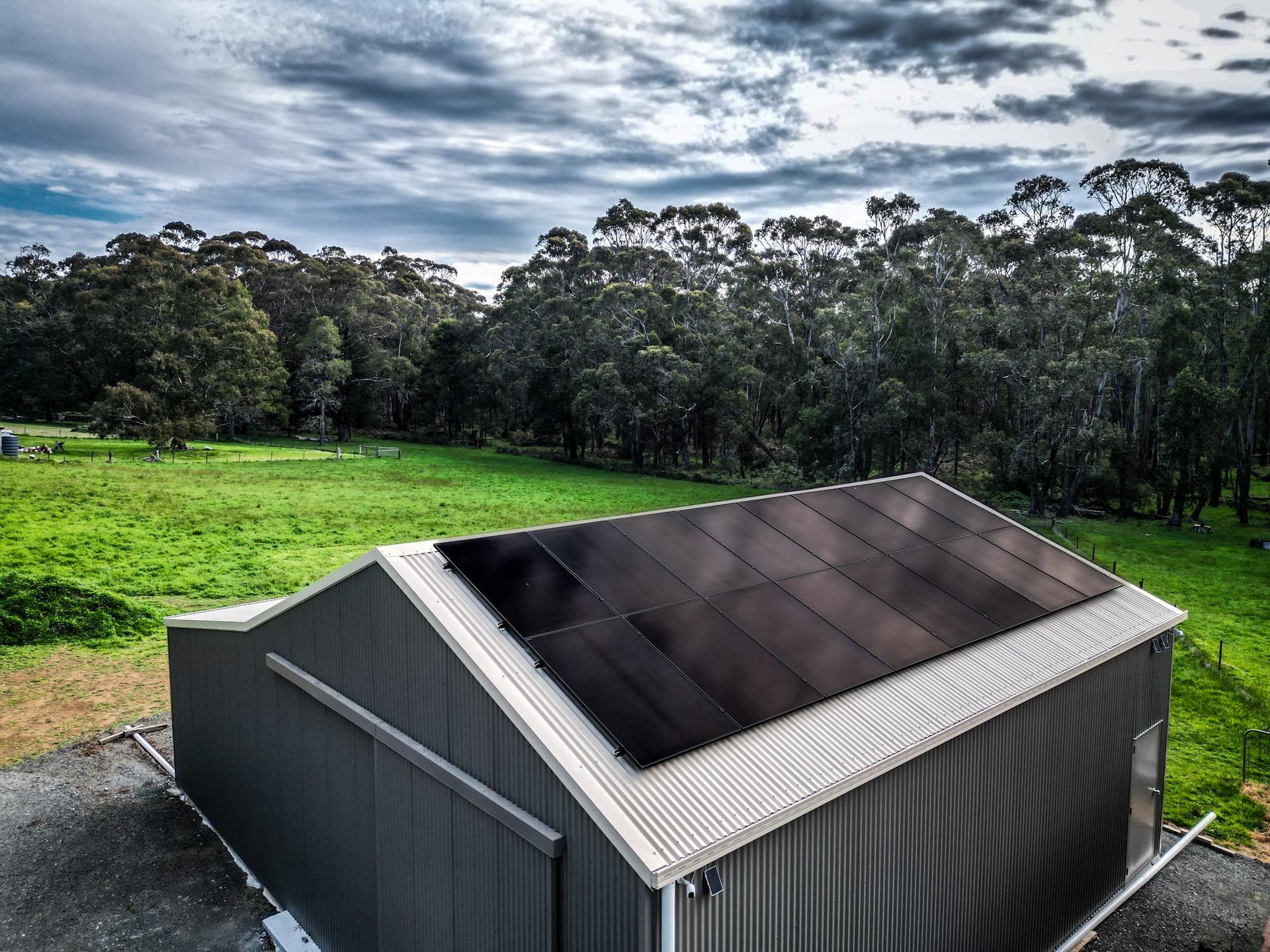
- 16 panels of 470 W on the shed roof
- Battery
- PowerPlus lithium
- PowerPlus Energy modules in a steel enclosure
- Inverter
- 5 kVA
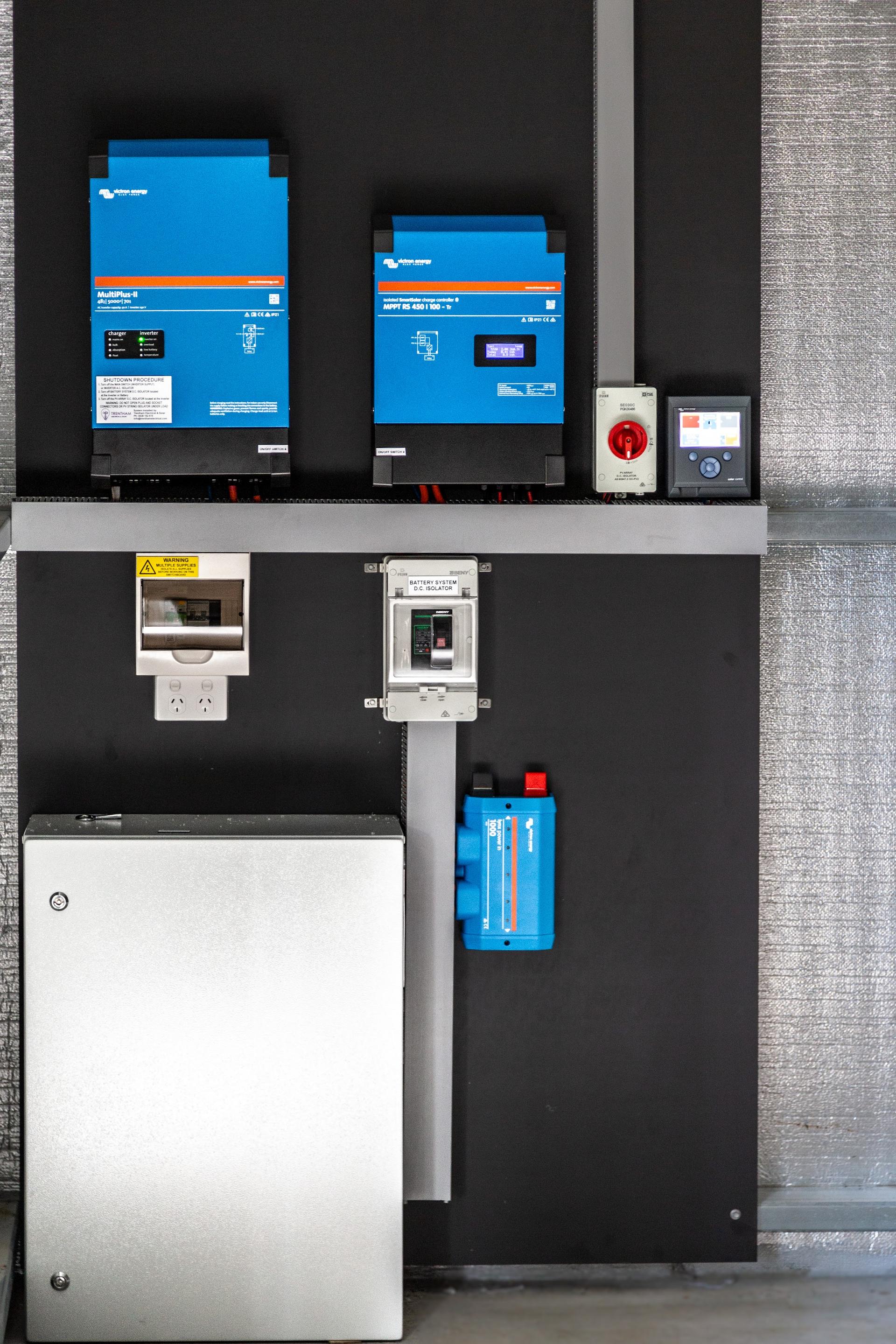
- Victron MultiPlus-II 48/5000 inverter charger
- Solar charging
- Victron MPPT RS
- SmartSolar MPPT RS 450/100 charge controller
- Monitoring
- Victron GX
- display on the board and online, watched from Trentham
- Next stage
- The house
- the system is set up to take the home when it is built
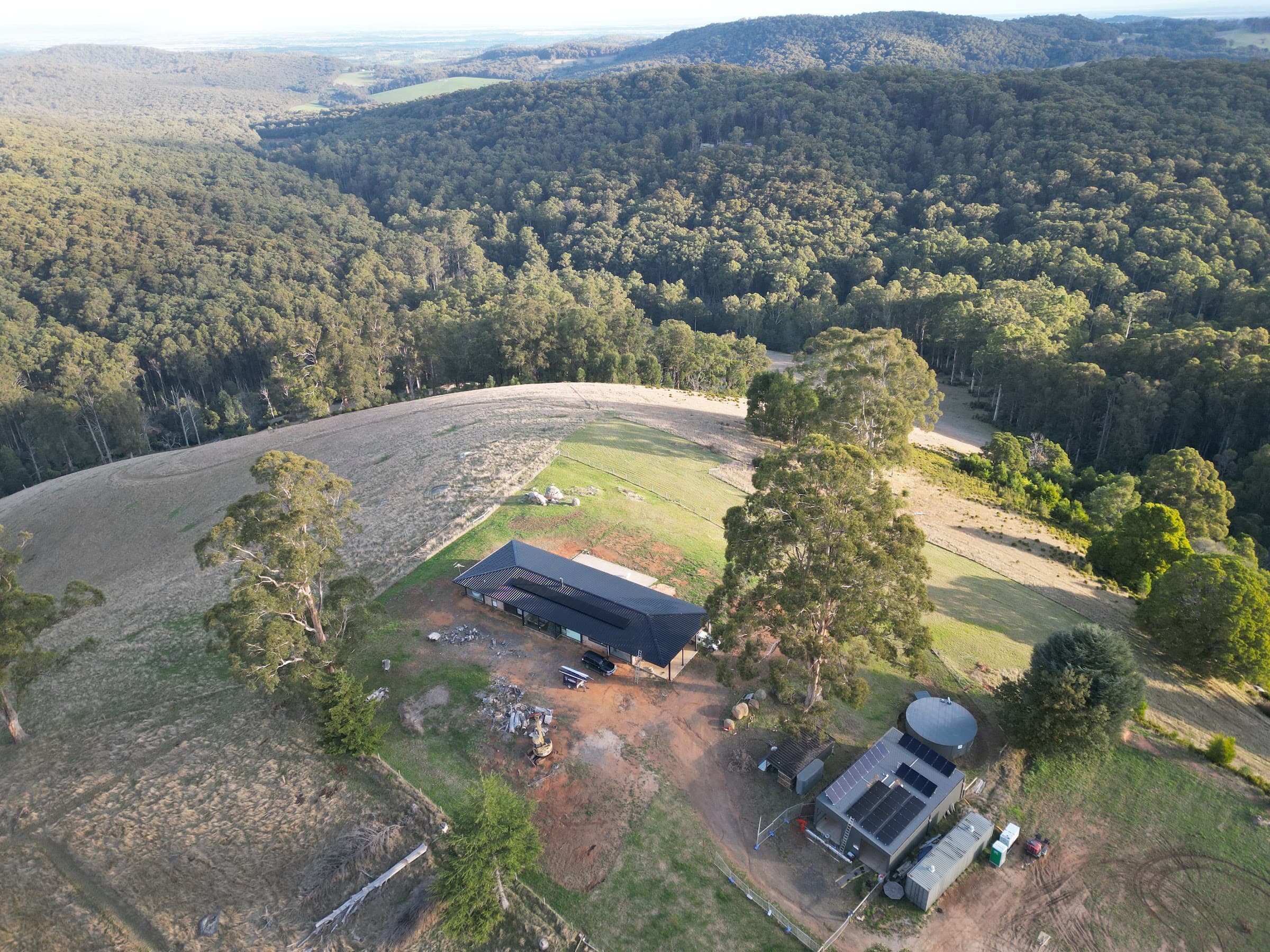
Installed late 2024. The panel count is taken from our own aerial photos and the equipment is as shown in the photos below.
Off grid power on the block before the house.
On a new block the shed usually goes up first, and it needs power long before the house does. At Cranneys Lane, Trentham, the off grid solar system went into the shed at that stage, so there is power on site through the build and the home has a system waiting for it.
What is in this off grid solar system.
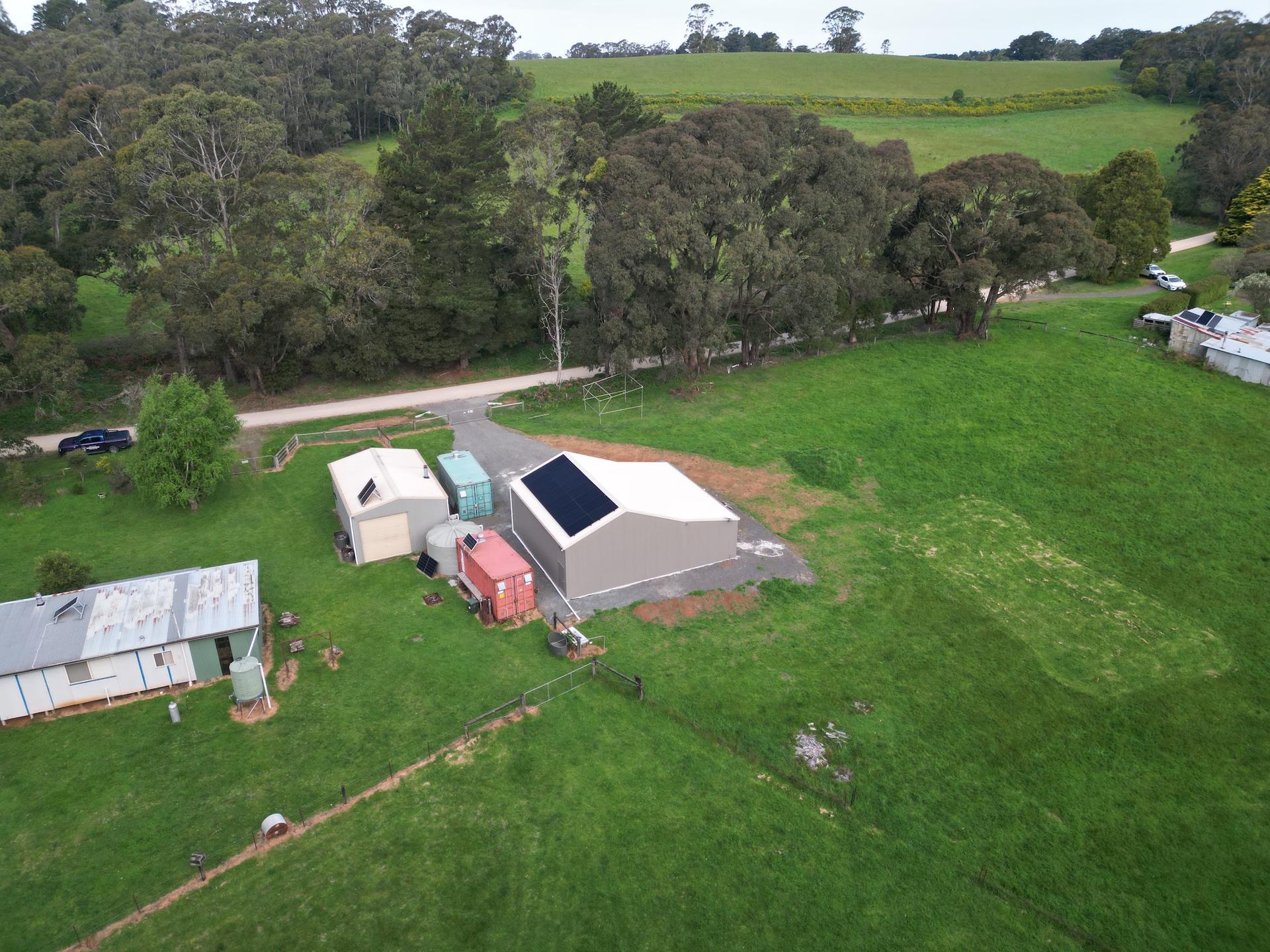
Sixteen solar panels in two rows on the shed roof. At 470 watts a panel that is 7.5 kW of solar.
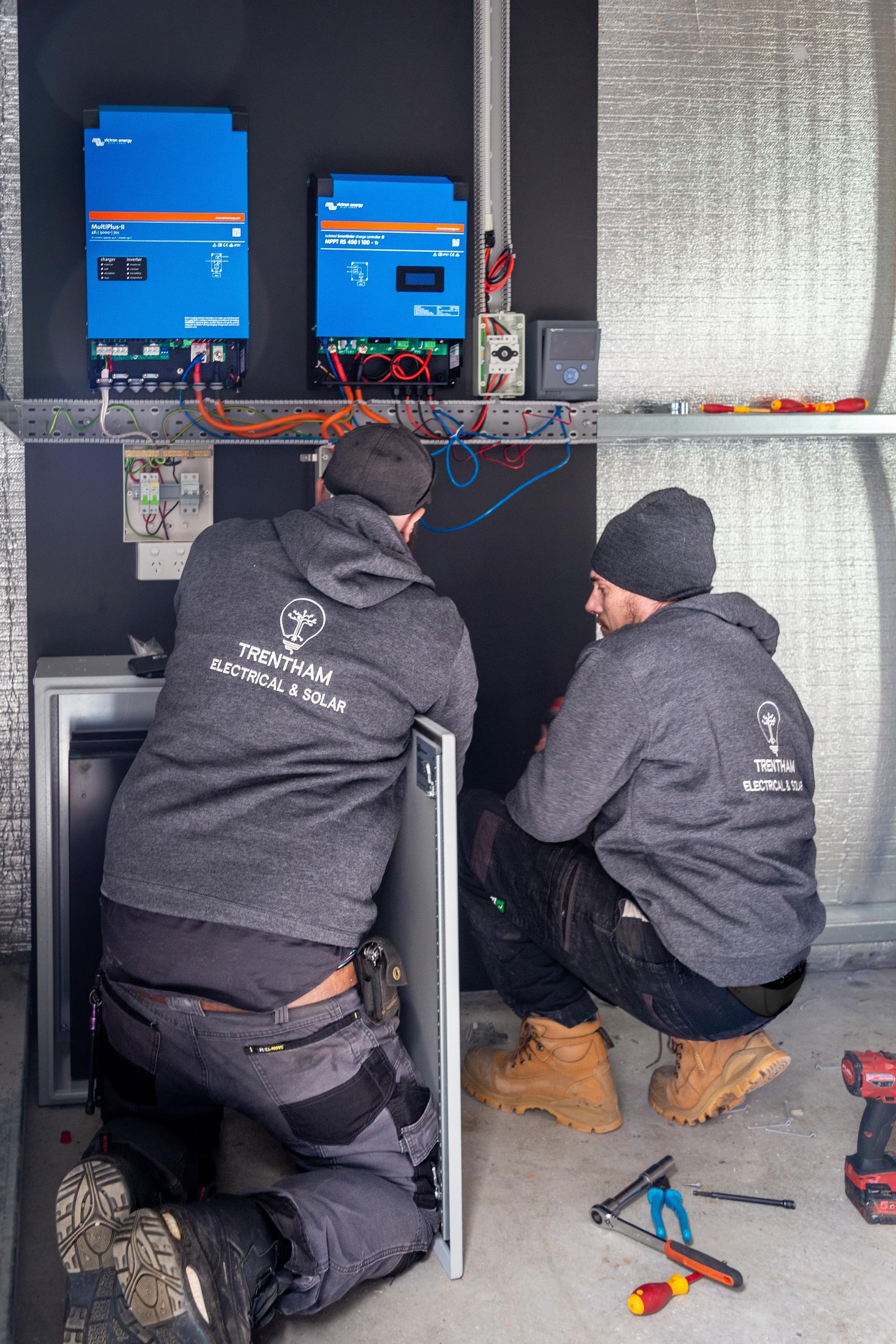
Inside, one board carries a Victron MultiPlus-II 48/5000 inverter charger, a Victron SmartSolar MPPT RS 450/100 charge controller, the isolators and the monitoring display. The PowerPlus Energy lithium battery modules sit in a steel enclosure under the board.
Why build an off grid system in stages.
Every part of a Victron system is its own unit, so the system can grow. More solar, more battery modules or more inverter can be added when the house comes, without throwing away what is already on the wall.
It also spreads the cost across the build, and the owner learns how the system behaves through a winter before the house depends on it.
On site
From the install.
Tell us about the property.
Where it is, what is on it, and what you need to run. We will tell you honestly whether standalone power stacks up and what it would take.