Size a solar battery to what you use from 4 pm to 6 am, in usable kWh, then check your solar can fill it in winter. Worked example and free calculator.
What size solar battery do I need? For a grid connected home, size the battery to the power you use from about 4 pm to 6 am, measured in usable kWh, then check that your solar has enough left over during the day to fill it, especially in winter. Your own bill decides the size, not an average. Our free Energy Plan Finder works it out from your bill, and the steps below show how to do it by hand.
How do you calculate solar battery size from a power bill?
Start with the energy you use between late afternoon and early morning, the hours a battery covers, not your total daily use.
- Find your evening and overnight use. A bill only gives a daily average, so look at your retailer's app or portal for half hourly smart meter data, and add up what you use from 4 pm to 6 am on a typical day.
- Check it in winter and summer. Heating and longer nights push winter use up.
- Check what your solar has spare. Your bill shows what you export each day. If the panels only export 6 kWh on a winter day, a 13 kWh battery will not fill from solar in winter.
- Convert to usable capacity, then pick a real product size.
The Queensland Government's battery buyers guide says the same: size it so solar can charge it by day and it covers your needs overnight.
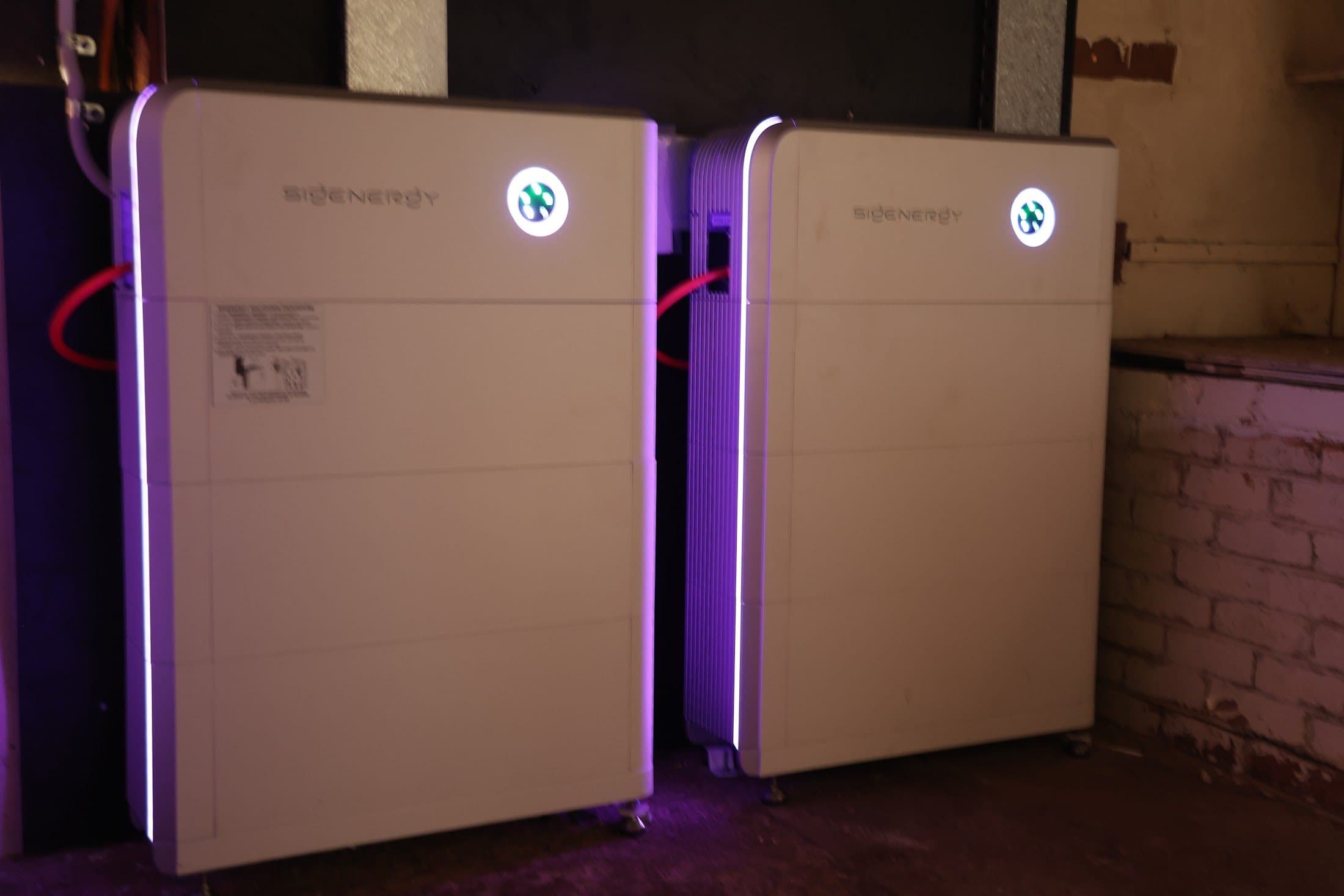
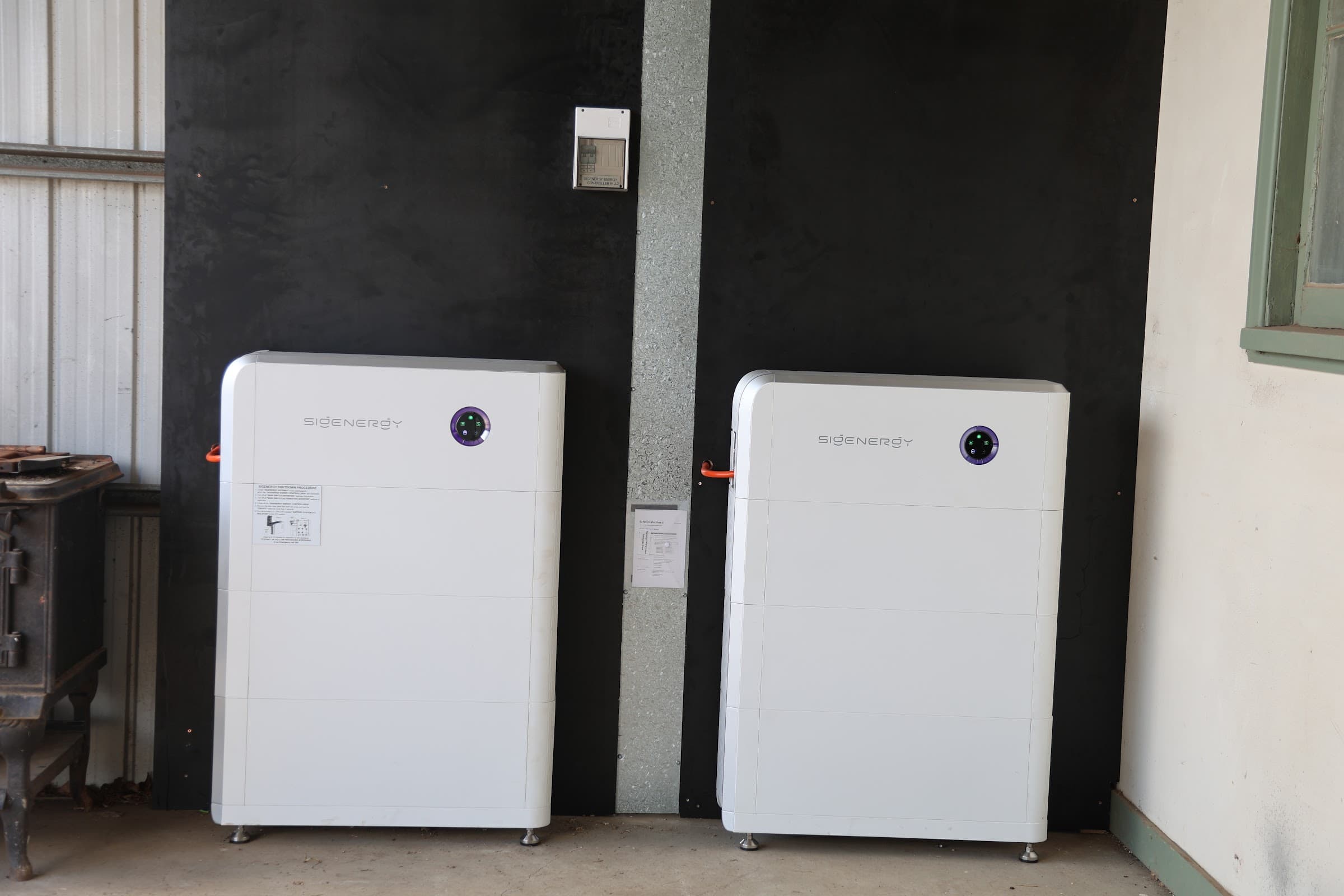
Worked example. Say a home's smart meter data shows it uses 11 kWh from 4 pm to 6 am on a typical winter day and 8 kWh on a summer day, and its winter bill shows about 12 kWh a day going out to the grid. The target is about 11 kWh usable. A Sigenergy SigenStor with one 5 kWh and one 8 kWh module (the 5S-13) has 13.0 kWh usable from 13.44 kWh total, according to Sigenergy's single phase datasheet. That covers the winter evening with a little margin, and the 12 kWh of winter exports will nearly fill it on an average day.
Usable capacity versus nominal capacity: which number counts?
Usable capacity matters, because it is the energy you can actually draw out. Nominal (or total) capacity is what the cells hold, some of which is kept back.
The gap between the two is the depth of discharge. In Sigenergy's single phase datasheet the SigenStor 5S-16 lists 16.12 kWh total and 15.6 kWh usable, with a depth of discharge of 97%. Brands differ, so compare quotes on usable kWh, which is also what the federal rebate tiers use.
Does winter or blackout backup change the battery size?
Yes. Winter often raises how much you want to store while lowering the solar you have to fill it.
In Melbourne, SolarQuotes found the June daily average from a 6.6 kW north facing system was 57% of its yearly daily average. If your winter exports are small, either size the battery to what the panels can fill in winter, or plan more panels alongside it. Our page on on grid solar covers sizing the array.
Backup is a separate question. The Queensland guide notes that not every home battery system can supply power during an outage, so check the system is set up for backup before you count on it. If you want power through blackouts, you also need to keep part of the battery in reserve every night, which means sizing above your evening use. Our home battery storage basics explain backup circuits.
How does the battery rebate affect the size to buy?
The federal rebate rewards the first 14 kWh of usable capacity most, so it nudges most homes toward a battery of about 14 kWh usable or a little under, unless their evening use clearly needs more.
Under the Cheaper Home Batteries Program, as the Clean Energy Regulator page stood when read on 25 November 2026 (last updated 29 October 2026):
- The first 14 kWh of usable capacity earns the full STC factor.
- Each kWh above 14 and up to 28 kWh earns 60% of it.
- Each kWh above 28 and up to 50 kWh earns 15%.
- Nothing above the first 50 kWh of usable capacity earns certificates.
The factor is 6.8 certificates per kWh for installs from May to December 2026, 5.7 from January to June 2027 and 5.2 from July to December 2027. Each battery must have a nominal capacity of 5 to 100 kWh.
In the worked example, the 13.0 kWh battery sits wholly in the first tier: 13.0 × 6.8 is about 88 certificates. The 15.6 kWh stack earns 95.2 on its first 14 kWh plus about 6.5 on the next 1.6 kWh, about 102 in total. Our article on what battery rebates are still open in Victoria covers eligibility and the Victorian side.
Is a bigger solar battery always better?
No. A battery only saves on the kWh it actually stores and gives back, so capacity your solar cannot fill, or your evenings do not use, is capacity you rarely touch. Above 14 kWh usable the rebate also drops to 60%, then 15%. A bigger battery makes sense when your evening use is genuinely high, for example with electric heating, an electric car charged overnight or a large household, when you have the panels to fill it, or when you want real blackout reserve.
Solar battery calculator: what does the Energy Plan Finder do?
Our free Energy Plan Finder is a solar and battery calculator that works from your own bill. Upload a recent power bill (a photo or PDF), type the figures in, or upload a smart meter (NEM12) file. It works anywhere in Victoria, NSW, the ACT, Queensland, South Australia or Tasmania, and we take nothing from any retailer.
It ranks every plan on your network by what you would really pay, with solar and battery included. For a home with no battery, it tries real battery sizes (10, 13.5, 16, 20, 27, 36, 45 and 54 kWh) on your own usage, each on the plan that suits it best, and recommends the size where going one step bigger stops adding a worthwhile saving. It looks at what you use from 4 pm to 6 am, the hours a battery covers. For a home that already has a battery and still sends a lot of solar out, it suggests how much more storage would help.
If you have no panels, it sizes the array to make about what the home uses over a year, then checks an average June day: the panels must cover your daylight use and fill the battery for the evening, and the bigger of the two answers wins. It rounds up to a common size (3.3, 5, 6.6, 8, 10 or 13.2 kW). It then ranks every plan again with the panels on and shows the saving per year against the cheapest plan today, as an "about" figure. It is not a quote: it cannot see your roof space or shading, so the size is checked on site before a design.
Questions
What size solar battery do I need for a 10 kW solar system?
The solar system size does not set the battery size on its own; your evening use does. A 10 kW array can usually fill a battery sized to a typical home's evening use in summer, but check your winter exports on your bill before you go bigger.
Is a 13 kWh battery enough for a house?
For many homes it is, if evening and overnight use is around 10 to 13 kWh. Homes with electric heating, a car charged overnight or a large family may use more, so check your own smart meter data.
What size solar battery do I need for a 4 bedroom house?
The number of bedrooms says little. Two 4 bedroom homes can use very different amounts at night, so size to the measured 4 pm to 6 am use, or let the Energy Plan Finder do it from your bill.
If you want to see the size that suits your own home, upload your bill to the Energy Plan Finder. It is free, and if you want us to check it on site afterwards, you can book a callback.
Mick McDonald
Technical Director, Trentham Energy
Questions about your own system? Call 1300 3458 00 or send us a message.
Sources
- Cheaper Home Batteries Program, Clean Energy Regulator (last updated 29 October 2026)
- Choose the best solar battery system for your home, Queensland Government (last updated 12 February 2024)
- Sigen Energy Storage System single phase datasheet, Sigenergy (via SolarQuotes, June 2024)
- How well does solar work through winter?, SolarQuotes (21 June 2021)